REVIEW · MAUI
Maui Eco-Raft Tour: Eye-Level Whale or Dolphin Watching – Lahaina
Book on Viator →Operated by Hawaii Ocean Rafting · Bookable on Viator
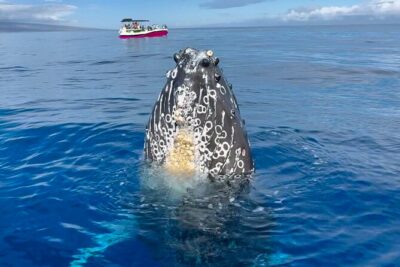
Whales from inches away, on a raft. This eye-level Maui eco-raft tour takes you off Lahaina on a small zodiac style boat, so you’re not staring over railings. I love the close-to-the-water ride and the hydrophone moments when humpback whales are in season, plus the guide shares what you’re seeing. One drawback: the boarding area takes some physical effort, and the tour isn’t for pregnant people or kids under 3.
What also wins me over is how efficiently the crew works to keep the group in the action. In particular, I’ve seen names like Captain Jack, Captain Mark, and marine naturalist Jess tied to excellent trips—focused searching, calm safety calls, and lots of whale behavior explained as you cruise. If you’re someone who hates getting wet, plan on reconsidering; this is a low-to-the-water craft, so ocean spray and light rain are part of the package.
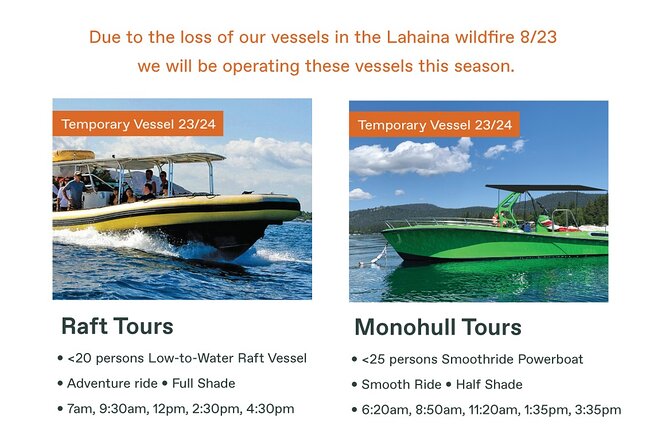
You’ll also choose the experience that matches the season: humpback whale watching from December to April, or dolphin watching and coastal sightseeing during the warmer months. Either way, you’re out for about 2 hours 30 minutes, capped at a small group size (up to 25), which makes it feel like a real outing—not a cattle call.
In This Review
- Key things to know before you go
- Eye-Level Views from a Low-Water Zodiac Raft off Lahaina
- Whale vs Dolphin Seasons: When to Book What
- Marine Naturalist Narration and Hydrophone Whale Songs
- What Happens During Your 2.5 Hours from 1223 Front Street
- Small-Group Size, Crew Focus, and Real-World Comfort
- What to Pack: Sun, Rain, and Reef-Safe Rules
- Price and Value: Is $85.16 Worth It?
- Safety and Wildlife Reality (What You Should Know Up Front)
- Best for Who: First-Time Whale Watchers, Couples, and Families (With the Right Age)
- Should You Book This Maui Eco-Raft Tour?
- FAQ
- Where does this tour depart from in Lahaina?
- How long is the Maui Eco-Raft Tour?
- Is the tour only for whales?
- Can children under 3 join the tour?
- Is the tour safe for pregnant people?
- Do you provide snacks or beverages?
- Do I have to wear a life jacket?
- What should I bring for weather and sun?
- Are whale or dolphin sightings guaranteed?
- What happens if the weather is poor?
Key things to know before you go
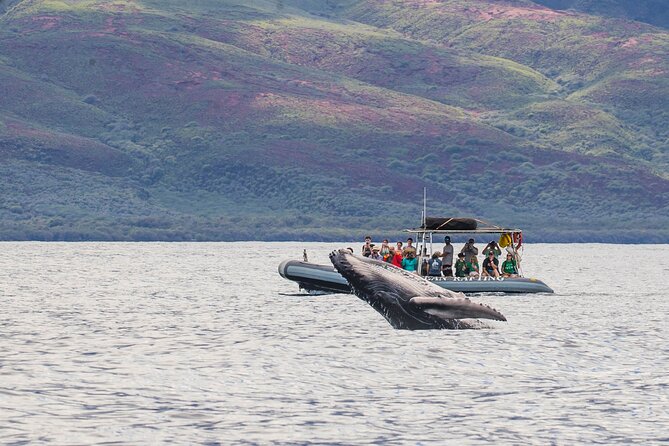
- Eye-level seating on a low raft helps you spot whale action quickly as conditions change
- Hydrophone whale songs are a special extra in whale season (Dec–Apr)
- Up-close encounters aren’t guaranteed since wildlife is wild, but the crew looks hard and stays with activity
- Plan to get wet and bring reef-safe sun protection (no spray sunscreen)
- Boarding is physical and the tour isn’t for pregnant people or those with back/neck injuries
- Max 25 people keeps the trip friendly and makes it easier to see and take photos
Eye-Level Views from a Low-Water Zodiac Raft off Lahaina
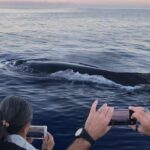
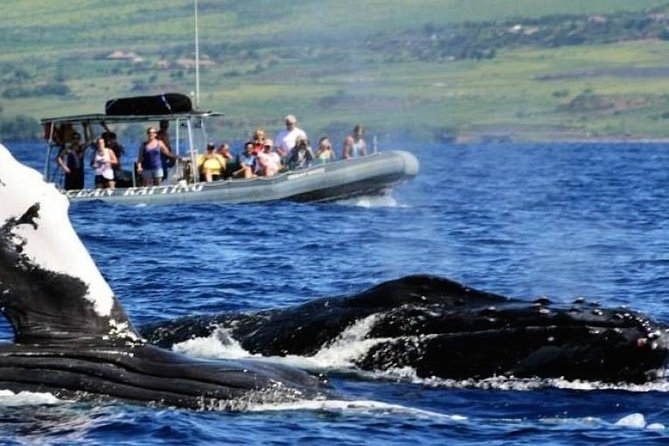
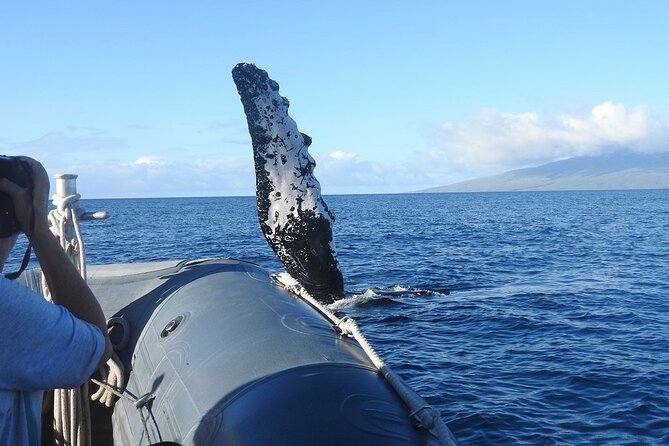
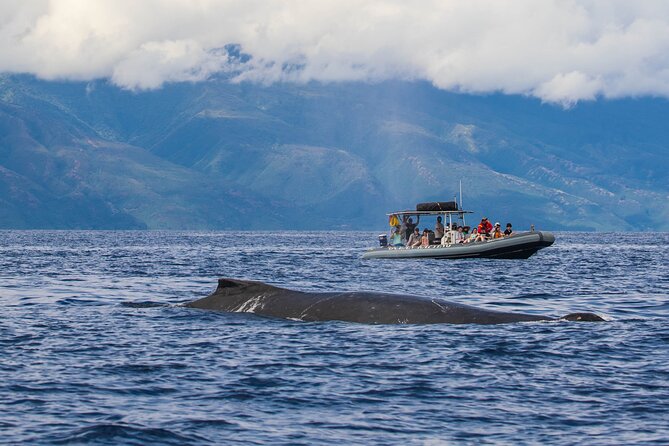
The whole point of this tour is simple: you’re not looking for whales through distance or barriers. You’re riding on a small, low-water zodiac-style raft, which puts your eyes closer to the surface where humpbacks (in season) and dolphins (in summer) actually show themselves.
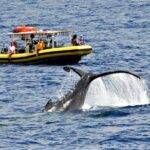
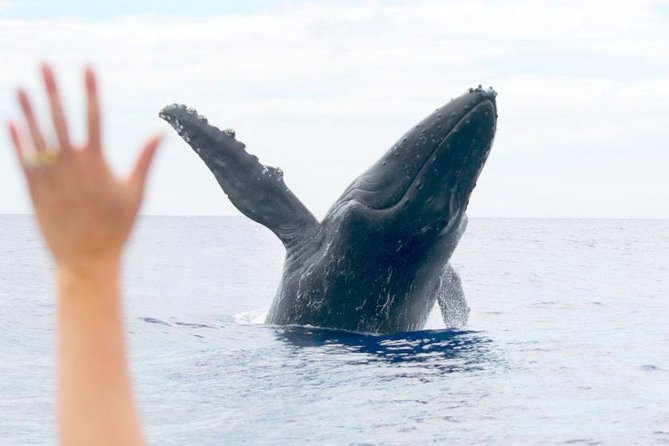
On a higher boat, you can lose the feel of what’s happening—spouts break the surface farther away and the best moments happen faster than you can reposition. Here, the “low and close” setup buys you time. When the captain spots activity, the raft can position so you can see the body language that makes whale watching fun: tail flukes, pectoral fin movement, and the way mothers and calves often stay near each other.
This is also why I like the structure of the tour: it’s not just cruising. When wildlife appears, the raft pauses so you can get your bearings, watch for repeats, and take photos without the whole group constantly shifting.
You can also read our reviews of more whale watching tours in Maui

Whale vs Dolphin Seasons: When to Book What
This tour is seasonal, and that matters for your expectations.
- December to April: you’re doing eye-level whale watching, focused on migrating humpbacks. The tour includes hydrophone listening so you can hear whale songs while you watch for surface activity.
- Summer months (seasonal): the option shifts to dolphin watching and coastal sightseeing. On this version, snacks and beverages are included.
If you’re traveling in whale season, I’d treat the hydrophone as a major part of the value. Hearing whale songs adds a second layer to the experience—especially on days when the best visuals are brief or the whales are farther from the raft’s exact position.
If you’re going in summer, the dolphin/coastal format still keeps the small-boat advantage. You’ll be out looking for marine activity rather than checking a box. Just know you’re trading humpback songs for a different style of viewing.
Marine Naturalist Narration and Hydrophone Whale Songs
One of the best reasons to book a guided raft trip (instead of a generic boat cruise) is context. The marine naturalist narration is there to make your sightings mean something—what you’re seeing, why it’s happening, and how the Hawaiian ecosystem connects to the animals you’re spotting.
Then there’s the hydrophone. A hydrophone is basically an underwater listening system. In whale season, it lets you pick up whale vocalizations while you’re on the water. That’s huge because it turns whale watching from only visual spotting into a full sensory experience.
Even if you’re not the type to study marine biology on vacation, you’ll feel the difference. When the guide links behavior to what you’re hearing, you start noticing patterns: how whales surface, how they move when a group is nearby, and why the crew sometimes stops quickly rather than just speeding through.
What Happens During Your 2.5 Hours from 1223 Front Street
This tour runs for about 2 hours 30 minutes, and it moves on the ocean’s clock, not yours. The schedule is straightforward, but you need to respect timing.
1) Arrive and check in at the Lahaina meeting point
The departure point is 1223 Front St, Lahaina, HI 96761. The tour leaves promptly, and you must arrive 30 minutes before boarding or you can miss the tour.
2) Board the low-water raft
You’ll get life jackets provided. They’re for emergencies, and you’re told they’re not required to be worn during the tour. You should still treat safety seriously, especially because you’re on open water in a small craft.
3) Search for whale or dolphin activity
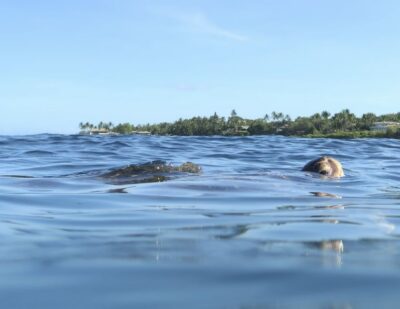
Once you’re out, the goal is active searching. In whale season, you cruise while scanning for migrating humpbacks. In summer, it shifts to dolphins and coastal sights.
4) Stop when there’s action
When whales (or dolphins) show up, the raft stops to give you the best viewing and photo opportunities possible. This is where the “eye-level” design pays off: you can watch surface behavior closely instead of only catching quick glimpses.
5) Return to shore
The trip ends back at the meeting point. Plan to head straight back to your next plan with minimal rushing.
A small heads-up based on real-world conditions: this is a “get ready to be a little damp” outing. Ocean spray and light rain can happen, so bring layers that you don’t mind getting wet.
Small-Group Size, Crew Focus, and Real-World Comfort
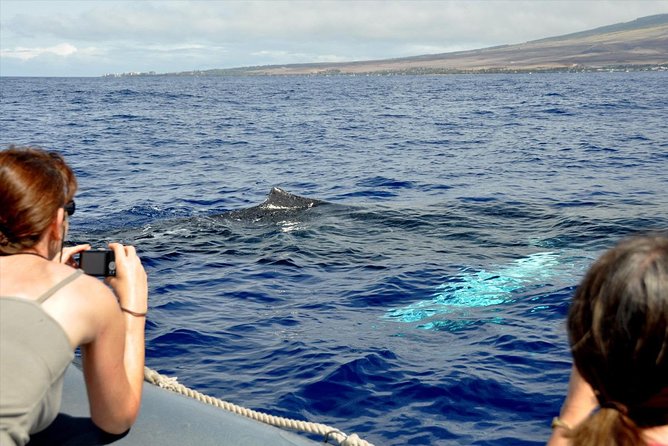
With a maximum of 25 travelers, this doesn’t feel like an assembly line. Smaller groups usually mean better sightlines and less chaos when the captain needs everyone to shift posture for viewing.
I also love that the crew seems built for the job: real-time scanning, quick decisions, and a clear focus on getting good sightings while still keeping distance from wildlife. The tour description emphasizes keeping appropriate space, and the best outcomes come from that steady approach.
Comfort-wise, the vibe is practical. You’re on a low raft, so you’re close to water and movement. Shade can vary on the boat, so sun protection matters even if the sky looks mild when you leave shore.
From a gear-and-body perspective, there’s one more real-world thing: boarding requires some physical mobility because of the boarding location. If you have balance issues or stiff joints, it’s worth thinking twice.
You can also read our reviews of more dolphin watching tours in Maui

What to Pack: Sun, Rain, and Reef-Safe Rules
This tour rewards smart packing. You don’t need to be a marine prepper, but a few items make the difference between comfy and miserable.
Bring:
- Hat and sunglasses
- Reef-safe sunscreen, but specifically rub-on only (no spray sunscreen is permitted)
- A light jacket or layer for cooler spray days
Expect to:
- Get wet: plan for low-to-water splashes and ocean spray
- Use ponchos if needed: the tour notes rain ponchos are available if you’re concerned about getting wet
Footwear tip: this is a wet-boat situation. Slipping around is the last thing you want. Wear shoes that handle wet decks and that are easy to manage if you need to remove them at boarding (some operators may have you do this for the raft area).
Price and Value: Is $85.16 Worth It?
At $85.16 per person for about 2.5 hours, you’re paying for three things you don’t get on cheaper cruises: small-raft viewing, specialized interpretation, and in whale season, the hydrophone.
Here’s how I think about the value:
- Small boat + eye-level viewing can drastically improve your odds of good sightings, because you’re watching the exact “surface theater” where whales and dolphins show their moves.
- Marine naturalist narration turns random spotting into an experience with meaning. It’s not just look-and-go.
- Hydrophone listening is a real differentiator during whale season. Even if your visuals aren’t perfect, the audio piece can still make the outing memorable.
This isn’t a silent, cheap ride. But for the combination of time on the water, guided focus, and the format built for wildlife viewing, it’s reasonable.
One value caution: up-close encounters aren’t guaranteed. This is worth accepting up front. What you are paying for is the setup and effort to find activity—not a promise that a whale will come to you.
Safety and Wildlife Reality (What You Should Know Up Front)
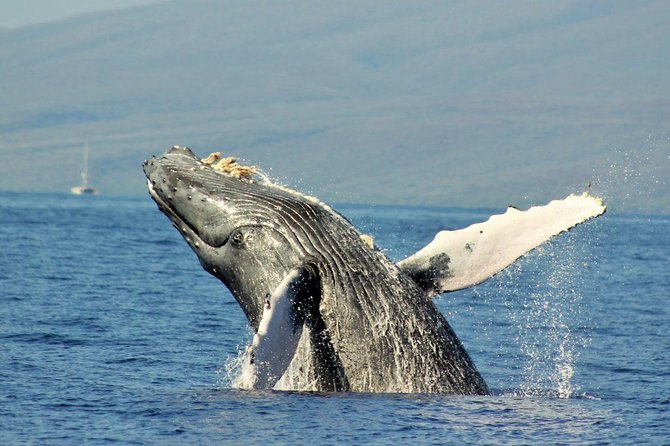
This is a nature-based tour, so you should plan with the correct mindset.
Wildlife reality:
- Encounters are in the wild, so whales or dolphins based on the option selected are not guaranteed.
- The tour notes that up-close wildlife encounters are not guaranteed. You might see lots of action—or you might get a calmer day where sightings are more brief.
Safety and who should avoid it:
- It’s not suitable for pregnant people.
- It’s not suited for people with back/neck injuries.
- No children under 3, and the tour states babies aren’t allowed on the raft.
- Physical mobility is required for boarding due to the boarding location.
The good news: the tour is small and has life jackets available for emergencies, and the crew runs operations efficiently. Your job is to bring the right expectations and show up early enough.
Best for Who: First-Time Whale Watchers, Couples, and Families (With the Right Age)
This is a strong fit if:
- You want eye-level ocean viewing instead of a high-deck cruise
- You like guided explanation while you watch
- You’re going during whale season and you want the hydrophone component
- You prefer a small group over crowded catamarans
It’s a tougher fit if:
- You can’t handle wet spray or light rain
- You need something that’s friendly for strollers or very limited mobility (boarding requires physical mobility)
- You’re pregnant, dealing with back/neck injuries, or traveling with kids under 3
For couples and solo travelers, the small-group format also makes it easy to talk with the crew and adjust to shifting conditions without feeling lost.
Should You Book This Maui Eco-Raft Tour?
I’d book it if you want your Maui marine time to feel direct and hands-on. The low-water raft setup plus naturalist narration is a winning combo, and the hydrophone whale songs in December–April give you a special souvenir that isn’t just photos.
I’d think twice before booking if any part of the safety notes applies to you—pregnancy, back/neck injuries—or if boarding logistics are a problem. And be honest with yourself about getting wet. This is an ocean tour, not a dry observation deck.
If you’re flexible on timing and go in the right season for what you want to see (whales vs dolphins), this is one of the better-value ways to experience Lahaina’s marine life up close—without the chaos of larger boats.
FAQ
Where does this tour depart from in Lahaina?
It starts at 1223 Front St, Lahaina, HI 96761, and ends back at the meeting point.
How long is the Maui Eco-Raft Tour?
It lasts about 2 hours 30 minutes.
Is the tour only for whales?
No. It’s eye-level whale watching from December to April, and it switches to dolphin watching and coastal sightseeing in the summer season.
Can children under 3 join the tour?
No. The tour requires guests to be three years of age or older, and children under 3 aren’t permitted.
Is the tour safe for pregnant people?
The tour states it is not suited for pregnant individuals.
Do you provide snacks or beverages?
On the dolphin tour, snacks and beverages are included. (The materials only specify this inclusion for the dolphin option.)
Do I have to wear a life jacket?
Life jackets are provided, but they are not required to be worn during the tour.
What should I bring for weather and sun?
Plan to get wet. Bring sun protection (hat, sunglasses, reef-safe rub-on sunscreen only, since spray sunscreen isn’t permitted).
Are whale or dolphin sightings guaranteed?
No. While the tour looks for wildlife, the materials say that encounters vary in the wild and that up-close encounters are not guaranteed.
What happens if the weather is poor?
This experience requires good weather. If it’s canceled due to poor conditions, you’ll be offered a different date or a full refund.