REVIEW · MAUI
Whale Watching Maui: 2-Hour Small Group Raft Tour from Lahaina
Book on Viator →Operated by Dive Maui · Bookable on Viator
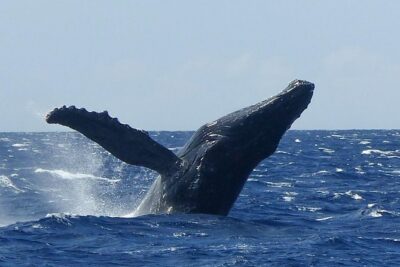
Winter whales, up close on a small raft. I love the small-group inflatable raft setup because it keeps sightlines wide and the crew can move the boat quickly when whales surface. I also love the hydrophone-and-speaker audio, which lets you hear humpback songs while you’re scanning for tails and breaching. One consideration: even on a smaller vessel, you still have to follow the same legal rules for how close boats can approach whales, so super-close viewing isn’t something anyone can promise day-to-day.
This trip is run by crews that get praised for both finding whales and explaining what you’re looking at. On past trips, captains like Will and Joe have worked with naturalists such as Renee or Brian, so you’re not just watching—you’re learning. Weather is part of the game on Maui; they’ll provide rain ponchos when it’s wet, but if conditions are unsafe you may be moved to another date.
In This Review
- Key Highlights Worth Your Time
- Maui Whale Watching From Lahaina: The 2-Hour Raft Game Plan
- The Small Raft Setup: Better Views Without the Chaos
- Hearing Whale Songs With a Hydrophone (Yes, Really)
- What Happens Once You Spot Whales: Watching Without Getting in the Way
- The Crew: Marine Naturalist + Captain Teamwork
- Comfort Details That Actually Help on Maui
- Price and Value: Is $80.60 Worth It?
- Weather Reality Check: When the Sea Says Not Today
- Who This Tour Fits Best (And Who Might Want to Rethink)
- Should You Book This Maui Whale Watching Raft Tour?
- FAQ
- How long is the whale watching tour?
- How much does the tour cost?
- Where is the meeting point in Lahaina?
- How many people are on the tour?
- Is whale song audio included?
- Are rain ponchos provided?
- Is bottled water included?
- Is alcohol allowed on the raft?
- Are there any age or pregnancy restrictions?
- What happens if the tour can’t run due to weather?
Key Highlights Worth Your Time
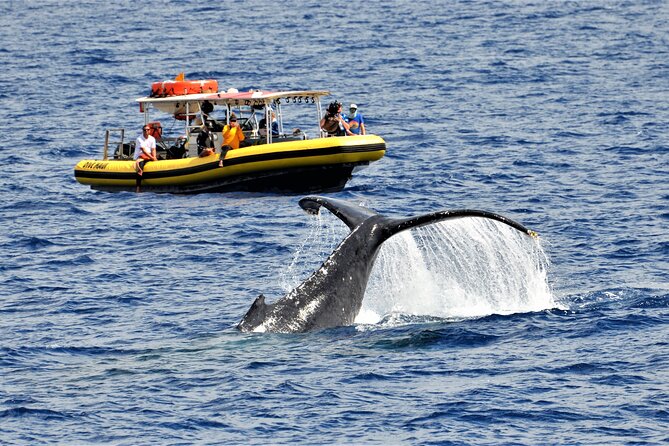
- Small-group (max 20) raft for better scanning and easier repositioning
- Hydrophone + speakers so you can listen to whale songs out on the water
- Whale guarantee: see humpbacks or go again for free
- Bottled/filtered water + reef-safe sunscreen to keep you comfortable
- Rain ponchos provided on rainy days, so you don’t have to plan around it
- Maui Nui whale sanctuary focus for mating and birthing season energy
Maui Whale Watching From Lahaina: The 2-Hour Raft Game Plan
This is a simple idea done well: hop on a custom-built inflatable raft in Lahaina and head out toward Maui Nui, a protected zone where humpback whales arrive to mate and give birth. The tour is about two hours, so it’s long enough to get into the whale-search rhythm, but short enough that you can still enjoy the rest of your day on Maui.
Your experience starts at Dive Maui / Hawaiian Rafting Adventures at 1223 Front St, Lahaina. Check in, get your water and gear, then meet your captain and Marine Naturalist. After that, it’s out to open water where the crew’s job is to spot whales early and keep you in a good viewing window.
You can also read our reviews of more whale watching tours in Maui


The Small Raft Setup: Better Views Without the Chaos
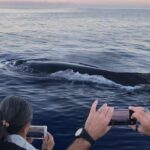
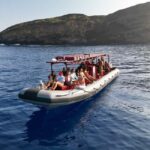
The headline for this tour is the raft size. With a maximum of 20 travelers, it’s built for visibility—people aren’t stuck watching from behind rows of taller decks. On a raft, your vantage point is lower and the deck area feels less crowded, which helps when whales pop up at different angles.
There’s also a practical bonus: a smaller vessel can reposition more naturally while still staying within safety rules and wildlife protection guidelines. That matters because whale sightings often come in bursts—one tail spout, then a pause, then a calf pops up, then something surfaces closer to the surface track. You don’t want to be stuck in the wrong spot when the action starts.
That said, here’s the catch you should keep in mind. Smaller doesn’t automatically mean closer in a way you’ll feel is “unfair” compared to bigger boats. Legal distance rules still apply, and humpbacks decide how interactive they are. So think of the raft as a better viewing platform, not a magic force field that guarantees breaching at arm’s length.
Hearing Whale Songs With a Hydrophone (Yes, Really)
One of the most memorable parts of this tour is the sound. You’ll have a hydrophone and speakers onboard, designed to let you listen to humpback vocalizations while you’re watching. It turns the trip from only visual into something more dimensional.
When whales are close enough to be “present” in the water volume around you, that audio becomes more than a fun gadget. It helps you understand why humpbacks are doing what they’re doing—mating calls, long-range songs, and the general sense that there’s a whole communication system happening beneath you.
If you’re the type who loves wildlife experiences where you can actually learn something in real time, this is a strong feature. It also gives you a reason to keep listening and scanning at the same time, instead of only staring at the horizon.
What Happens Once You Spot Whales: Watching Without Getting in the Way
On this kind of humpback tour, the best moments usually follow a pattern: the crew finds active whales, then they work the raft to keep you watching while staying respectful of the animals’ space. The goal is clear—get good angles as whales surface, and don’t crowd or block other viewpoints.
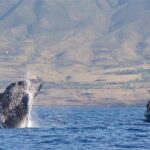
This tour is centered on the Maui Nui sanctuary, so you’re likely to encounter the season’s usual storylines: mothers with calves, escort males, and the kinds of surface behaviors that make you look twice when a baby is involved. Many whale watchers love the mom-and-calf moments because you can see the rhythm of the interaction—calves stay close, adults adjust their position, and the whole group moves as one unit.
If a whale swims under the boat, or you see a lot of activity in a short span, that’s often when the raft setup feels best. Because you’re on a smaller platform with wide sightlines, you can catch movement across more directions without craning your neck around strangers.
The Crew: Marine Naturalist + Captain Teamwork
This tour leans hard on the human side. You’ll go out with an experienced captain and a Marine Naturalist who’s there to explain what you’re seeing. Past trips highlighted naturalists like Renee and Brian, and captains like Joe and Will, with lots of praise for answering questions and sharing quick, useful context.
Here’s why that matters: whale watching isn’t just spotting something big. It’s learning the difference between a spout, a tail flick, and a surface event that tells you where the whale is headed next. A good naturalist helps you connect the dots fast, so the ocean goes from random waves to a moving map.
The crew’s job also includes repositioning. Captains are managing the raft, staying safe, and keeping you in a viewing-friendly lane while the naturalist adds context. When both parts work, you get those “two hours flew by” moments—because you’re paying attention the whole time.
A few more Maui tours and experiences worth a look




Comfort Details That Actually Help on Maui
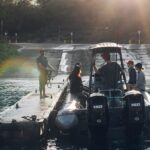
Two hours on the water can be surprisingly pleasant—or you can feel it when wind shifts. This operator builds in small comfort wins:
- Bottled water is included, plus filtered water and paper cups meant to cut down on plastic waste.
- Reef-safe sunscreen is included, which is useful if you forget to pack yours.
- Rain ponchos are provided when it’s rainy, so wet weather doesn’t automatically turn your trip into misery.
- The raft is custom-built for 360-degree views, meaning you’re not trapped facing only one direction.
One extra point: this tour is family-friendly, but there are restrictions. There’s no children under age 3, and the tour does not accommodate pregnant persons. Service animals are allowed.
If you’re planning your day around the tour, this kind of comfort package makes it easier to travel light and show up ready.
Price and Value: Is $80.60 Worth It?
At $80.60 per person for about two hours, this isn’t a budget activity. So the real question is value: what do you get for that money that you can’t easily DIY from the beach?
You’re paying for three things:
- Time on the water in the right area (mating/birthing season in Maui Nui)
- A small group experience that keeps eyes on whales instead of dealing with crowding
- Tools for learning and connection, especially the hydrophone setup and the Marine Naturalist onboard
Add in the whale guarantee. The promise is straightforward: you see humpbacks, or you get to go again for free. Guarantees are always “marketing until tested,” but here it’s paired with an operator that focuses on finding active whales rather than just drifting.
One more value note: this tour is booked about 26 days in advance on average, which usually means you should lock it in earlier than your last-minute Maui schedule if you want a specific date.
Weather Reality Check: When the Sea Says Not Today
Maui whale season is real, but so is ocean weather. This experience requires good weather. If it’s canceled due to poor conditions, you’ll be offered a different date or a full refund.
Even when you’re going on a raft tour, Mother Nature runs the show. Wind and waves can cut visibility or make the water unsafe. The good part is that the company provides rain ponchos for wet days, so mild weather won’t automatically ruin the day.
My practical tip: if you’re choosing between multiple activities that day, keep flexibility. A whale tour is often the kind of plan that benefits from a little slack in your itinerary.
Who This Tour Fits Best (And Who Might Want to Rethink)
This is a strong fit if you want:
- a short, focused whale outing (two hours)
- better sightlines than big-boat setups
- guided learning from a Marine Naturalist
- the chance to hear whale songs through the hydrophone
It’s also a great option for families who can handle being on the water and staying engaged. The age rule (no kids under 3) is the main gate.
If you’re expecting a guaranteed “close encounter” where whales break in front of you every time, adjust your expectations. Even the best operators can’t control whale behavior, and legal distance rules still apply. The guarantee is about seeing whales, not about getting the exact same level of surface action every trip.
Should You Book This Maui Whale Watching Raft Tour?
I’d book it if you want a well-rounded whale experience that mixes smart logistics with real learning. The small-group raft format makes the viewing feel less crowded, and the hydrophone audio is the kind of detail that turns a good trip into a standout one.
I’d think twice only if you’re the type who needs the experience to feel like a premium “we’re closer than everyone else” contest. Even on smaller boats, you’re still playing by the rules, and humpbacks decide their own level of engagement.
If you’re flexible with weather and your goal is to see humpbacks in the Maui Nui sanctuary with expert guidance, this tour looks like a solid bet.
FAQ
How long is the whale watching tour?
It runs about 2 hours.
How much does the tour cost?
The price is $80.60 per person.
Where is the meeting point in Lahaina?
You’ll start at Dive Maui / Hawaiian Rafting Adventures, 1223 Front St, Lahaina, HI 96761, USA.
How many people are on the tour?
The maximum is 20 travelers.
Is whale song audio included?
Yes. You get a hydrophone and speaker system to listen to whale songs.
Are rain ponchos provided?
Yes, rain ponchos are provided on rainy days.
Is bottled water included?
Yes, bottled water is included. Filtered water and paper cups are also part of the setup.
Is alcohol allowed on the raft?
Alcohol is BYO, but no glass is allowed.
Are there any age or pregnancy restrictions?
Children under age 3 aren’t allowed, and the tour does not allow pregnant persons.
What happens if the tour can’t run due to weather?
If it’s canceled due to poor weather, you’ll be offered a different date or a full refund.