REVIEW · MAUI
Maui Ocean Center All Day Admission Ticket
Book on Viator →Operated by Maui Ocean Center · Bookable on Viator
Maui’s best rainy-day plan comes with real tide pools. A full-day admission ticket lets you wander through Hawaii-native marine life at your own pace, from tanks and tunnels to hands-on areas and daily presentations. The highlight for many people is the Humpback Whales of Hawai‘i 3D Sphere, a face-to-whale experience that adds real wow without needing a boat.
I also like how the center mixes serious education with practical, do-it-yourself moments. You can watch naturalists guide talks at places like Turtle Lagoon, Open Ocean areas, and the Living Reef, plus you get tactile time in touch zones designed for close observation.
One thing to consider: this is not a huge, multi-day aquarium. If you’re expecting a massive, crowd-bending facility, you might feel like the visit finishes fast, and the whale sphere has age limits (children under 5 can’t participate).
In This Review
- Key takeaways before you go
- Maui Ocean Center: what your all-day ticket really buys
- The easy flow: how to pace your visit from 9am to 4pm
- The Humpback Whales of Hawai‘i 3D Sphere: the star attraction
- Open Ocean and the 750,000-gallon moment
- Living Reef, Turtle Lagoon, and the reef-focused storytelling
- Touch pools and hands-on learning without the chaos
- Cultural wood carving demo and other added texture
- Food and shopping at the Aquarium: Seascape and Ocean Treasures
- How long should you plan for: 2 hours vs a slow day
- Price and value: is $55.44 worth it?
- Who should book this all-day aquarium ticket?
- Should you book the Maui Ocean Center all-day admission ticket?
- FAQ
- What time does the Maui Ocean Center ticket let me enter?
- How long should I plan to spend inside?
- What’s included with the all-day admission?
- Is parking included?
- Is food included?
- Can I cancel for a refund?
Key takeaways before you go
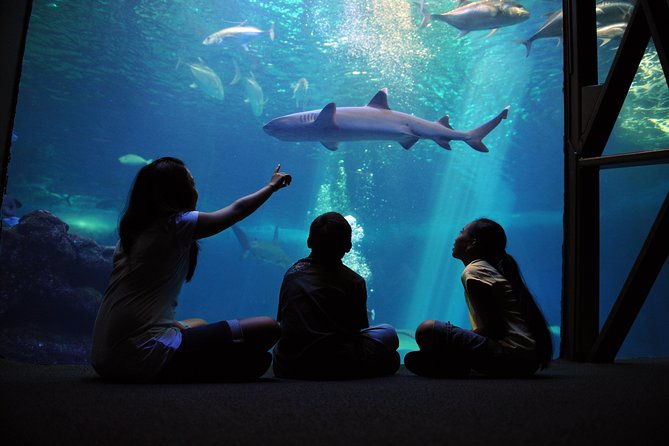
- All-day access from 9am to 5pm with last entry at 4pm, so you can match your pace
- 60+ exhibits featuring Hawaii’s native marine life, many species found nowhere else
- 750,000-gallon Open Ocean exhibit, the big sight-and-sound moment
- Humpback Whales of Hawai‘i 3D Sphere, the most repeated must-see
- Daily Marine Naturalist presentations at Turtle Lagoon, Open Ocean, Discovery Pool, Living Reef, and Nursery Bay
- Touch pools and cultural activities, including a wood carving demonstration
Maui Ocean Center: what your all-day ticket really buys
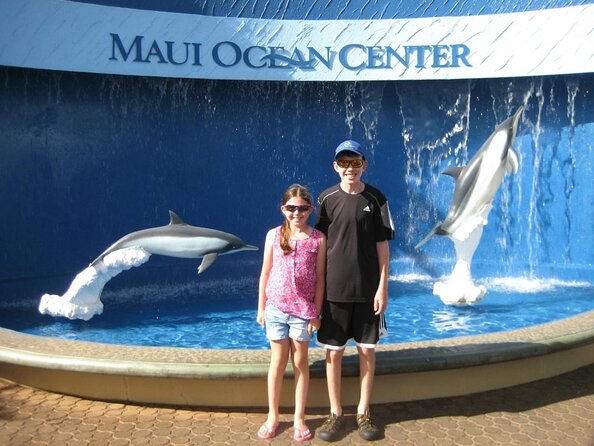
This is an all-day admission ticket to Maui Ocean Center, the Aquarium of Hawai‘i, based at 192 Maalaea Rd in Wailuku (start at 9:00am, with last entry at 4:00pm). You use a mobile ticket, walk the grounds at your own speed, and choose which daily shows to catch—no timed group march, no pressure to “do everything.”
For the money, the best value is that you’re not limited to one or two exhibits. You’re getting a full pass through 60+ interactive displays plus a packed daily schedule of talks (listed as 20 daily presentations). If you like reading small labels, watching animals calmly, and returning to the same areas for different angles, you’ll stretch it into a longer visit.
The center also leans into a simple idea that makes it feel more “Maui” than generic aquarium stops: the animals are native to Hawai‘i’s shores. That matters. It turns “cool fish” into a local conversation about reefs, restoration, and why these species live where they live.
A few more Maui tours and experiences worth a look

The easy flow: how to pace your visit from 9am to 4pm
Plan for about 2 hours if you mainly hit the big exhibits and shows. Many people treat it as a couple-hour block and feel satisfied. If you’re a slower reader, love photo stops, or want hands-on areas, you’ll likely find 4 to 5 hours disappears faster than you expect.
I recommend starting with the biggest draw first—especially the 3D show—then working your way through the tanks and touch areas. That way, you’re not stuck hunting for it when your energy is fading.
A practical tip: check the presentation times you care about and build your loop around them. For example, Turtle Lagoon has Marine Naturalist presentations at 10:30am and 2:30pm, and Shark Nursery Bay has them at 11:45am and 1:45pm. Those slots can help you shape your route so you’re not bouncing randomly.
And yes, it can get busy around popular show times, so arriving earlier in the day gives you more calm breathing room.
The Humpback Whales of Hawai‘i 3D Sphere: the star attraction
If you’re choosing just one “wow” moment, make it the Humpback Whales of Hawai‘i 3D Sphere. The experience is designed as a virtual whale encounter, and it’s repeatedly the highlight people talk about because it’s dramatic without requiring an ocean trip.
In a real-world sense, this show helps if you’re traveling with kids or anyone who doesn’t want a long day outdoors. You still get the emotional hit of being close to humpbacks, but you’re indoors, on Maui’s timetable, with a predictable session.
One caution: children under 5 are not permitted to participate in the whale sphere (that age rule comes up in real visitor feedback). If you’re traveling with very young kids, it’s worth planning alternative aquarium highlights so the day doesn’t feel centered on one show they can’t access.
Open Ocean and the 750,000-gallon moment
The Open Ocean exhibit is the aquarium’s “main stage.” You’ll encounter marine life in a 750,000-gallon space that’s built to make you feel like you’re watching animals move through a larger habitat, not just in a small tank.
This is where the center’s scale really shows. Even if you don’t know the names of every fish, the exhibit helps you notice behavior: how animals cruise, pause, and respond to the environment.
I like this part for first-time visitors because it gives you a baseline. After you see the Open Ocean area, the smaller exhibits feel more connected. You’ll start noticing details like different body shapes, movement styles, and how each animal fits into the reef story.
Living Reef, Turtle Lagoon, and the reef-focused storytelling
If Open Ocean is your big stage, the reef exhibits are your slow, “look closer” section. The Living Coral Reef exhibit is a major draw, described as one of the world’s largest displays of live Pacific corals. That means your visit isn’t only about fish—it’s also about the living structure that supports them.
Turtle Lagoon is another must-see. It’s also tied to Marine Naturalist presentations, with daily talk times at 10:30am and 2:30pm. Even if you don’t catch every word, these talks help you understand what you’re looking at and why it matters to Hawai‘i’s ocean life.
What I like about reef-focused spaces is that they turn a pretty display into a conservation conversation. You start to see the ecosystem as a system, not a collection of separate tanks.
A few more Maui tours and experiences worth a look

Touch pools and hands-on learning without the chaos
Maui Ocean Center gives you real hands-on learning through the Tide Pool Tactile Discovery area. It’s set up for close encounters with two-finger touch, which is a nice compromise: you get contact without feeling like it’s messy, unsafe, or overly rushed.
There’s also a Shark Nursery Bay, supported by daily presentations at 11:45am and 1:45pm. This is another place where the center’s “learn while you watch” approach shines. You’re not just staring at animals—you’re getting context from naturalists who can answer questions about what you see.
Also, the center includes a Discovery Pool and Nursery Bay spaces, with trained ocean naturalists presenting at multiple exhibits throughout the day. That gives you a good rhythm: look, learn, watch again.
If you’re traveling with kids, this hands-on angle is a big win because it gives them something active to do besides walk and point.
Cultural wood carving demo and other added texture
Not every aquarium feels like Maui. This one adds cultural context through activities like a cultural wood carving demonstration. It’s simple, but it changes the flavor of your day from purely marine-science to something more island-shaped.
I appreciate that the cultural activity isn’t trying too hard. It’s there to give you a local moment while you’re already in the middle of an ocean-focused setting.
That helps if you’re going as a couple or family: one person can enjoy the animal tanks, the other can enjoy the cultural side, and you can still regroup without fights over which room to enter next.
Food and shopping at the Aquarium: Seascape and Ocean Treasures
A big practical bonus: you can eat and shop on site. The Seascape Restaurant is ocean-view dining and described as Ocean-Friendly certified, with fresh catch specials and island-inspired cuisine. I like having this option because you’re not forced into the car mid-visit when you finally hit a good animal viewing moment.
You’ll also find world-class shopping at the Maui Ocean Treasures gift shop. Even if you’re not a souvenir person, it’s a convenient place to browse after you’ve worked up an appetite—or while your group decompresses between exhibits and show times.
Food and drinks aren’t included in the ticket, so factor that into your day budget. Still, the convenience can save you time, and time is money on Maui.
How long should you plan for: 2 hours vs a slow day
The ticket says an approximate duration of about 2 hours, and that’s a fair estimate if your goal is the key highlights. You can see a lot without overthinking it: major exhibits, the show, a couple of touch points, and a few photo stops.
But here’s the truth: the aquarium rewards a slow pace. Some visitors end up staying 4 to 5 hours, especially if they read signage carefully, want multiple viewings of shark-related areas, or just enjoy standing in front of reef tanks longer than planned.
If you want my practical approach, I’d plan a comfortable 3 to 4 hours on the first half of your Maui day. That gives you room for naturalist talks and a relaxed route, without feeling like you’re racing the clock.
Price and value: is $55.44 worth it?
At $55.44 per person, this isn’t a cheap impulse buy. But it’s also not priced like a premium “one and done” attraction. You’re paying for a full-day admission window (9am to 5pm, last entry at 4pm) plus major included experiences like the Humpback Whales of Hawai‘i 3D Sphere and multiple named exhibit areas with daily presentations.
So the value depends on your style:
- If you like education, animal observation, and hands-on moments, it can feel worth it fast.
- If you’re looking for a giant aquarium with endless rooms, you might feel the time is shorter than you expected.
There are mixed reviews on pricing fairness. Some people felt it was a great learning day; others felt the aquarium is compact compared with bigger mainland facilities they’ve seen. My advice: treat it as a focused Maui ocean stop, not a substitute for the largest aquariums in the world.
Also remember: parking costs extra. Paid parking is listed at $3 per hour via ParkLinq App or QR upon arrival, and food/drinks cost extra too. Those add-ons can shift the total spend.
Who should book this all-day aquarium ticket?
This fits best if you want:
- a family-friendly Maui plan with clear “kid wins” like sharks, turtles, and touch pools
- a whale highlight without committing to a boat day
- a local-nature aquarium focused on Hawai‘i marine life, not non-native collections
It can be less ideal if:
- you’re expecting a giant facility that takes a full day just wandering
- you’re traveling with very young children who can’t participate in the whale sphere (under 5)
On the accessibility front, there are notes that most exhibits are handicap friendly, but stairwells and protruding rocks around presentation areas can be tricky. If you need step-free routes, take it slow and consider asking staff on arrival what paths work best for your mobility needs.
And one more small reality check: parking is paid, and the center is near public transportation, but it’s still a place where having your own way to get there helps you stay flexible.
Should you book the Maui Ocean Center all-day admission ticket?
I’d book it if you want a calm, educational Maui ocean day with multiple “hooks” to keep everyone interested: the 3D humpback experience, Open Ocean scale, reef-focused exhibits, and naturalist talks scheduled through the day.
Skip it or be cautious if you’re price-sensitive and only interested in one or two attractions. At this size, it works best when you actually plan to slow down, watch, and use the included presentations rather than rushing through.
If you’re an ocean lover, bring your curiosity. The center’s strongest moments are the ones where you look a little longer, then learn what you’re seeing—and why Hawai‘i’s waters are worth protecting.
FAQ
What time does the Maui Ocean Center ticket let me enter?
You can visit anytime between 9:00am and 5:00pm, and the last chance for entry is 4:00pm.
How long should I plan to spend inside?
An approximate visit duration is about 2 hours, but you may want more time if you plan to watch presentations and linger in exhibits.
What’s included with the all-day admission?
The ticket includes all-day access plus featured experiences and areas such as the Humpback Whales of Hawai‘i 3D Sphere, the Living Coral Reef exhibit, Turtle Lagoon and its naturalist presentations, Shark Nursery Bay and its naturalist presentations, and the Tide Pool Tactile Discovery, among other included exhibit access.
Is parking included?
No. Paid parking is $3 per hour and is handled via the ParkLinq App or QR code upon arrival.
Is food included?
No. Food and drinks are not included in the ticket. There is an on-site restaurant option at Seascape Restaurant if you want to eat there.
Can I cancel for a refund?
Yes. Free cancellation is available if you cancel at least 24 hours before the experience starts for a full refund. If you cancel less than 24 hours before, the payment isn’t refunded.