REVIEW · MAUI
Semi-Private Surf Lesson – 3 Students 1 Instructor
Book on Viator →Operated by Maui Waveriders Lahaina · Bookable on Viator
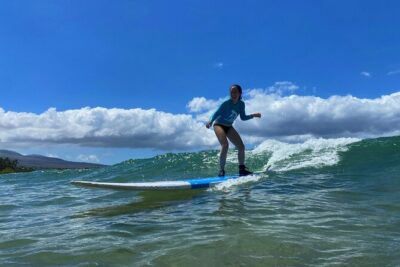
If you can stand on sand, you can learn to surf. This semi-private lesson in Lahaina pairs simple coaching with real time on the water at the Breakwall. You’ll practice first on land, then paddle out so you can feel how Maui waves actually behave.
What I like most is the setup: you start with ocean safety and surf technique practice before you ever try to catch a wave. The second big win is the small group feel—listed as 3 students per instructor and capped at six—so you get enough attention to move from nervous paddling to standing up.
One thing to think about is timing: the whole session is about 1 hour 30 minutes, so the goal is solid fundamentals and some wave rides, not a full makeover into an advanced surfer. If you want photos, plan on spending extra for that add-on.
In This Review
- Key Highlights You’ll Care About
- Lahaina Breakwall: Why This Lesson Works for First-Time Surfers
- What You Do First: Safety Talk and Surf Technique on Land
- The Walk to the Water and the First Paddle: Getting Your Bearings
- Catching Waves Without Guesswork: How You Learn to Pop Up
- Gear, Sun Protection, and What to Bring
- Group Size and the Semi-Private Advantage (3 Students, Max 6)
- Instruction Style: Clear Coaching, Firm When Needed, Patient Always
- Photos During Your Session: Great Memories With an Added Cost
- Price and Value: Does $109 Make Sense for Maui Surf?
- Getting There: Meeting Point and How It Fits Your West Maui Day
- Who Should Book This Surf Lesson (And Who Might Want Another Option)
- Should You Book Maui Waveriders Lahaina Semi-Private Lesson?
- FAQ
- How long is the semi-private surf lesson in Lahaina?
- Where does the lesson take place?
- What group size should I expect?
- Is this lesson for beginners?
- What should I bring to the lesson?
- Is the activity private for my group?
- How do I receive my ticket?
- Is the meeting point easy to reach by public transportation?
- Is there a photographer during the session?
- Is free cancellation available?
Key Highlights You’ll Care About
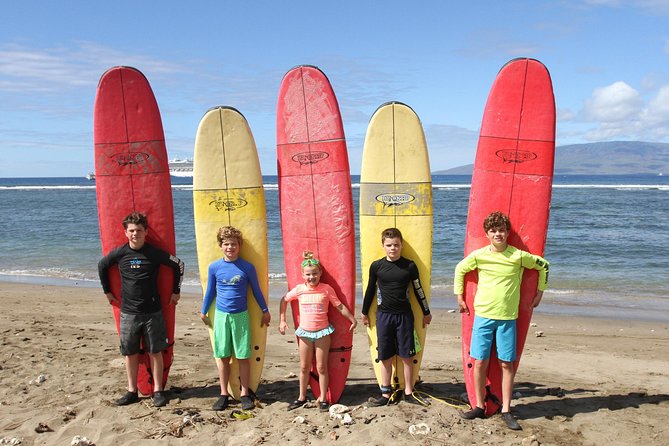
- Small-group coaching with a semi-private structure (3:1) and a max of six in the lesson
- Lahaina Breakwall wave time after land practice so you can match technique to real conditions
- Sand + technique groundwork that helps your pop-up feel less random
- Safety-first instruction focused on currents, wave reading, and smart positioning
- Optional pro photos available during the session for a memory upgrade
Lahaina Breakwall: Why This Lesson Works for First-Time Surfers
Lahaina is one of the easier places on Maui to wrap your head around surfing because the lesson route is built around learning the basics, not fighting mystery. You’ll paddle out to the Breakwall in Lahaina to get a feel for the waves, then pop up on a surfboard when it’s the right moment.
This matters because beginners usually fail for one of two reasons: they don’t understand where to be, or they don’t yet have a repeatable way to get up. This lesson tackles both. First you train the movements on land, then you use those movements immediately on the water.
Also, this is aimed at beginners and intermediate surfers, so you’re not stuck in a group where only one person is getting real instruction. If you’re brand-new, you get the basics. If you’ve ridden once or twice, you can still get clearer coaching on how to read waves and improve your technique.
You can also read our reviews of more private tours in Maui



What You Do First: Safety Talk and Surf Technique on Land
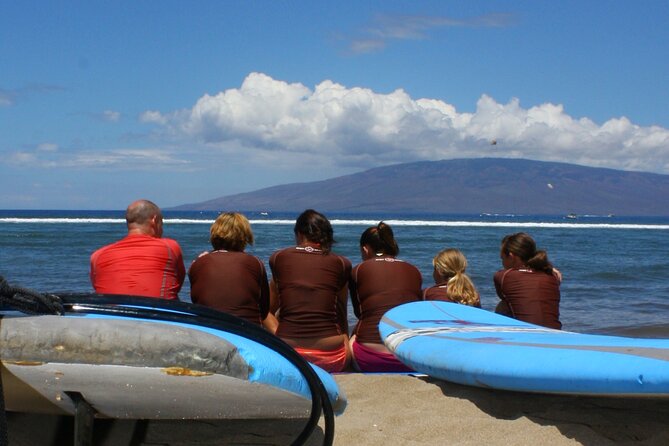
You start on shore with two things: ocean safety and surf technique practice. Before you’re in the water, your instructor sets expectations and runs through the surf basics step-by-step. Then you practice the mechanics on land so your first attempts aren’t completely blind.
Expect this land portion to feel practical. It’s the moment where you learn what to do with your body position, how to handle the board, and how to avoid common mistakes that waste energy. Many first-timers show up thinking the hard part is balance. The truth is balance becomes easier once you understand timing.
The lesson also includes a sand lesson, which is exactly what it sounds like: you get repetition on the board and movements in a safer environment. That sand time is huge for confidence because you can make mistakes and adjust without the stress of waves pushing you around.
The Walk to the Water and the First Paddle: Getting Your Bearings
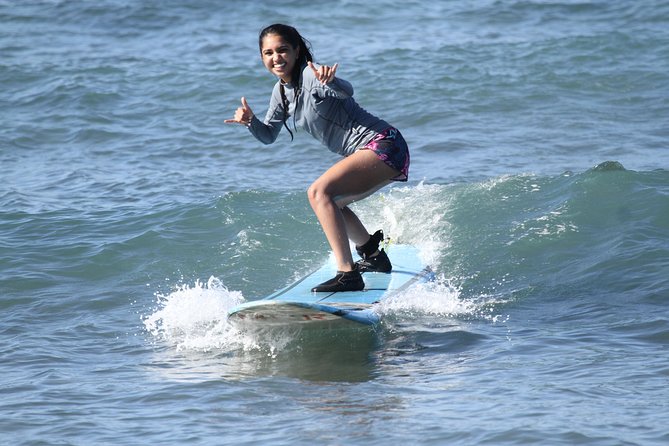
After your land practice, you head to the water and start building wave awareness right away. The lesson includes a real paddle out toward the Breakwall, so you can feel the conditions instead of guessing.
This part is more than a transfer from shore to sea. It’s where you learn how waves arrive, how sets form, and how the ocean affects your speed and board angle. If currents are working that day, you’ll feel it immediately. The good news is that instruction stays safety-focused, so you’re not just tossed into the deep end and hoped-for.
One small reality check: the lesson area can feel busy because it’s a popular surfing zone with other instruction happening around you. It doesn’t ruin the day, but it’s smart to arrive with a calm mindset and plan to move through a bit of shared space.
Catching Waves Without Guesswork: How You Learn to Pop Up
Once you’re comfortable on your boards, the lesson shifts into catching waves. The whole flow is designed to keep you moving toward actual stands and rides. You paddle when it makes sense, aim your board better, and practice popping up as waves let you.
Here’s what makes this approach work for most people: you’re not learning by theory while you’re already tired and cold. You’re learning by doing, in short, coached attempts. Then you get quick corrections and try again.
You’ll likely hear instruction from coaches known for patience and clear cues. Names that show up frequently include Kahala, Fred, Jake, Trin/Trinity, Waio, and Waiola. Across those different instructors, a common theme is simple: keep you safe, keep you trying, and make progress feel possible.
That’s especially important in surf lessons, because the first time you wipe out, you need reassurance that it’s normal. When the coaching tone is steady and encouraging, you keep going long enough to have that first real success moment.
Gear, Sun Protection, and What to Bring
You’ll want to take the sun seriously. The lesson specifically advises bringing a swim shirt for sun protection and rubbing on the surfboard. That’s practical advice for Maui, where strong light and board contact can turn a beginner session into a painful one.
In addition to that, some people report getting surf attire like a shirt and shoes provided on site. Since the only guaranteed instruction from the lesson info is to bring a swim shirt, I’d still pack one so you’re covered either way.
Beyond clothing, think about how you handle getting ready quickly. You’re on a schedule and you want your body in surf-mode: comfortable swimwear, your swim shirt, and any simple comfort items you might need for the short wait time between attempts.
A few more Maui tours and experiences worth a look





Group Size and the Semi-Private Advantage (3 Students, Max 6)
This is where you get value beyond just paying for a surfboard and standing around. The booking is described as semi-private with 3 students per instructor, and the operator also notes groups are limited to six for a more personalized experience.
What that means for you in real life:
- You’re more likely to get individual corrections instead of generic pointers.
- You spend less time waiting for your turn.
- You can progress faster because coaching happens in smaller bursts.
Even if you end up toward the higher end of the group cap, the lesson structure still supports a small-group rhythm. That matters because surfing is not a passive activity. The ocean keeps moving, so you need quick feedback while the moment is still fresh.
Also, this is listed as a private tour/activity where only your group participates. So you’re not mixed with unrelated groups in the same coaching pool. You’ll be learning with the people you booked with.
Instruction Style: Clear Coaching, Firm When Needed, Patient Always
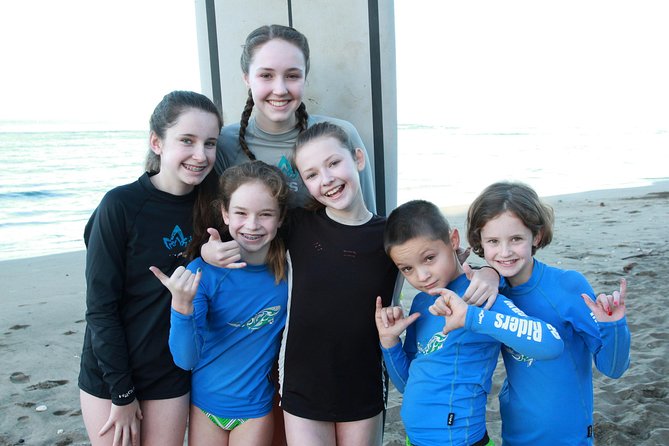
Surf lessons vary a lot. Some instructors teach like you’re in a classroom. Some teach like you’re in a sports camp. This experience aims for a blend: structured safety and technique, plus a coaching style that pushes you without being harsh.
In the people I’m seeing named, there’s a consistent pattern: instructors are patient, and they’re willing to be firm about safety and positioning while still keeping the mood upbeat. That combination is a big deal. A firm instructor helps you avoid risky moves. A patient one keeps you from freezing the second the waves get bigger.
If you’re nervous, that’s the exact moment to trust the process. Your goal isn’t perfection on wave one. Your goal is learning a repeatable method: where to place your feet, how to manage the board, and how to time your pop-up.
Photos During Your Session: Great Memories With an Added Cost
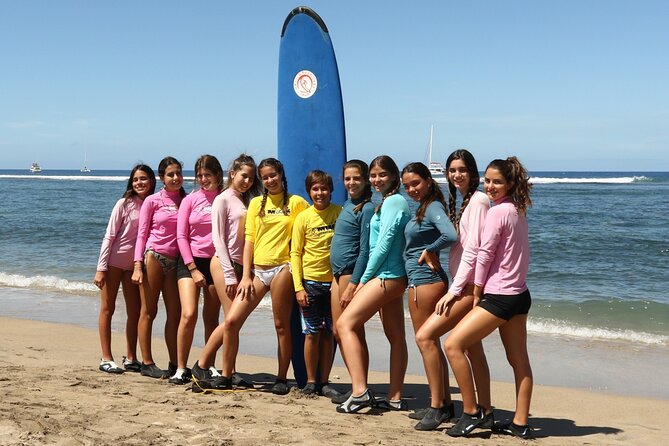
If you want proof you actually did it, a photographer is available during your session. That’s a smart option for two reasons.
First, when you’re learning, you’re usually not thinking about capturing good shots. Second, getting photos taken by someone who’s set up for action can be far better than trying to nail timing with your own camera.
Just treat it like a planned add-on. People have described the photo option as reasonably priced, and at least a few say it’s worth it for the memories. So if you’re budgeting your Maui day, this is the line item to account for if you care about photos.
Price and Value: Does $109 Make Sense for Maui Surf?
At $109 per person for about 1 hour 30 minutes, you’re paying for more than basic access. You’re paying for:
- instruction on ocean safety and surf technique,
- guided wave practice at the Breakwall,
- a small-group ratio that makes coaching practical,
- and the support tools that keep you comfortable in the process.
Surfing on Maui can be expensive if you pay for a big group lesson with little feedback. This one leans toward the middle: not a lone private instructor, but small enough that you’re not lost in the shuffle.
Booking patterns suggest it fills up fast—on average about 28 days in advance—so if you’re set on a specific day, you’ll want to lock it in early.
Getting There: Meeting Point and How It Fits Your West Maui Day
The lesson starts and ends back at the meeting point. The start location is listed as QCW7+M5X, Waikapu, HI 96793, USA. It’s also noted as being near public transportation, which is useful if you’re not trying to drive Maui every day.
In practice, I like meeting points that make the logistics easy. You’ll have a shorter day if you don’t add long transfers. Since this activity is fairly direct—go to the water, learn, come back—it fits well as a half-day adventure.
One travel tip: plan your day around water timing, not just the start time on the calendar. You’ll want a little buffer so you’re not stressed about being late while the ocean is ready to work.
Who Should Book This Surf Lesson (And Who Might Want Another Option)
This lesson is a strong fit if:
- You’re a beginner and want a structured path toward standing up.
- You’re intermediate and want coaching that’s still approachable.
- You prefer small-group attention over large classes.
- You want a fun West Maui activity with a cultural tie-in to surfing and a practical, safety-first teaching style.
It may feel less ideal if:
- You want a super long session where you grind technique for hours.
- You’re expecting advanced wave riding right away.
- You don’t like the idea of paying extra for optional photos.
If your main goal is getting on the board and feeling the basics click, this is exactly the right type of lesson.
Should You Book Maui Waveriders Lahaina Semi-Private Lesson?
Yes, if you want a small-group surf lesson in Lahaina that moves quickly from safety drills to real Breakwall wave attempts. The price feels fair for the coaching time, the small ratio, and the focus on getting you standing up rather than just paddling around.
Book it early if your dates are firm, and bring a swim shirt so you’re comfortable from the first drill to the last ride. If photos matter to you, plan for that extra cost too—and get ready to come home with proof that you tried Maui surf the smart way.
FAQ
How long is the semi-private surf lesson in Lahaina?
It’s approximately 1 hour 30 minutes.
Where does the lesson take place?
The surfing portion is at the Breakwall in Lahaina, West Maui, and the activity starts and ends at the same meeting point.
What group size should I expect?
It’s listed as semi-private with 3 students per instructor, and groups are limited to six for a more personalized experience.
Is this lesson for beginners?
Yes. It’s suitable for beginners and intermediate surfers.
What should I bring to the lesson?
You should bring a swim shirt for sun protection and to help prevent rubbing on the surfboard.
Is the activity private for my group?
Yes. It’s described as a private tour/activity, with only your group participating.
How do I receive my ticket?
You’ll receive a mobile ticket.
Is the meeting point easy to reach by public transportation?
The meeting point is listed as near public transportation.
Is there a photographer during the session?
A photographer is available for photos during your session.
Is free cancellation available?
Yes. You can cancel for a full refund up to 24 hours before the experience start time, and the experience requires good weather, with an offer of a different date or full refund if canceled due to poor weather.