REVIEW · MAUI
Group Surf Lessons from Kaanapali Beach
Book on Viator →Operated by Sea Maui Surf · Bookable on Viator
Waves, boards, and a quick on-ramp to Maui surf. This group lesson at Ka’anapali Beach is built for first-timers who want real coaching in the ocean, not just standing around on shore. You’ll get instruction plus a safety talk before anyone heads in.
I love the small student-to-instructor ratio (max 4 students per instructor). I also love that the price covers the big stuff: surf boards, rash guards, and booties.
One thing to consider: the session is short, and the paddling can feel like the hardest part—so go in with moderate physical fitness and ocean comfort.
In This Review
- Key things that make this lesson work
- Ka’anapali Beach is the right classroom for first waves
- What you do in 90 minutes (and why the timing matters)
- Ocean safety briefing first, so you can relax faster
- Getting the right gear included (board, rash guard, booties)
- The coaching style: small groups, big patience
- What makes Ka’anapali sessions feel easier for beginners
- Fitness, swimming comfort, and motion-sickness reality checks
- Price and value: $120.46 for gear plus coaching in Maui
- Who should book this surf lesson at Sea Maui Surf
- The meeting point: start here and keep it simple
- Should you book this surf lesson in Kaanapali?
- FAQ
- What age is the group surf lesson for?
- How long is the surf lesson?
- What surf gear is included in the price?
- Where do we meet for the lesson?
- How many people are in the group?
- What happens if the experience is canceled due to weather?
Key things that make this lesson work
- Max 4-to-1 coaching means you’re not lost in a crowd.
- Beginner surf instruction + an ocean safety briefing happens before you get in the water.
- Included gear (board, rash guard, booties) removes the most annoying planning.
- Designed for ages 13+ who can swim and feel comfortable in the ocean.
- People often report getting up quickly, especially with patient, hands-on coaching from instructors like Steven, Devin, Danny, TJ, Sky, Steve, John, Joe, and JT.
Ka’anapali Beach is the right classroom for first waves
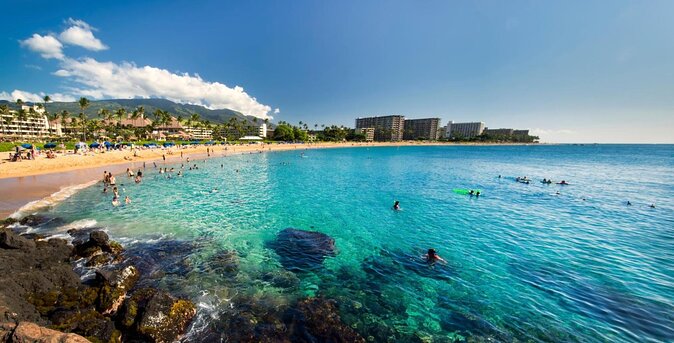
This lesson runs out of Ka’anapali Beach in Lahaina, a popular Maui spot for learning because it’s set up for easy access to the water and a classic beach-surf vibe. For you, that matters. Learning surf is already a lot to juggle, and the last thing you want is a long, complicated commute to the shoreline.
The “where” also connects to the “how.” A surf lesson is part technique, part timing, and part ocean reading. When you’re at a working surf beach with a focused group, you can spend more of your 1 hour 30 minutes doing the things that count.
A few more Maui tours and experiences worth a look


What you do in 90 minutes (and why the timing matters)
This is a group lesson for people 13 years and older. You’ll share instructor(s) with others, with a maximum group size of 4 travelers and a stated coaching ratio of up to four students per instructor. That’s a sweet spot for first-timers because you still get individual attention, but you’re also moving along fast enough to stay engaged.
In practice, you should expect a flow like this:
- An initial check-in at the meeting point area at 2435 Kaanapali Pkwy, Lahaina, HI 96761
- An ocean safety briefing before you head in
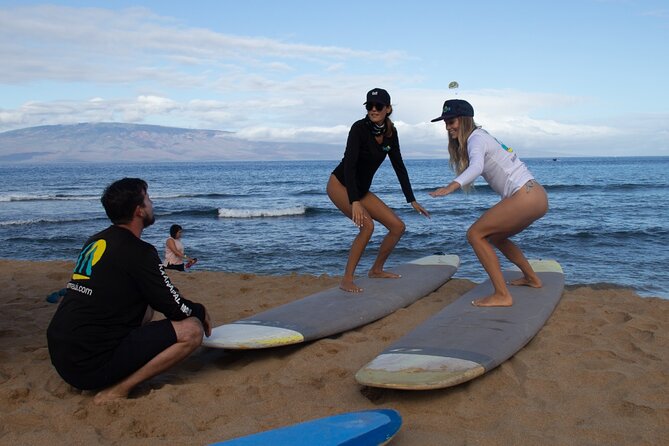
- Beginner instruction focused on how to position yourself, paddle, and stand up when the wave and your timing line up
- Time in the water where you can try multiple runs as the lesson progresses
The short duration is a feature for many people. You get the full experience—coaching, safety, and waves—without it becoming a half-day project. The trade-off is simple: you won’t turn into an expert surfer in one session, even with great coaching.
Ocean safety briefing first, so you can relax faster
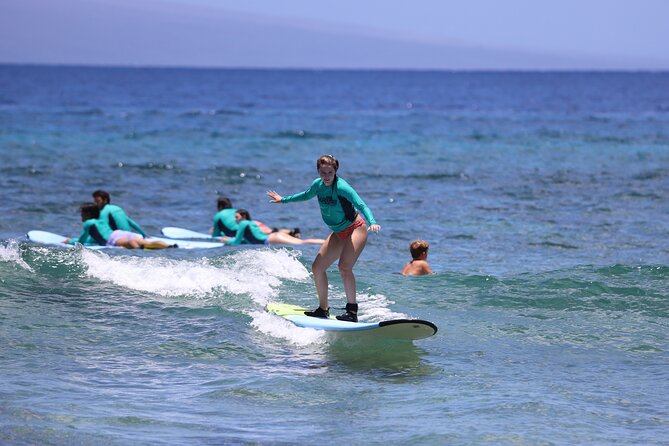
One of the most consistently praised parts of this lesson is how the instruction builds confidence. You’re not just tossed into the water. You get an ocean safety briefing prior to entering so you understand what to watch for and how the staff wants you to handle yourself in real ocean conditions.
Why that matters: surfing isn’t dangerous because everyone is reckless—it’s risky because oceans change. Wind, swell, and currents affect everything. A clear safety talk helps you get the right mindset quickly, so you can focus on learning rather than guessing.
From the teaching style described in the experience, you’ll also see why many people call the coaches patient. This kind of calm, step-by-step approach is a big deal when you’re trying something new and your brain is already busy with balance and timing.
Getting the right gear included (board, rash guard, booties)
The lesson includes:
- Surf boards
- Rash guards
- Booties
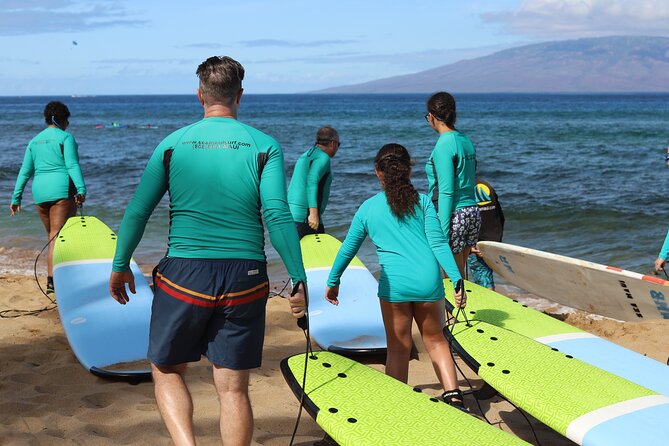
This is good value for you because it removes the usual surf-planning headache. You don’t have to rent or scramble for the right fit. Rash guards and booties also make your whole session more comfortable, especially if the water feels cool or the shoreline is a little rough.
Also, since this is a beginner-focused group, the included equipment is meant to match what first-time surfers actually need. People can struggle less when they’re not also worrying about board choice, wetsuit-type fit, or whether they packed the right footwear.
A small detail from past experiences that’s worth noting: some people also mention extra items like a basket for personal belongings. That’s not listed as a core inclusion, but it shows the staff often plans for the reality that you’ll want a simple place to stash your stuff while you’re in the water.
The coaching style: small groups, big patience
The best-selling point here is the coaching intensity. With up to 4 students per instructor, you’re more likely to get real feedback instead of vague pointers. That’s exactly what you want when your goal is to stand up and ride even a little—because the difference between falling and success is usually one or two corrections.
You’ll see the same pattern in the instructor names people mention: coaches such as Steven, Devin, Tyler, Danny, TJ, Sky, Steve, John, Joe, and JT are credited with patient, practical instruction and helping beginners catch waves. Many people also highlight that staff keep things clear and guide you through each step at a pace that feels workable.
One thing to keep your expectations grounded: one person felt there wasn’t much instruction before getting into the water. That can happen in any group setting if the ocean conditions demand quicker transitions. If you prefer lots of demo time on shore, show up ready to ask questions fast.






What makes Ka’anapali sessions feel easier for beginners
Beginners often think the ocean will be all chaos. It’s not. It’s waves and wind and timing, plus your body learning a new rhythm. The way this lesson is structured helps you get that rhythm.
In past experiences, people mention things like:
- Instructors helping students get standing as soon as they’re in the water
- Coaches focusing on keeping it simple enough to manage real ocean conditions
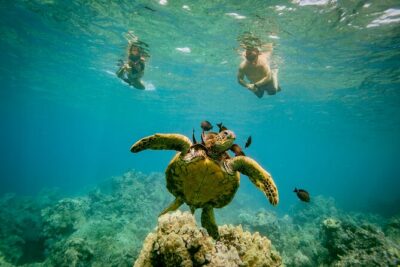
- Even seeing sea life like turtles between wave cycles
Also, people report getting on boards during the first attempts. That’s not magic—it’s good lesson design. You’re coached to use the right wave energy and the right technique for your current skill level, then given repeated chances to try again.
If the ocean is more challenging than expected (windy conditions, bigger swells), you may work harder than you planned. One solo surfer noted paddling can be the toughest part and stressed that you need excellent physical condition to handle it comfortably. Another noted motion sickness considerations. Those are worth respecting.
Fitness, swimming comfort, and motion-sickness reality checks
This lesson is for people who are able to swim and who feel comfortable doing so in the ocean. That’s not a small detail. Surfing is a workout, and ocean confidence changes everything.
The info also calls for a moderate physical fitness level. In real-world terms, you should be ready for:
- Repeated paddling out and catching waves
- Standing up attempts that require leg strength and balance
- Handling a bit of wipeout work without panicking
If you’re prone to motion sickness, take that seriously. One person suggested taking Dramamine beforehand. I can’t tell you what to do medically, but I do think it’s smart to plan ahead if you’re sensitive to boats, waves, or rocking water.
If you’re not a strong swimmer yet, don’t force it. This is a beginner surf lesson, not a swim lesson.
Price and value: $120.46 for gear plus coaching in Maui
The price is $120.46 per person for about 1 hour 30 minutes. On its own, that’s not a cheap activity. But value depends on what you get inside that time.
Here’s what you’re paying for:
- A focused beginner group setup with up to 4 students per instructor
- An ocean safety briefing
- Surf boards, rash guards, and booties included
- A real chance to stand and ride during a short Maui window
When gear is included, the economics get easier to justify. Renting a board and sorting out surf clothing can add up quickly, especially if you’re only in Maui for a few days.
Then there’s the human part: many people recommend this lesson highly, and the common theme is that instructors keep it manageable and supportive. If you want a first surf experience where you feel guided instead of overwhelmed, this price starts looking fair.
Who should book this surf lesson at Sea Maui Surf
This group lesson is a strong fit if you:
- Are 13+ and can swim confidently in open water
- Want a structured beginner experience in Maui’s surf scene
- Prefer small group coaching over self-guided beach trial
- Want gear taken care of for you (board, rash guard, booties)
It may be a less ideal fit if you:
- Struggle with paddling or have limited ocean stamina
- Get motion sickness easily and haven’t planned for it
- Want long shore-based instruction time before going into the water
One more note that comes up: some people mention photographers available for an extra fee. If you want action shots, that can be a nice add-on, since you’ll likely want proof that you actually rode a wave.
The meeting point: start here and keep it simple
You’ll start at 2435 Kaanapali Pkwy, Lahaina, HI 96761. This matters because surf lessons run smoother when you’re on time and ready to move. Plan to arrive with enough buffer to check in, get gear, and get your safety briefing handled without rushing.
The activity ends back at the meeting point. So you’re not stuck figuring out transportation after a workout.
Should you book this surf lesson in Kaanapali?
I’d book it if your goal is a first-timer surf experience that’s coached, safety-led, and logistically easy. The included gear and the small-group 4-to-1 approach are the core reasons this works, especially for families and mixed-skill groups where not everyone wants to guess their way through lessons.
Skip it (or at least rethink timing) if you know you won’t handle paddling well, don’t feel comfortable swimming in the ocean, or you need lots of pre-water demo time to feel ready. Surf can be humbling fast, and comfort matters.
If you’re aiming for a Maui highlight where you have a genuine shot at standing up, this one is built for that.
FAQ
What age is the group surf lesson for?
The lesson is designed for students 13 years of age or older who can swim and feel comfortable doing so in the ocean.
How long is the surf lesson?
The experience runs about 1 hour 30 minutes.
What surf gear is included in the price?
You’re provided a surf board, rash guard, and booties as part of the lesson.
Where do we meet for the lesson?
The meeting point is 2435 Kaanapali Pkwy, Lahaina, HI 96761, USA.
How many people are in the group?
This activity has a maximum of 4 travelers, and the student-to-instructor ratio is kept at a maximum of four students per one instructor.
What happens if the experience is canceled due to weather?
If the lesson is canceled due to poor weather, you’ll be offered a different date or a full refund.