REVIEW · MAUI
Ultimate Self-Driving Audio Tour of Road to Hana, Maui
Book on Viator →Operated by History with Action · Bookable on Viator
The Road to Hana gets a great soundtrack. I love the offline GPS map and directions, and I love the hands-free narration that plays as you move between places. One thing to consider: the audio is triggered by GPS location and timing, so if you wander off route (or detour a lot), you can fall out of sync.
This is also one of the more budget-friendly ways to do the long Hana drive. It’s priced per group (up to 4 people), so the cost can drop fast if you’re traveling with family or friends, and you can start, pause, and finish across one or multiple days.
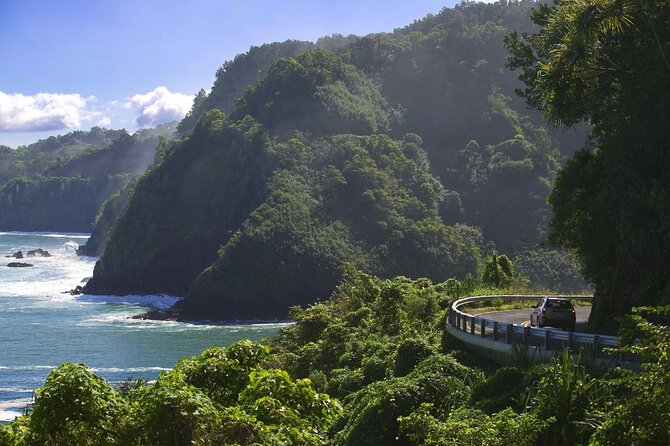
Plan for real Maui driving. This route is long (70+ miles), and while the audio run is about 2–3 hours, the real payoff comes when you match the stops to your pace—quick photo pulls or slower hikes.
In This Review
- Key things to know before you go
- What this Road to Hana audio tour really gives you
- Offline GPS and auto-play audio: how you’ll actually use it
- Paia to Mile Marker Zero: starting in a character-filled Maui
- Ho’okipa Beach Park and Twin Falls: quick hits that set the pace
- The arboretums and lookouts: where the scenery turns into a lesson
- Beaches, bays, and the black sand reservation reality
- Waterfalls that make the whole long drive feel worth it
- Swims, cliff-jumping, and why you should go in cautious
- Haleakalā mention: why it’s included and how to decide
- Price and value: $16.99 per car can change the math
- Timing: why 2–3 hours on audio doesn’t mean your whole day
- Practical tips that make this tour smoother
- Who this works best for
- My booking call: should you book this Road to Hana audio tour?
- FAQ
- Does this Road to Hana audio tour work without cell service or Wi‑Fi?
- What does the tour cost?
- How long does it take?
- Can I use it over more than one day?
- Are entry tickets or permits included?
- Do I need a reservation for the black sand beach?
- Where do I start and where does it end?
Key things to know before you go
- Offline GPS directions and story playback without cell signal
- Audio automatically triggers by your location once you start at the first point
- $16.99 per group (up to 4) can beat the cost of full-day bus tours
- Real destination variety: beaches, arboretums, waterfalls, lookouts, and one major trail
- Some places cost extra or require reservations/permits, like Wai’anapanapa (black sand)
- You’re responsible for driving and parking decisions—this is self-guided, no meet-up at the start
What this Road to Hana audio tour really gives you
Most Road to Hana trips fall into two buckets: you’re either stuck on a bus with strangers and a fixed schedule, or you’re white-knuckling your way through long drives with only your own guesswork. This audio tour splits the difference in a smart way.
You get a guided-feeling experience (history, context, and “stop here” moments), but you stay in control of how long you stay at each place. The narration is designed to be hands-free, so you aren’t stuck reading your phone while you’re on a winding, one-lane-ish road.
And because it’s offline-ready, you’re not forced to hunt for signal at the exact moment you want directions.
A few more Maui tours and experiences worth a look


Offline GPS and auto-play audio: how you’ll actually use it

The biggest advantage here is the way it’s built for Maui’s low-signal reality. The tour uses an offline map and it doesn’t rely on Wi‑Fi or cellular once you’ve downloaded it properly.
Here’s the practical rhythm you’ll follow:
- After booking, you’ll get a password by email/text and you’ll need to download the tour while you have strong Wi‑Fi/cellular.
- When you’re on site, you open the Action’s Tour Guide App, enter the password, and start the correct tour version based on your starting point and direction.
- You go to the starting point yourself (no guide waiting there).
- Once you’re in the right place, the audio begins automatically and then continues as the app detects you moving between points.
Audio setup matters for comfort and safety. You can connect your phone to your car stereo via Bluetooth, USB, or AUX, and playback is compatible with Apple CarPlay (Android Auto is noted as coming soon). If you’ll be walking at stops, you may prefer headphones—especially so you don’t have to crank your car volume while you hike a bit.
The tradeoff: since it’s GPS-triggered, staying close to the suggested route and not making frequent detours helps keep the timing aligned.
Paia to Mile Marker Zero: starting in a character-filled Maui

Paia is a fun first vibe check. This stretch of Maui leans bohemian, with an almost playful edge—there’s even a sign that reads Do Not Feed the Hippies, followed by streets full of colorful characters. It’s also tied to major pop-culture real estate, including a house owned by Willie Nelson.
From there, you roll toward the famous start point along the Road to Hana—Mile Marker Zero. The narration gives you context right away, including how this road traces back to a footpath dating to the 1400s. That’s a key difference from doing Hana as a checklist: you start understanding why the route exists and why it became such a cultural symbol.
If you like roads that feel like living history, this opening portion is where the tour starts paying you back.
Ho’okipa Beach Park and Twin Falls: quick hits that set the pace
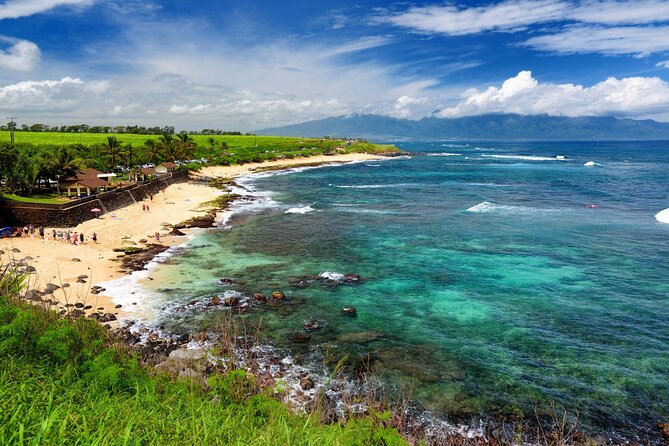
Ho’okipa Beach Park is where the drive slows down naturally—part state park, part surfing area, and set up for picnicking with open space and pavilions. Even if you’re not stopping for long, it’s a strong reset after the early roads.
Then comes Twin Falls. It’s a straightforward “pull over and look” kind of stop: the narration frames it as two waterfalls, and you get great photo angles without needing a long hike. This is the kind of stop that works well if you’re traveling with kids, or if you want to save your energy for the bigger walks later.
The arboretums and lookouts: where the scenery turns into a lesson

Road to Hana isn’t only about beaches and waterfalls. A lot of what makes this drive feel special is plant life and micro-regions—how jungle changes shape as you move.
The tour leans into that with several arboretum-style stops and viewpoints, including:
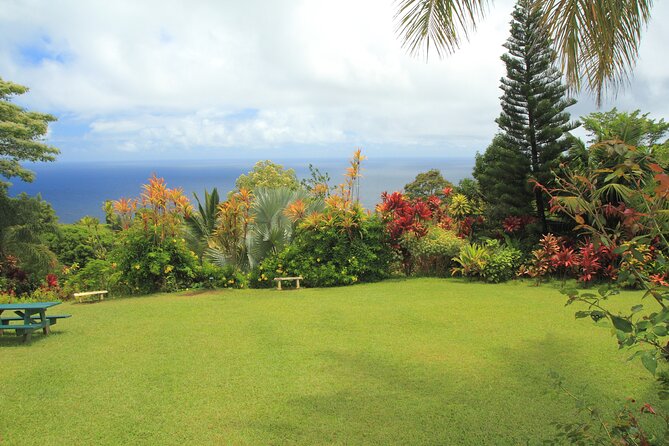
- Garden of Eden Arboretum: home to 700+ plant species, with some plants donated by former Beatle George Harrison. If you like seeing plants where the story behind them matters, this stop is more than just pretty scenery.
- Ke’anae Arboretum: described as formerly a peninsula of jagged black rock that became one of the greenest areas on Maui. That “before and after” framing helps you notice what you’re seeing.
- Ching’s Pond area: a popular cliff-jumping spot. If you stop here, go in with caution and don’t treat it like a casual swim.
- Wailua Valley Lookout: a key moment for those who enjoy remote, rugged coastlines. This is the kind of place where you understand why Hana takes time.
- Nahiku Viewpoint: one more top ocean-view moment, and it’s also noted as being near George Harrison’s former home.
Between these, you’ll also get smaller “pull-offs” where the tour points you toward the views and the why behind them. That’s a big part of why an audio guide works here: it tells you what you’re looking at, instead of just where to park.
A drawback to flag: the audio doesn’t replace good driving judgment. If you rush these pull-offs because you’re chasing the next story timing, you’ll miss what makes them worth stopping.
A few more Maui tours and experiences worth a look


Beaches, bays, and the black sand reservation reality
If you’re here for coastal variety, Hana delivers. This audio tour does a solid job of matching the stops to different beach “personalities,” including:
- Kaumahina State Park: good for a picnic and photos along the coastline.
- Honomanu Bay: described as a black pebble beach where you can often find some serenity. This is the kind of stop that feels different from the more crowded-looking beach areas.
- Hana Bay: called out as a lively area with BBQs, kayaks, and clear water.
- Koki Beach: a red sand beach that’s meant to be a quick photo stop.
- Hamoa Beach: noted for a connection to Oprah, who owns around 200 acres nearby.
The standout “planning checkpoint” is Wai’anapanapa State Park, where you’ll find one of Hawaii’s famous black sand beaches. Reservations are required here, and the needed permit/reservation isn’t included in the tour price. Translation: don’t assume you can just show up.
If you want to do the black sand beach, build that into your schedule first, then match the audio drive around it. It’s the stop most likely to affect whether your day feels smooth or stressful.
Waterfalls that make the whole long drive feel worth it

Hana is famous for water, and the tour doesn’t just mention waterfalls—it frames them so you stop at the right moments.
A few highlights you’ll hear about and likely want to see:
- A trio of waterfalls that merge into one bigger cascade during the wet season (the narration sets expectations for how it changes with weather).
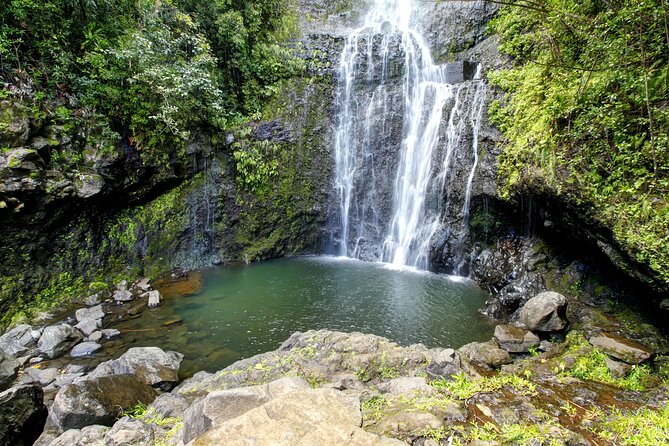
- Wailua Falls: described as about 200 feet tall. This is the kind of stop where you’re already tired from the driving, and then the view resets you.
- Pipiwai Trail: one of the best hikes on Maui, packed with waterfalls plus bamboo forest and jungle scenery. This is not a “30-second stop” unless you’re rushing, so decide ahead of time if you’re going to commit to it.
The tour ends at the Kipahulu Visitor Center, which makes sense after a day (or multiple day slices) where water and jungle take turns driving the experience.
Swims, cliff-jumping, and why you should go in cautious
Two stops in the route call out cliff-jumping culture:
- Ching’s Pond
- Waioka Pond (also referred to as Venus Pool)
Both are described as clear-water spots where people jump. That can sound tempting, but Maui’s roads and weather can be unpredictable. If you’re stopping here, treat it like an active, higher-risk water location, not a casual photo moment. The tour itself flags “exercise plenty of caution,” and I agree—bring that same mindset.
If swimming isn’t your thing, you can still use these moments for views and photos. Just don’t let the reputation of a spot tempt you into doing something beyond your comfort.
Haleakalā mention: why it’s included and how to decide
The audio also points you toward Haleakalā National Park with a commanding view element. It’s described as sitting atop a massive volcano, with the peak stretching roughly 10,000 feet above sea level.
Even if you’re not planning a long park day, this mention is useful because it helps you judge whether the detour fits your time and energy. Since the core of the Road to Hana drive already has plenty of stops, think of Haleakalā as a decision point: do you want one more big view, or do you want to protect your schedule for the beaches and Pipiwai Trail?
Price and value: $16.99 per car can change the math
At $16.99 per group (up to 4), this tour’s value is really about how you travel. Hana is one of those experiences where transportation is already a cost (rental car or taxi logistics), and guided tours can get expensive fast when you’re doing a full day.
This audio guide works like a low-cost “brains and context” add-on:
- You’re paying for storytelling and turn-by-point guidance.
- You’re not paying for a bus seat, time constraints, or a tight schedule.
- You can stop, pause, and spread it across days without feeling like you’re breaking a tour contract.
If you’re traveling solo, it can still be worthwhile for the convenience and offline support. But if you’ve got two or four people in a vehicle, it becomes a particularly strong deal.
Timing: why 2–3 hours on audio doesn’t mean your whole day
The tour is described as about 2–3 hours to complete, and that matches the idea of “drive and hit key spots.” But Road to Hana is full of side quests: waterfalls, beaches, lookouts, and at least one real hike.
So plan your day like this:
- If you’re doing mostly quick stops and photos, the audio timing may feel close.
- If you want to include Wai’anapanapa, Garden of Eden, and the Pipiwai Trail, you should treat it as a longer day or even split it across two days.
One of the smartest parts of the setup is that you can start and pause freely. That lets you handle crowds, weather, and your own energy level without stress.
Practical tips that make this tour smoother
A few things will keep your drive calm and your audio aligned:
- Download everything before you go when you have strong Wi‑Fi/cellular. The offline promise only works if the download is done right.
- Use car audio when driving so you’re not balancing volume and attention.
- Don’t crank the speed to “catch” the narration. The app expects you to follow the route and speed limits.
- Keep your phone stable and visible enough for quick checks (even if you’re mostly listening). If audio ever acts weird, you’ll want to troubleshoot without pulling over in panic.
Also, check for route and safety realities. Maui County has temporarily closed a section of the Road to Hana from Alelele Bridge to Lelekea Bridge near K’pahulu, and you’ll need to plan around that. Separately, there’s a tsunami warning note for Hawaii tied to a Pacific earthquake, with guidance to check tsunami.gov for the latest.
Who this works best for
This audio tour is a great fit if you:
- Want a guided feeling without joining a bus tour
- Prefer flexible timing over strict departure windows
- Like history and place-based stories, not just “here’s a view”
- Need offline directions for a road where cell service can be unreliable
It may be less ideal if you:
- Want constant, turn-by-turn live navigation (this is GPS-triggered audio and offline mapping, not a full real-time routing system)
- Don’t want to deal with downloading and app setup
- Plan to make lots of detours that could throw off the GPS story timing
My booking call: should you book this Road to Hana audio tour?
Yes, if you want to turn the long Road to Hana drive into something you actually learn from—without paying for a full-day guided bus experience. The offline setup is the headline, and the narration approach keeps you from missing key “why stop here” moments while still letting you travel at your own pace.
Skip it (or pair it with extra planning) if you’re unwilling to handle offline app setup, and if your plans heavily depend on stops that require reservations or paid entry like Wai’anapanapa and the Garden of Eden.
If you’re open to driving thoughtfully, stopping when the audio cues you, and building in time for at least one hike or beach you care about, this is one of the best ways to do Hana with your own rhythm.
FAQ
Does this Road to Hana audio tour work without cell service or Wi‑Fi?
Yes. It uses an offline GPS map with directions, and the audio stories play based on your location. You must download the tour while you’re in strong Wi‑Fi/cellular first, and it works offline after that.
What does the tour cost?
It’s $16.99 per group, for up to 4 people in the same group/car.
How long does it take?
It takes about 2 to 3 hours on average to complete the audio drive.
Can I use it over more than one day?
Yes. You can start anytime and pause anywhere, so you can spread it across one or multiple days.
Are entry tickets or permits included?
No. Attraction passes, entry tickets, and the Wai’anapanapa State Park permit or reservations are not included. Garden of Eden admission fees are also not included.
Do I need a reservation for the black sand beach?
Yes. Reservations are required for Wai’anapanapa State Park (black sand beach).
Where do I start and where does it end?
You start at the designated starting point on your own (no one meets you). The tour ends back at the meeting point.