REVIEW · MAUI
Lauhala Bracelet Craft Class on Maui
Book on Viator →Operated by Oni Foundation Inc - Wonderful World of Aloha Cultural Activity Center · Bookable on Viator
Want a Maui souvenir you actually wear? This lauhala bracelet class is hands-on and culturally grounded. I especially like that you weave a bracelet to take home and that the instructor shares Hawaiian history and culture as you work. The main catch is that weaving takes some finger/hand finesse, so it’s best for ages 12 and up.
You’ll start at the Oni Foundation’s Wonderful World of Aloha Cultural Activity Center in Kahului (near the Queen Ka’ahumanu Center area), with a small group capped at 25 people. The class runs about 1 hour starting at 1:00pm, and you’ll be encouraged to arrive early to check out the Migrations costume galleries before weaving begins.
In This Review
- Key Points You’ll Care About
- Where the Class Happens: Oni Foundation in Kahului
- The 1:00pm Class Flow: Learn Lauhala and Weave a Bracelet
- A Note on Skill Level and Age
- Arrive Early for the Migrations Costume Galleries
- The Cultural Teaching: More Than Just a Craft Demo
- What You’ll Take Home (And Why It’s Good Value)
- What’s Not Included
- Logistics That Matter: Small Group, Easy Language, Smooth Timing
- A Practical Tip for Your Arrival
- Who This Class Is For (And Who Might Skip It)
- Should You Book the Lauhala Bracelet Craft Class on Maui?
- FAQ
- How long is the Lauhala Bracelet Craft Class?
- How much does the class cost?
- What time does the class start?
- Do I need weaving experience before I go?
- Are supplies included?
- Is food included with the class price?
- What is the cancellation policy?
- What’s the maximum group size?
Key Points You’ll Care About
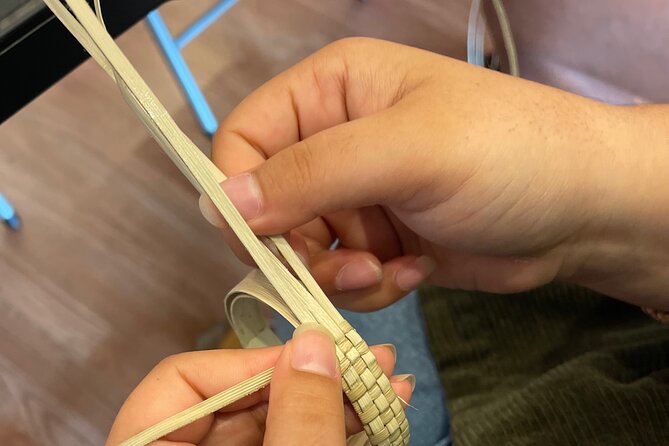
- You leave with a wearable keepsake: your own finished lauhala bracelet
- Culture is part of the craft: you learn plant background and Hawaiian context from your instructor
- Supplies are included: you focus on weaving instead of shopping for materials
- No experience is required: you’ll get the basic techniques step-by-step
- It’s a good small-group activity: up to 25 people makes the class feel manageable
Where the Class Happens: Oni Foundation in Kahului
This class takes place at the Oni Foundation Inc – Wonderful World of Aloha Cultural Activity Center, at 275 W Kaahumanu Ave in Kahului. Even if you’re not a craft person, the setting helps you shift gears from beach-mode to hands-on cultural learning fast.
The center also has costume displays, including Migrations costume galleries. If you’re arriving on foot around the Queen Ka’ahumanu Center area, plan a little extra time to get your bearings before the instructor starts teaching. It makes the whole afternoon smoother—especially if you tend to get a bit turned around in busy shopping areas.
One small practical plus: the class is run in English, and it’s a good fit for many people since it’s designed for beginners. And yes, service animals are allowed, so you can plan with confidence if that matters to your group.
A few more Maui tours and experiences worth a look



The 1:00pm Class Flow: Learn Lauhala and Weave a Bracelet
The session is about an hour, starting at 1:00pm, and you’ll end back at the meeting point. The pace is relaxed, but it’s not a slow craft project you can drift through—you’ll learn enough technique to finish a bracelet you’re proud of.
Here’s how your instructor typically starts:
- You begin with an introduction to the lauhala plant
- You learn how the leaves are prepared for weaving
- You get guided instruction on basic weaving techniques for a bracelet
No prior weaving experience is required. That said, weaving does involve some real hand coordination. You’ll want to be comfortable using both hands for a short period, and you’ll appreciate patience with yourself if the first passes don’t look perfect.
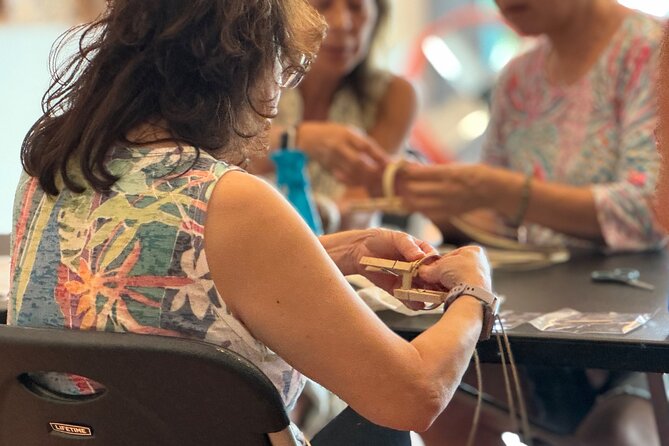
Once you’re taught the basics, you move into the fun part: weaving your bracelet. This is where the class becomes more than a souvenir workshop. You’re learning a repeated pattern you can feel in your fingers, and that makes the whole hour feel satisfying instead of rushed.
A Note on Skill Level and Age
The class is recommended for ages 12 and up, largely because weaving takes some finger/hand finesse. If you’re bringing a teen or a crafty kid, that’s ideal. If you’re visiting with younger kids, you might find they get restless during the hands-on focus time—so it’s worth thinking about your group’s attention span before you book.
Arrive Early for the Migrations Costume Galleries
You’ll be told to arrive early, and I strongly agree with that advice. The costume galleries (including Migrations) are a great warm-up because they give you context while you’re waiting for the weaving lesson to begin.
This is one of those “you’ll thank yourself later” moments. When you see clothing and historical presentation before you start working with the plant and techniques, the whole activity lands better. You’re not just making something pretty—you’re connecting craft to culture as you go.
It’s also a handy buffer if you’re coming from another part of Kahului. There’s enough going on at the center that even if you’re 10–15 minutes early, you still feel like you’ve gotten value.
The Cultural Teaching: More Than Just a Craft Demo
What makes this class especially worth it is how the instruction ties the weaving to Hawaiian culture and history. Your instructor doesn’t just point at your hands and say go—there’s actual explanation behind the plant and the craft.
In particular, the weaving expert is described as patient and engaging, with a steady stream of historical information. In one standout experience, a mom-and-daughter duo connected strongly with the teacher (called Ku’ulei, and also referred to as Koo). That kind of instructor relationship matters in a craft class: you relax, you learn faster, and you’re more likely to finish feeling proud.
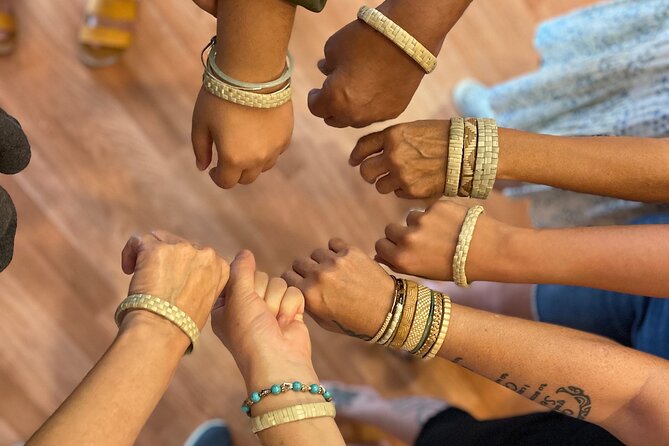
You’ll also notice a subtle but important detail: everyone’s bracelet comes out unique. That happens naturally with hand weaving, but it’s part of the charm. Yours won’t look like a factory copy, and you’ll walk away with something that feels personal.




What You’ll Take Home (And Why It’s Good Value)
The big headline is simple: you weave your own lauhala bracelet and take it with you. Supplies are included, so you’re not paying extra for materials or kits. For $25 per person, the value comes from two places: the teaching time and the finished keepsake.
This price point also works well if you want a cultural activity that isn’t locked into a half-day schedule. With about one hour, you can fit it between beach time and dinner without feeling like your day got eaten by logistics.
Just keep expectations realistic. This isn’t a multi-session craft course where you build mastery over weeks. Instead, it’s a beginner-friendly class that gives you enough technique to complete a bracelet in one sitting—exactly the kind of payoff that makes souvenir shopping unnecessary.
What’s Not Included
No meals or refreshments are included. So if you’re doing this at 1:00pm, it’s smart to eat beforehand or plan to grab something after. Also, gratuity isn’t included, which is a common reality for this type of small guided activity.
Logistics That Matter: Small Group, Easy Language, Smooth Timing
This is capped at a maximum of 25 travelers, which helps the class feel less like a conveyor belt and more like real instruction. It also means you’ll have a better chance to ask questions if you get stuck on a step.
The class includes a mobile ticket, and confirmation is sent at booking. It’s offered in English, which is helpful if you’re traveling with people who don’t want to rely on translations.
It’s also near public transportation, which is a big plus if you’re not renting a car. And since you return to the meeting point after the session ends, you don’t need to figure out any complicated drop-off or transfer.
A Practical Tip for Your Arrival
If you’ve ever gotten lost in a mall, you know how stressful that can feel when you’re supposed to be on time. This center’s setup seems to handle that reality with patience, so don’t panic—but do follow the advice to arrive early so you don’t feel rushed.
Who This Class Is For (And Who Might Skip It)
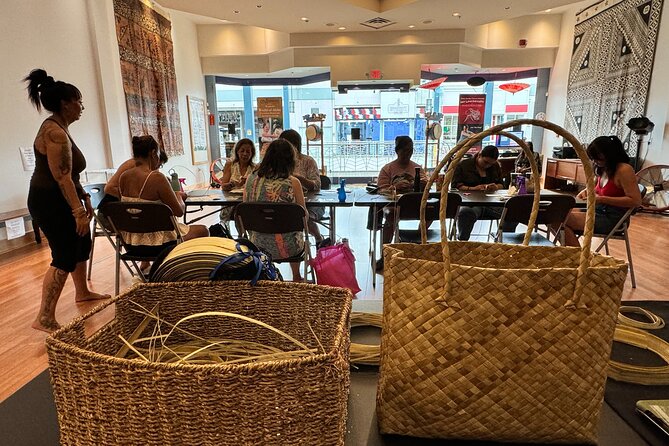
This lauhala bracelet craft class is ideal if you want:
- a hands-on Maui memory you can actually wear
- a beginner-friendly activity with cultural context
- something for families or couples that doesn’t require lots of walking
It’s also a solid “cool down from the sun” option. An afternoon start can help you avoid the most intense heat hours, and sitting at a guided station makes the experience feel comfortable and focused.
I’d think twice if:
- you’re hoping for a long, elaborate art project (the time is about one hour)
- your group includes kids who struggle with sustained fine-motor tasks
- you want food included (you’ll need to plan around meals)
Should You Book the Lauhala Bracelet Craft Class on Maui?
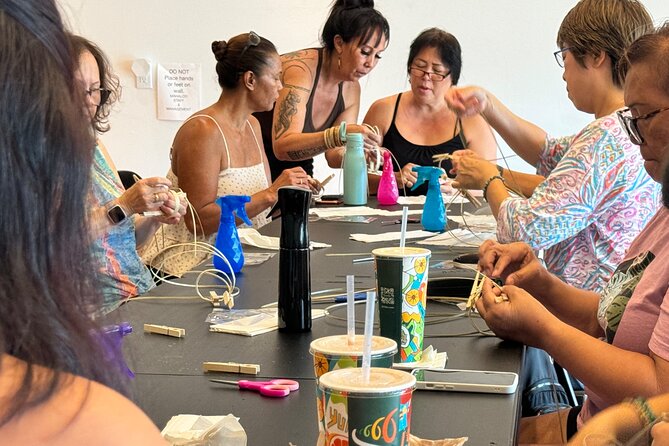
Yes—if you want an authentic, wearable souvenir made through real instruction. The combination of weaving practice, plant preparation knowledge, and Hawaiian cultural storytelling is what makes this class feel worth the time.
Book it especially if you like activities where the final result is immediate: you learn basics, you apply them, and you leave with a bracelet that looks different because your hands made it. Even if you’re not artistic, you can still succeed here as long as you’re willing to slow down and work with your fingers for an hour.
FAQ
How long is the Lauhala Bracelet Craft Class?
It lasts about 1 hour (approx.).
How much does the class cost?
The price is $25.00 per person.
What time does the class start?
The class begins at 1:00pm.
Do I need weaving experience before I go?
No experience is necessary. You’ll learn the basic techniques during the class.
Are supplies included?
Yes, supplies are included.
Is food included with the class price?
No. Meals & refreshments are not included.
What is the cancellation policy?
You can cancel for a full refund up to 24 hours in advance. Within 24 hours of the start time, the amount paid is not refunded.
What’s the maximum group size?
The class has a maximum of 25 travelers.