REVIEW · MAUI
Sea Scooter Snorkeling Tour with GoPro – Wailea Beach
Book on Viator →Operated by My Splash - Sea Scooter Snorkeling Maui · Bookable on Viator
Want snorkeling with training wheels? This sea scooter snorkeling tour out of Wailea Beach gives you a guided ride over Maui’s reefs, with Makena Bay turned into an easy, close-up wildlife experience. You’ll get coaching on ocean safety and scooter control, then spend your swim time where the fish and Hawaiian green sea turtles hang out.
I love the small group feel, capped at 10 people, which means the guides can actually watch how you’re doing and help fast. I also like the hands-on gear setup and the fact they document your time underwater with photos and video as you explore.
The main drawback is effort: the 9:10 a.m. departure is more challenging, and you’ll need to lightly swim with a life vest on plus have the upper-body strength to operate the scooter.
In This Review
- Key highlights worth your attention
- Wailea Beach meet-up and the flow of the tour
- Scooter training and safety briefing: how they set you up
- What happens during the snorkeling time in Makena Bay
- The wildlife focus: turtles, fish, and the whole reef vibe
- Underwater photos and video: what’s included and what costs extra
- Best departure time for your comfort level
- Gear, extra protections, and what to bring
- Guides you’ll remember: the difference between staff and performers
- Price and value: is $149 a good deal?
- Who this tour fits best (and who should reconsider)
- Should you book this Wailea sea scooter snorkeling tour?
- FAQ
- How long is the sea scooter snorkeling tour?
- How much does it cost?
- Where does the tour start?
- How big is the group?
- What language is the tour offered in?
- What safety equipment is required or provided?
- Do I need to be an experienced swimmer?
- Is the sea scooter included?
- Are photos and video included?
- What is the cancellation policy?
Key highlights worth your attention
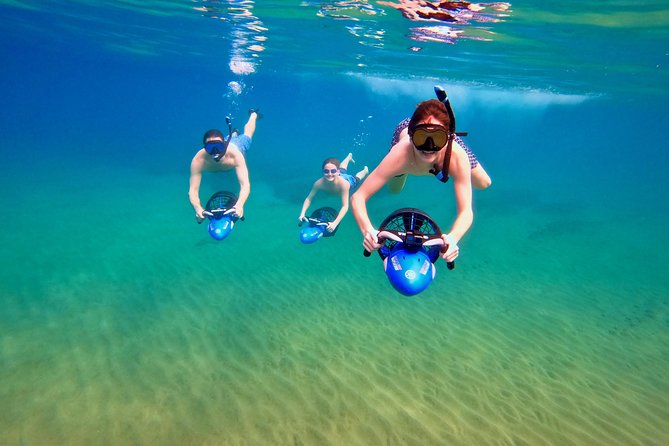
- Small group (max 10): more hands-on attention than big-bus snorkeling.
- Sea scooter + top gear: you’ll use snorkeling equipment and scooter control tools, with goggles designed to avoid fogging.
- Guided reef spotting: marine flora and fauna commentary focused on Makena Bay.
- Underwater photo and video capture: your guide helps document the experience.
- Real-world skill guidance: practice and pacing for different comfort levels (ask the guide how they’ll help you).
- Time choice matters: 8 a.m. is the calm-conditions slot; 9:10 a.m. is for stronger swimmers.
Wailea Beach meet-up and the flow of the tour
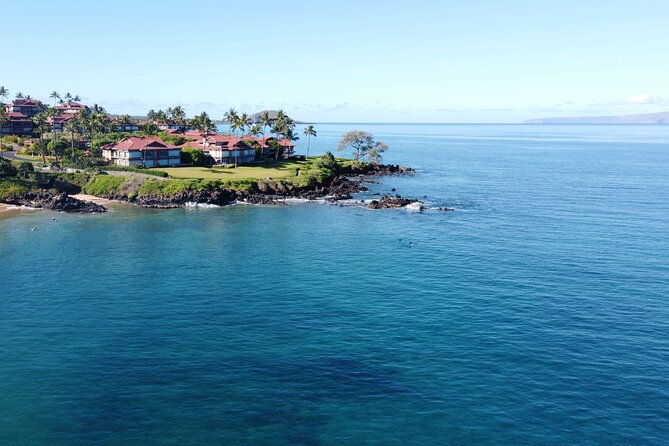
This tour starts at 3894 Wailea Alanui Dr, Kihei, HI 96753, and it ends back at the same meeting point. That might sound basic, but it matters on Maui. It keeps logistics simple when you’re already juggling beach time, sunscreen, and parking.
You also get a mobile ticket, and the tour is offered in English. The group size is max 10, and that small number shows up in how the experience feels. You’re not stuck waiting for a crowd. You can hear instructions. You can ask questions. And if you’re nervous, you’ll usually get the extra check-in you need before you head out.
Timing is your first decision point. The 8 a.m. tour is described as having the best calm conditions. The 9:10 a.m. tour is labeled more challenging and recommended for strong swimmers. If you’re the type to overthink the ocean, pick 8 a.m. If you’re confident in water movement and buoyancy, 9:10 a.m. can be a better fit.
You can also read our reviews of more snorkeling tours in Maui


Scooter training and safety briefing: how they set you up
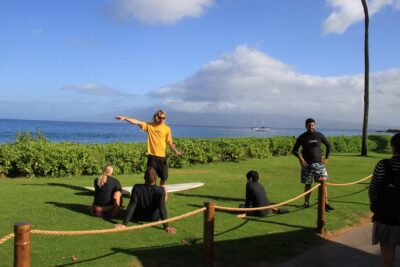
Plan on about 1 hour 30 minutes total on the water experience (approx.). Before you go, you’ll get a detailed briefing on ocean safety plus a tutorial on the sea scooter and snorkeling gear. This is one of the best parts of the setup, because it turns sea scooter snorkeling from a hype idea into something you can actually manage.
You’re required to be able to lightly swim with a life vest on, and you’ll need upper body strength to operate the scooter. That doesn’t mean you need to be an athlete. It means you should feel comfortable using your arms and core to steer and stay in control.
Goggles are provided, and they’re specifically described as top-of-the-line to reduce foggy or leaky issues. In other words, they’re trying to keep your attention on what’s underwater—not on fixing your face mask.
From the reviews, I’m especially glad they keep instruction practical and calm. People have praised guides for not rushing hesitant swimmers and for giving extra help when nerves show up. Some guides, including Yuri, have been noted for letting guests practice in shallower water first. That kind of pacing makes a huge difference if you don’t love the feeling of being out of your depth.
Tip: if you get even slightly anxious in water, you’ll feel more confident if you go in rested and focused. Don’t skip the breathing breaks they encourage during training.
What happens during the snorkeling time in Makena Bay
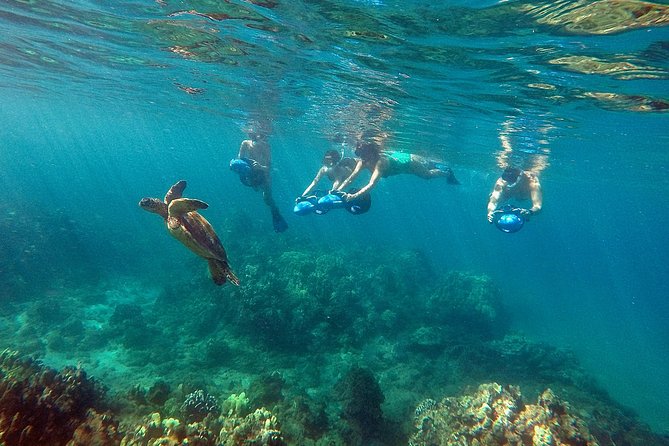
Once you’re suited up, the tour is built around guided exploration of reef habitat near Makena Bay. The guides help you navigate the waters, point out natural treasures, and identify reef fish you’d otherwise miss.
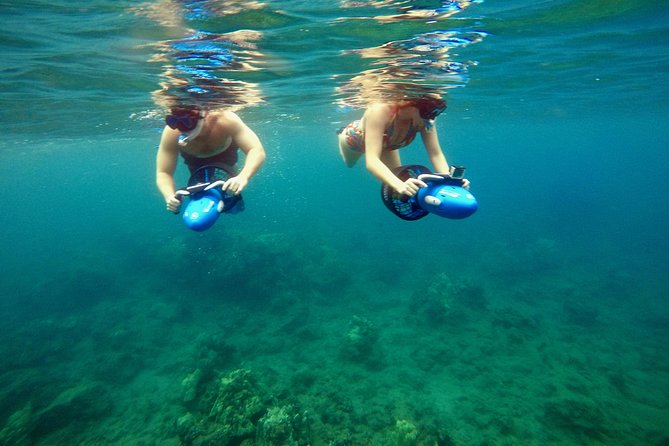
Here’s what makes sea scooter snorkeling different from regular snorkeling: the scooter helps you cover more reef area without doing a huge amount of fin-kicking. You still need to be present and follow directions, but you’re less likely to burn out early. That means more time watching wildlife and less time just trying to get through the water.
The guide commentary is also part of the value. You’re not just floating and hoping for turtles. You’re learning what you’re seeing—marine flora and fauna—and getting directed to the spots where the bay is lively.
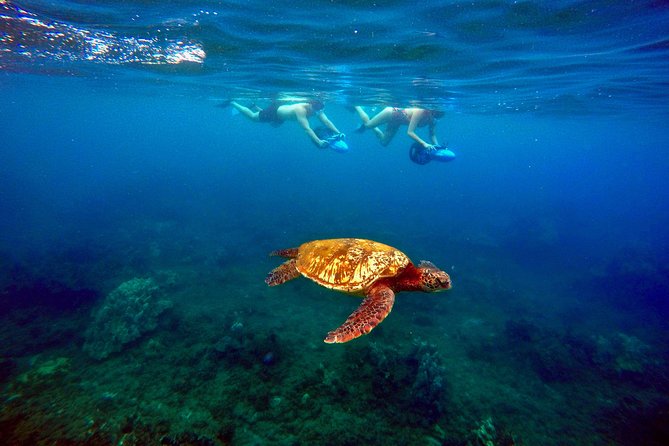
In reviews, I saw lots of specifics about what the guide might point out: turtles show up again and again, along with eels and lots of fish. Some guests even mentioned sharks and sting rays. Other sightings included schools of fish and large reef features you’d be less likely to reach with basic snorkeling pace.
You should also expect your guide to manage the group as you move. Some guests reported that the tour separates people by skill level, which helps avoid the classic chaos of mixed swimmers all moving at once.
The wildlife focus: turtles, fish, and the whole reef vibe
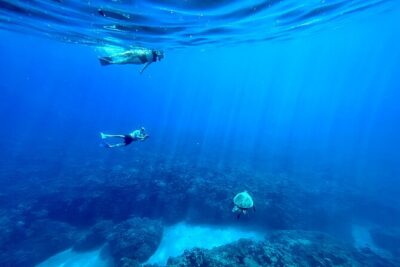
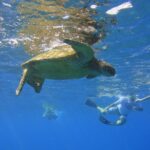
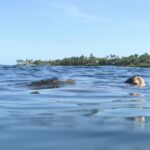
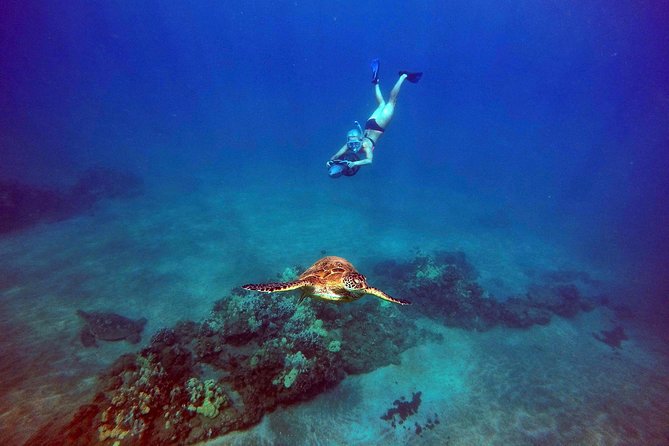
Let’s talk about the star attraction: Hawaiian green sea turtles. The tour description is direct about the bay hosting hundreds of marine life, including green turtles. That’s not just marketing language. It shows up repeatedly in the experiences people described—multiple turtles, frequent turtle sightings, and guides helping guests swim close enough to really see how the turtles move.
You’re also in the right zone for reef fish and other marine residents. Reviews mention eels, sting rays, and a mix of big and small fish. Even when water conditions weren’t perfect, guests still reported plenty of marine life sightings.
One more bonus: the guides sometimes bring a fun, skill-building tone to the outing. A guest described Tristan teaching a backflip and a barrel roll. I wouldn’t plan on learning tricks as the reason to book, but it hints at the confidence level guides bring to making the experience feel exciting and not stiff.
And if the ocean gives you a break, you might even hear wildlife like whales singing. That’s not guaranteed, but it’s been reported as part of the overall experience atmosphere.
Underwater photos and video: what’s included and what costs extra
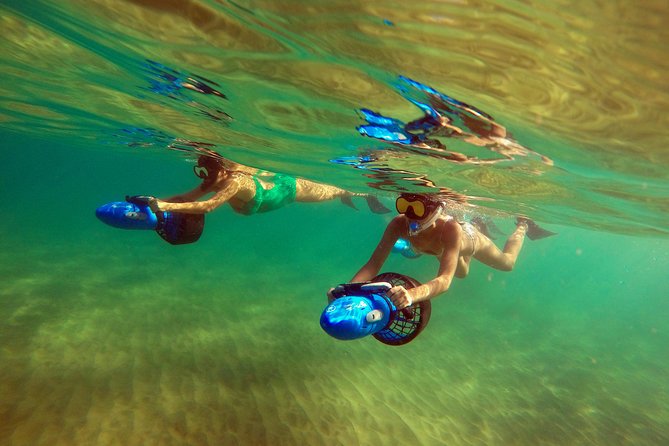
You’ll be guided to explore and they’ll document your time underwater with photos and video. That matters because sea scooter snorkeling changes your positioning. You’re moving more efficiently, and your guide is already watching where you’re headed. That’s ideal for capturing clearer images than you’d usually get fumbling with a phone while breathing through a snorkel.
One important detail: video packages are sold separately and are not included in the base price. So, think of your “included” documentation as part of the fun, but if you want higher-end deliverables you may need to add them later.
From reviews, I also picked up that some guides use phones with waterproof cases to take photos of guests. That’s a practical touch if you want pictures that include your face, not only the wildlife.
A few more Maui tours and experiences worth a look

Best departure time for your comfort level
This tour gives you two departure windows, and they’re not interchangeable in terms of comfort.
- 8 a.m.: best calm conditions. If you’re uneasy about open water movement, this is the safer bet. Calm conditions mean less stress when you’re learning steering, spacing, and how to keep your snorkel setup steady.
- 9:10 a.m.: more challenging, for strong swimmers. If you can handle a bit more water motion and you’re comfortable in the ocean, you’ll probably enjoy this slot more.
A practical way to choose: if you can’t swim long distances but you’re comfortable floating and lightly swimming with a life vest, start with 8 a.m. If you’re confident in stronger swimming and you like a more active water experience, consider 9:10 a.m.
Also, go in with the mindset that the guides will set you up for success, but ocean conditions are real. One review mentioned cloudy water and still seeing plenty of turtles and fish. Clear water isn’t guaranteed, but good guidance can still make the experience worthwhile.
Gear, extra protections, and what to bring
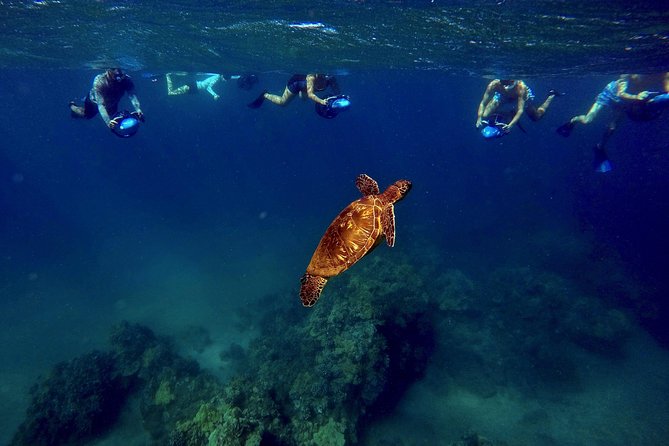
You’ll be provided with snorkeling equipment and a sea scooter. Goggles are described as high quality to avoid typical fogging and leakage issues.
Several reviews also point out practical extras like life vests and snorkel gear being provided. One guest noted that the tour gives a wet suit top, which can reduce sun exposure on your chest. That’s useful in Maui sun where you can get burned fast even when you think you’re being careful.
What should you bring? The tour data doesn’t list a full packing list, so keep it simple:
- Wear swimwear you’re comfortable in
- Plan to follow the guide’s instructions on any sunscreen use and how gear will sit on your skin
- Bring the essentials you’ll normally pack for a beach day (water, your basics)
- If you want to avoid last-minute discomfort, use the restroom before you go, because you’re committing time to the water once you’re out
If you’re cold or tired, you might be offered an option to take a break. One review said they brought a paddle board in case someone got tired or cold. That doesn’t mean it’s always needed, but it’s good to know the crew thinks about comfort.
Guides you’ll remember: the difference between staff and performers
Small groups matter, but so does the person leading you.
In reviews, I saw names come up again and again: Tristan, Yuri, Seth, Ryan, and Shelby. That’s not random. People specifically praised them for clarity before getting in the water, patience with nervous guests, and active wildlife spotting.
Seth was praised for taking videos and pictures while keeping things fun. Ryan got credit for patience and knowledge, including helping a 74-year-old woman feel supported. Yuri was highlighted for letting a hesitant guest practice in shallower water first before moving to the sites. Tristan was described as explaining everything clearly and guiding people toward good spots for turtles and fish.
When a guide is consistent, you feel it. You’re more likely to enjoy the time rather than worry about whether you’re doing something wrong.
Price and value: is $149 a good deal?
At $149 per person for about 1 hour 30 minutes, you’re paying for more than just access to snorkeling water. You’re paying for:
- Sea scooter and snorkeling gear
- Guided navigation and safety briefing
- Reef spotting commentary
- Underwater photo and video documentation
You may also notice a psychological value here: less effort means you can actually enjoy what you came for. Standard snorkeling can be tiring fast, especially if you’re not a strong swimmer. A sea scooter helps you reduce the “work” part of the experience, so you spend more time watching turtles and reef fish rather than trying to catch your breath.
So, is it worth it? If you want an easier way to see more reef, yes. If you already love traditional snorkeling and you’re happy doing long stretches of swimming without help, you might not get as big a value jump. But based on the reviews, many first-timers still found the scooter made the experience feel doable, as long as you can lightly swim with the life vest.
Who this tour fits best (and who should reconsider)
This is a sea scooter snorkeling tour designed for people who can swim lightly and operate themselves safely in open water with a life vest on. It also requires upper body strength to operate the scooter, so it’s not ideal for guests who can’t comfortably use their arms.
It’s described as suitable for experienced snorkelers with swimming skills, but the practical reality from reviews is that beginner-level guests often do well when guides slow down and support them. The key is your comfort with being in the ocean and your willingness to practice what they teach.
You’ll likely love this tour if:
- You want to see marine life without wearing yourself out
- You’d rather cover more reef area than do long fin sessions
- You want a guided experience where someone helps you find wildlife
You might skip it if:
- You’re not comfortable swimming even lightly
- You can’t or won’t follow safety guidance
- You lack the strength needed to steer and operate the scooter
Should you book this Wailea sea scooter snorkeling tour?
If you want the Maui reef experience but with less fatigue and more guidance, this is a strong pick. The small group size, the safety briefing, and the scooter setup make it feel structured without being rigid. The chance to see green sea turtles, plus guided commentary in Makena Bay, is exactly the kind of “you did it right” snorkeling day people remember.
My advice: book the 8 a.m. slot if you’re even a little unsure. Pick 9:10 a.m. only if you already feel solid in the water. And if photos and video matter to you, plan for the fact that some video packages may cost extra.
If you want sea turtles, reef fish, and a calmer, more efficient way to snorkel, this one earns your attention.
FAQ
How long is the sea scooter snorkeling tour?
The tour lasts about 1 hour 30 minutes.
How much does it cost?
It is priced at $149.00 per person.
Where does the tour start?
The meeting point is 3894 Wailea Alanui Dr, Kihei, HI 96753, USA, and the tour ends back at the same location.
How big is the group?
The maximum group size is 10 travelers.
What language is the tour offered in?
The tour is offered in English.
What safety equipment is required or provided?
You must be able to lightly swim with a life vest on, and life vests and snorkeling gear are described as provided.
Do I need to be an experienced swimmer?
You should have strong physical fitness, and the guidance notes that the 9:10 a.m. tour is recommended for strong swimmers. You must be able to lightly swim with the life vest on.
Is the sea scooter included?
Yes. The tour includes the sea scooter and snorkeling equipment.
Are photos and video included?
The experience includes underwater photos and video documentation, but video packages are sold separately and are not included in the base price.
What is the cancellation policy?
You can cancel up to 24 hours in advance for a full refund.