REVIEW · MAUI
Deluxe Helicopter Tour of Molokai and Maui
Book on Viator →Operated by Maverick Helicopters Maui · Bookable on Viator
First off, this is the most efficient way to see two islands. You’ll fly out of Kahului in a small group, then cross the Pailolo Channel for a one-ride overview of both Maui and the less-visited Molokai—waterfalls, cliffs, valleys, and ocean in a way roads and tours on land just can’t match. I especially like that the flight runs on a tight loop with real air-time over the big sights, plus live commentary so the views come with context.
The second thing I really like: the route hits a mix of dramatic geology and iconic Hawaiʻi scenes—like towering sea cliffs, Kahiwa Falls, and Maui’s Iao Valley State Park—without turning your day into a travel slog. One thing to think about first is logistics around comfort and limits: seating is assigned by weight and balance, and FAA rules require original photo ID for check-in (no digital copies).
In This Review
- Key things you’ll notice on this Molokai and Maui flight
- The two-island route: why this flight feels like more than a scenic loop
- Kahului start: what to expect before you take off
- Molokai’s north shore: Kahiwa Falls, Halawa Valley, and towering sea cliffs
- Kahiwa Falls: the waterfall you’ll remember
- Halawa Valley: where the land looks carved
- The north shore feeling: remote and quiet from above
- South Molokai: fishponds and the coral reef view
- Crossing the Pailolo Channel: the moment the islands really separate
- Back over Maui: Iao Valley State Park, West Maui Mountains, and Honokohau Falls
- Iao Valley: the classic valley from a new angle
- West Maui Mountains: a big-picture geology check
- Honokohau Falls: Maui’s tallest waterfall
- Onboard reality: windows, seats, EC130 flying, and getting the best views
- Comfort and motion sickness: what to do for a 55-minute flight
- Price and value: is $375.64 actually a good deal here?
- Who this tour fits best (and who should think twice)
- Should you book this Molokai and Maui helicopter tour?
- FAQ
- How long is the Deluxe Helicopter Tour of Molokai and Maui?
- Where does the tour start and end?
- Is hotel pickup and drop-off included?
- What photo ID do I need for check-in?
- Is there a minimum age to fly?
- Can children fly without an accompanying adult?
- Can I request specific seats?
- What if I weigh over the limit?
- What happens if the weather cancels the flight?
- Can I cancel for a full refund?
Key things you’ll notice on this Molokai and Maui flight
- Molokai’s tallest sea-cliff views from the air, including the north shore areas like Kahiwa Falls and Halawa Valley
- 800-year-old fishponds and coral reef on Molokai’s south coast, seen from above
- Maui highlights in one sweep, including Iao Valley State Park and Honokohau Falls
- Small cabin feel: up to 7 passengers plus the pilot on an Airbus EC130, with panoramic windows
- Real “everyone gets the view” flying—the helicopter can be rotated during the flight so people aren’t stuck looking at the same side the whole time
- Safety and nerves control: the pilot’s style and calm approach matters here, and it’s a frequent theme in how people describe the experience
The two-island route: why this flight feels like more than a scenic loop
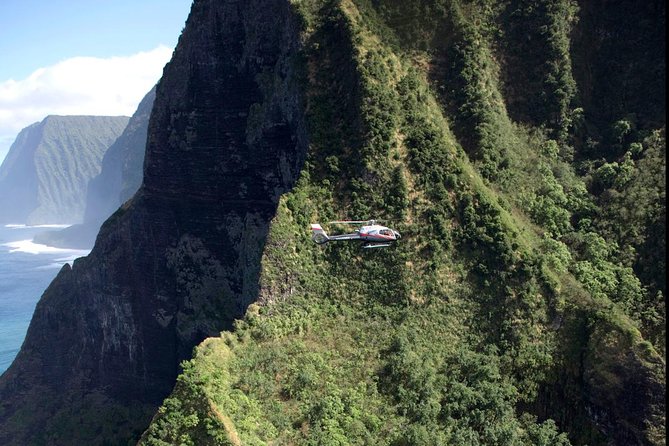
A helicopter tour in Hawaiʻi can be “pretty” in a generic way. This one feels different because you’re not just hovering over a single coastline. You get a two-island circuit: Maui first as you head out, then Molokai’s remote areas, then back to Maui for additional viewpoints and waterfalls.
The key value is time. You’re only out for about 55 minutes, but the flight plan covers enough variety that you end up seeing the island characters in one go:
- Molokai as rugged, quieter, and more exposed to the ocean
- Maui as greener and more layered, with waterfalls and the famous valley area
Also, the flight runs in a way that’s easy to understand on the ground later. After you land, you’ll start recognizing what you saw—cliffs vs. valleys vs. water shaping the coastline. It helps you connect photos to real geography.
A few more Maui tours and experiences worth a look

Kahului start: what to expect before you take off
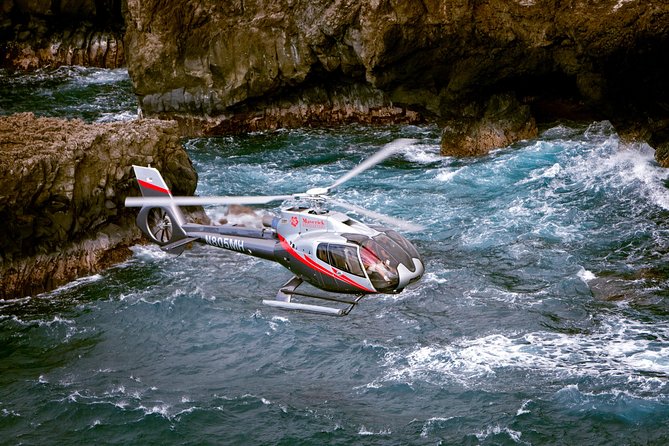
Your tour begins at the heliport in Kahului, Maui. You meet your pilot there, strap in, and get into the rhythm quickly. There’s no hotel pickup included, so you’re building your day around getting to the Kahului departure point on time.
A practical heads-up: you’ll want your photo ID ready for check-in. This tour follows FAA rules for all passengers 18+, and you need an original government-issued photo ID—no photocopies, no digital ID. If you show up without it, check-in can be denied, and you won’t get a refund.
Once you’re in the aircraft, the “wow” hits fast. Panoramic windows make it easier to spot:
- surf lines in the water below
- patchwork forest canopy
- coastline shapes that look almost imaginary from the air
Even if you’ve been to Maui before, this part gives you a whole new sense of scale.
Molokai’s north shore: Kahiwa Falls, Halawa Valley, and towering sea cliffs
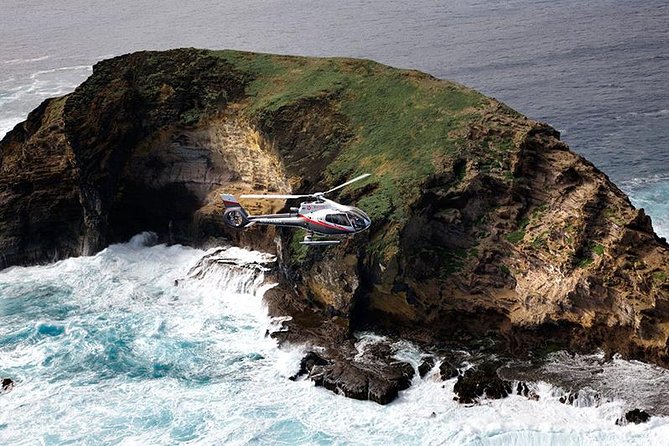
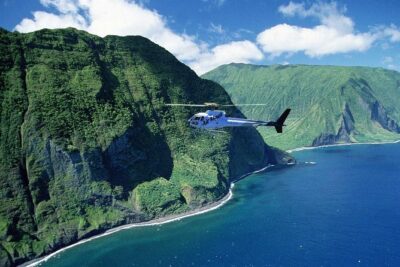
Molokai is where the tour does its main work. You’ll cruise along the world’s tallest sea cliffs, listed at more than 3,000 feet (about 914 meters)—and seeing that height from the air changes the way your brain understands the island.
This section of the flight focuses on a few standout targets:
Kahiwa Falls: the waterfall you’ll remember
You’ll look down on Kahiwa Falls, described as among the tallest waterfalls in the Hawaiian Islands. From the helicopter, waterfalls aren’t just “a waterfall.” They look like ribbons dropping off a wall, with jungle texture around them. That’s the advantage of air views: you see how the water lands, not just that it exists.
Halawa Valley: where the land looks carved
Next comes the Halawa Valley area. From ground level, valleys like this are hard to grasp because you can’t see the full shape at once. From above, you can track the valley’s depth and the way it funnels the eye toward the ocean side.






The north shore feeling: remote and quiet from above
The flight also gives you a glimpse of Molokai’s north shore from a distance—serene from the air, but still unmistakably rugged. If you’re the type who likes scenery with less crowds and more raw coast, this part delivers.
One small consideration: waterfalls and remote valleys can look muted on hazy days. If the weather is even slightly flat, you may still love it, but crisp visibility makes a big difference for camera results.
South Molokai: fishponds and the coral reef view
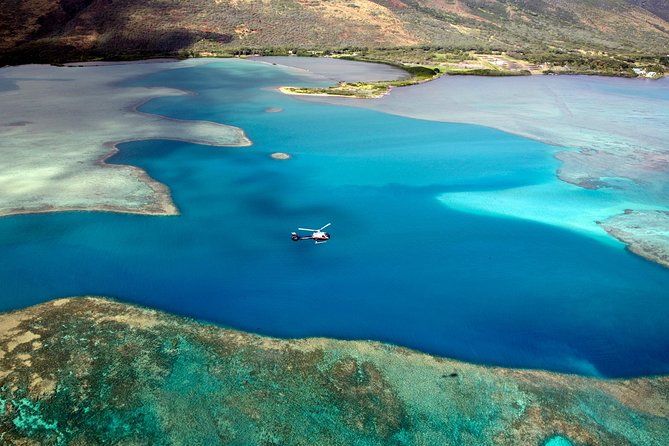
After the north shore drama, you’ll swing toward the southern coastline for Molokai Fringing Coral Reef and the island’s ancient fish ponds, built around 800 years ago.
This is a different kind of wow. Instead of cliffs and vertical drops, you’re spotting human-made features that blend with the coastline—and then seeing how the reef changes the ocean color. It’s the kind of aerial detail you can’t really appreciate from beaches or roads because you’re not high enough to read the whole system at once.
If you care about Hawaiʻi beyond postcard scenes, this stop is the one that can add a deeper layer to the trip—because you’re looking at an old food-and-water landscape shaped by the islands themselves.
Crossing the Pailolo Channel: the moment the islands really separate
The flight includes time over the Pailolo Channel, the stretch of ocean between Maui and Molokai. This is one of those segments that feels oddly satisfying: you watch the coastline boundaries and then suddenly you’re just over open water with both islands in view.
For a short tour, that’s smart planning. The channel crossing gives you contrast—Molokai’s rugged edges against Maui’s volcanic and greener textures.
If you’re flying for the first time, this is also when you can get used to the “helicopter feeling.” It’s a calm moment to check where your seats point, get your camera ready, and settle in.
Back over Maui: Iao Valley State Park, West Maui Mountains, and Honokohau Falls
Once you’re back over Maui, the tour shifts to highlights that many people associate with the island—especially Iao Valley State Park.
Iao Valley: the classic valley from a new angle
Flying over Iao Valley gives you a clean view of how the valley cuts through the terrain. From the ground, you might spend time near a specific viewpoint. From above, you can see the valley shape and the surrounding ridgelines at the same time.
West Maui Mountains: a big-picture geology check
You’ll also get an aerial look across Maui’s western side, with the West Maui Mountains noted by your pilot. From the helicopter, ridges look stacked and layered. It’s a great way to “read” the island’s shape without driving long routes.
Honokohau Falls: Maui’s tallest waterfall
The ride ends with Honokohau Falls, described as Maui’s tallest waterfall. Like Kahiwa Falls, the aerial view turns the waterfall into a visual event—one that you see as part of the hills and rainfall patterns feeding it.
You’ll also get a look toward Haleakala volcano in the distance, when conditions allow. It’s not the main show, but it’s a satisfying horizon detail that connects the dots between Maui’s famous peak and the valleys you’ve been flying over.
Onboard reality: windows, seats, EC130 flying, and getting the best views
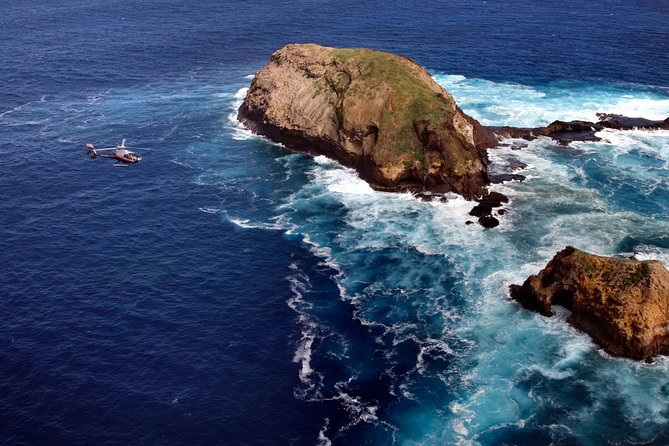
This tour uses Airbus EC130 helicopters, and it’s capped at 7 passengers plus the pilot. That small size is a big deal. You’re not sharing the experience with a huge crowd, and your pilot can manage the cabin attention without sounding like they’re reading a script into the wind.
A few onboard points that matter to your comfort:
- Seat assignments aren’t guaranteed by request. They’re set by weight and balance. If you’re traveling with a friend and want the best odds of sitting together, this is something to plan around mentally.
- The operator may rotate the helicopter during the flight so everyone gets to see key sights from their side.
- Many people mention feeling safe and settled during the flight, with pilots who keep a steady pace and explain what’s coming next.
From a camera standpoint, the panoramic windows help a lot, but the cabin still isn’t the same as standing on a dock. You’ll get better shots when you keep your lens steady and time your photos for the moments the pilot lines up the cabin.
Comfort and motion sickness: what to do for a 55-minute flight
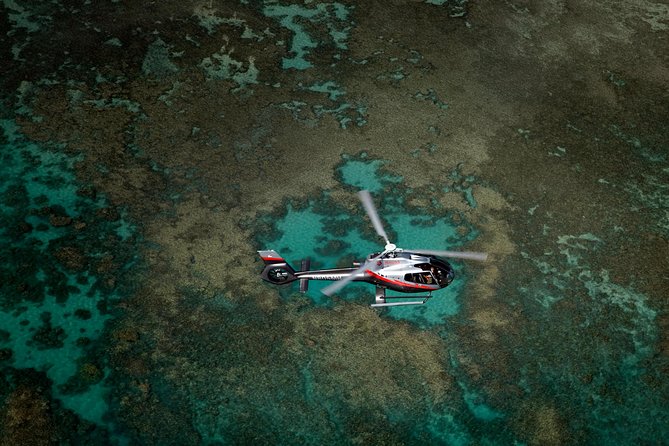
A helicopter ride is short, but it can still trigger motion sensitivity for some people. The good news: this is only about 55 minutes, and pilots generally warn about bumpy sections so you can brace.
If you’re prone to motion sickness, a practical move is to take your prevention medication ahead of time (many folks in feedback recommended timing their meds about an hour before). Also pack your own water bottle for after, but during the flight the tour notes that only bottled water is permitted.
Dress for comfort more than style. You’ll want:
- comfortable clothing
- shoes (required)
- sunglasses for glare off the ocean
And if you run hot or cold easily, bring a layer. Weather on the coast can change quickly.
Price and value: is $375.64 actually a good deal here?
At $375.64 per person for roughly 55 minutes, it’s not cheap. The value comes from what you’re buying:
- access to places you can’t efficiently see by car or bus
- aerial scale and vertical detail (cliffs, waterfalls, valleys, reef color shifts)
- a route that covers both Molokai and Maui in one day
If you’re comparing this to booking multiple land activities to cover the same spread of scenery, the helicopter can start to look like a time-saver. You’re paying for air-time over specific targets—Kahiwa Falls, Halawa Valley, reef and fishponds, Iao Valley State Park, Honokohau Falls—rather than paying for general scenery.
My advice: decide what you want your Maui vacation to feel like. If you want a day built around hikes and viewpoints from the ground, the helicopter might feel pricey. If you want that once-in-a-trip aerial perspective—especially with the two-island combination—it usually lands in the “worth it” category.
Also, the reviews people share about the flight often mention that the pilots manage the cabin and help ensure everyone gets a shot. That kind of execution matters when you’re paying for a premium experience.
Who this tour fits best (and who should think twice)
This tour is a strong match if you:
- want a bucket-list style aerial view without spending a full day driving
- like waterfalls and dramatic coastline
- want Molokai specifically, because it’s far less “easy” to reach from Maui than many first-timers expect
- prefer a small-group experience where the pilot can give real live commentary
Think twice if you:
- need to sit in a specific spot next to specific people (seat assignments depend on weight and balance)
- have issues with FAA ID rules and might forget documents
- have a strong allergy to helicopter noise or motion sensitivity you haven’t managed before
Should you book this Molokai and Maui helicopter tour?
If your goal is maximum scenery per hour, and you’d actually use the route—Molokai cliffs and waterfalls, reef and ancient fishponds, then Maui valleys and Honokohau Falls—this is an easy yes. It’s not just a sightseeing ride. It’s a clean, efficient way to see both islands in one perspective.
Book it if you can handle the ID requirement, you’re comfortable with weight-and-balance seating, and you’ll benefit from aerial views more than you’ll benefit from land exploration. If that’s your style, this is a rare Maui splurge that tends to feel like the trip highlight, not an expensive side quest.
FAQ
How long is the Deluxe Helicopter Tour of Molokai and Maui?
The flight is about 55 minutes.
Where does the tour start and end?
The tour starts in Kahului, HI and ends back at the meeting point.
Is hotel pickup and drop-off included?
No. Hotel pickup and drop-off are not included.
What photo ID do I need for check-in?
For passengers 18 and older, you must bring an original government-issued photo ID (like a REAL-ID compliant driver’s license or a valid passport). Photocopies or digital IDs are not accepted.
Is there a minimum age to fly?
There is no minimum age. Children under age two can fly as lap children with valid paperwork and fly at no cost.
Can children fly without an accompanying adult?
Children 16 and under must be accompanied by an adult.
Can I request specific seats?
Requests can be made, but seating is assigned based on legal weight & balance limits, so specific seating next to the party or in the same row can’t be guaranteed.
What if I weigh over the limit?
The tour notes a total weight per passenger limit of 275 lbs. Passengers over 275 lbs (124 kg) may need to purchase an additional seat, paid directly to the operator on the day of the tour, based on comfort and balance of the aircraft.
What happens if the weather cancels the flight?
This tour requires good weather. If the operator cancels due to poor weather, you’ll be offered a different date or a full refund.
Can I cancel for a full refund?
Yes. You can cancel up to 3 days in advance for a full refund. If you cancel less than 3 days before, the amount you paid is not refunded.