REVIEW · MAUI
Semi Private Surf Lessons with Experienced Coaches
Book on Viator →Operated by Maui Surfer Girls · Bookable on Viator
Surf lessons on Maui, minus the chaos. This semi-private setup gives you small-group coaching and a 30-minute sand lesson before you hit the waves. The one real drawback is the requirement: you must know how to swim, and the class is for ages 11+.
The action starts at Ukumehame Beach Park (615 HI-30, Lahaina) and runs about 2 hours total. You get licensed, English-speaking guidance, plus booties and a rash guard shirt, and the coaches keep groups tight for a more hands-on experience.
In This Review
- Key Takeaways Before You Paddle Out
- Ukumehame Beach Park: Where Your 2-Hour Lesson Starts
- Semi-Private Coaching Ratio: Why 2 Hours Feels Like More
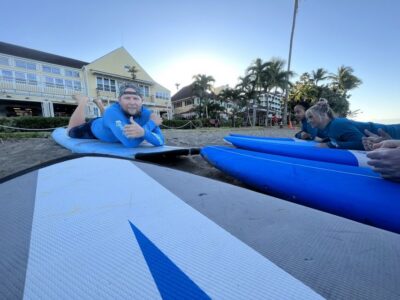
- The 30-Minute Land Lesson: Ocean Awareness and Pop-Up Practice
- The 90 Minutes in the Water: Getting on the Board Faster
- Board Choices and What They Mean for Beginners
- Gear Included: Rash Guard, Booties, and Staying Comfortable
- Price and Value: What $165 Buys You in Real Terms
- Who This Surf Lesson Is Best For (and Who Should Skip It)
- Practical Notes for Ukumehame: Sun, Comfort, and Watching Your Progress
- Should You Book Maui Surfer Girls Semi-Private Lessons?
- FAQ
- How long is the Maui Surfer Girls semi-private surf lesson?
- What is the minimum age for this lesson?
- Do I need to know how to swim?
- How big is the group for semi-private lessons?
- How many students does each instructor work with?
- Where does the lesson start?
- What surf gear is included?
- Is English the only language offered?
- What is not included in the price?
- What happens if the weather is poor?
Key Takeaways Before You Paddle Out
- Small semi-private groups (2–6 people) with a max 3:1 student-to-instructor ratio
- 30 minutes on land for ocean awareness, surf etiquette, and pop-up practice
- 90 minutes in the water, with coaches helping you choose sets and get positioned
- Gear included: longboards, soft tops, hard tops, booties, and rash guards
- Instructors get real about safety and technique, with names like Andrew, Jedi, Maggie, Kelly, Natalie, and Sloane showing up in coaching rosters
Ukumehame Beach Park: Where Your 2-Hour Lesson Starts
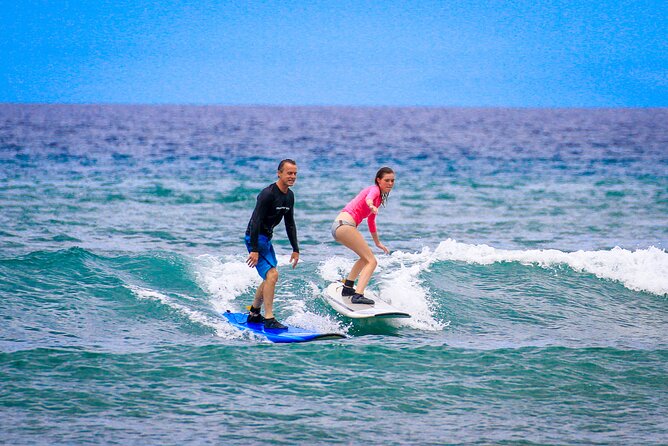
This lesson is timed for a classic Maui surf arc: meet, learn the rules, then get as much water time as possible. The meeting point is Ukumehame Beach Park, at 615 HI-30, Lahaina. The activity ends back at the same spot.
A practical detail: this is an outdoor beach session. One common heads-up from past sessions is that there is not a ton of shade at Ukumehame, so plan for sun from the moment you arrive. Bring a way to cool down between attempts, and don’t assume you’ll find instant relief under trees.
Also, you are not dealing with a giant herd here. Because this is semi-private, your group is kept together, and you’re not waiting around with strangers who are on totally different skill levels.
You can also read our reviews of more private tours in Maui



Semi-Private Coaching Ratio: Why 2 Hours Feels Like More
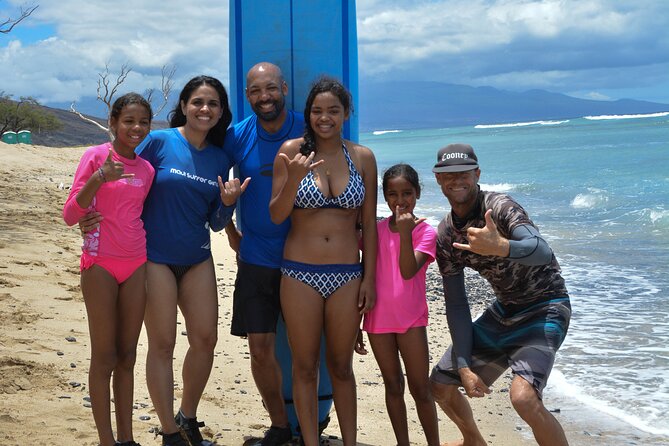
You’re paying for a format that’s meant to speed up learning. Maui Surfer Girls runs semi-private lessons for groups of 2–6 people, and the coaching is capped at 3 students per instructor. That matters because surfing beginners don’t just need general advice. They need quick corrections and frequent rest breaks.
The “private tour/activity” language also means you won’t be mixed into other groups. Only your group participates, but within your group the coaching ratio keeps things personal. If you’ve ever taken a class where an instructor does one talk for everyone and then disappears, this setup is designed to avoid that.
It’s also a family-friendly structure. The lessons run with ages 11 and up, and past sessions included a mix like a parent plus kids. If your group can all meet the swimming requirement, this is a good way to keep everyone moving through the lesson instead of waiting their turn.
The 30-Minute Land Lesson: Ocean Awareness and Pop-Up Practice
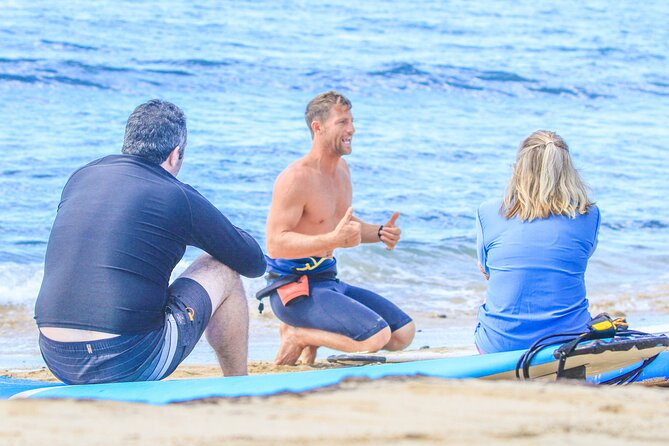
Before you paddle out, you get about 30 minutes on land. This is not filler. It’s the part that helps you stop guessing once you’re in the water.
Here’s what the land time covers:
- Ocean awareness (how to read what’s happening around you)
- Surf etiquette (the basics so you don’t create chaos)
- Pop-up practice (getting your body into position fast)
The biggest value is the pop-up work. Surfing is short bursts plus repeatable body mechanics. When the coach teaches an efficient pop-up method on sand, you waste less energy in the water trying to reinvent the motion.
Expect coaching to be direct and encouraging. Some instructors in the coaching lineup are known for patient, step-by-step instruction and a calm safety tone. If you’re nervous, this land phase helps you feel like you know what comes next.
The 90 Minutes in the Water: Getting on the Board Faster
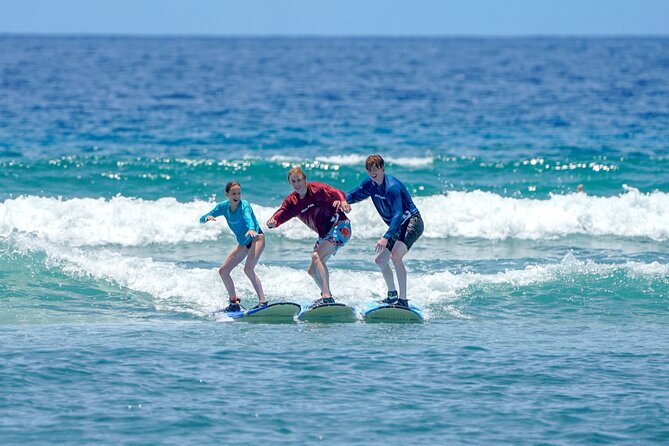
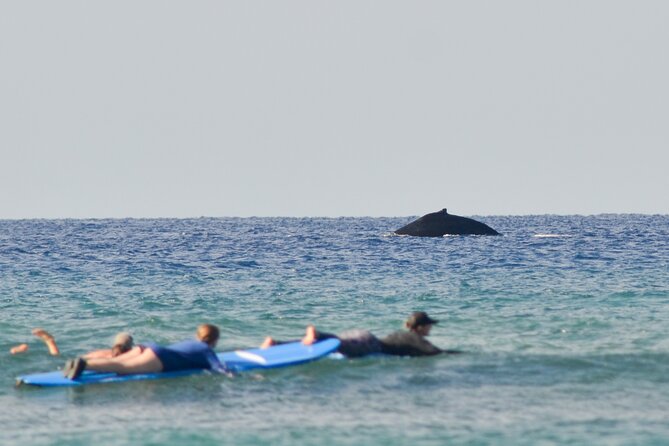
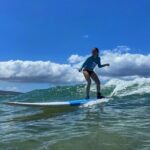
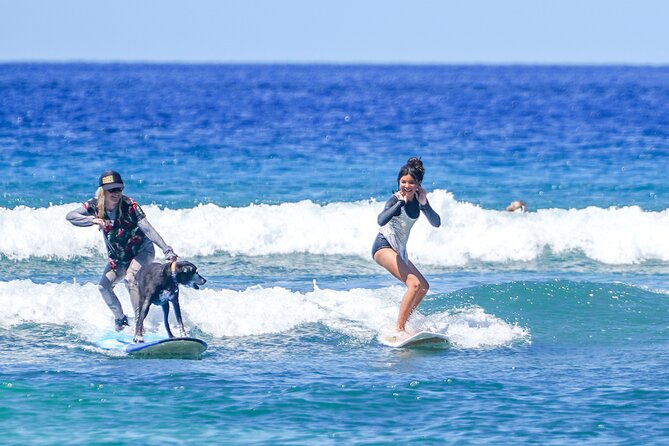
After the sand lesson, you shift into roughly 90 minutes of water time. That’s the payoff. The coaches aim to get you paddling out, catching workable waves, and standing up safely and repeatedly.
Ukumehame is often used for beginner-friendly conditions, and the coach’s job is to match you to the right waves. You should expect guidance on:
- Where to paddle relative to the wave sets
- When to go so you are not rushing your turn
- How to recover if you wipe out
One detail that can make a huge difference: coaches may physically help if you’re getting too tired to paddle. In past sessions, coaches like Sloane were described as using hands-on support to help someone get positioned and get moving out into the surf. If you have limited upper-body stamina, you’ll appreciate that the instruction isn’t only verbal.
Also plan for the workout. Surfing uses shoulders, neck, and core. If you’re a bit stiff from travel, you might feel it by the end, even if you stand up only a handful of times.
Board Choices and What They Mean for Beginners
You’ll have access to different boards depending on what fits your group and skill level. Included are longboards, soft tops, and hard tops.
The practical takeaway:
- Longboards are usually easier to balance on when you’re learning.
- Soft tops reduce sting and can feel more forgiving for first contact.
- Hard tops can work well once you’re moving confidently and your coach has seen your control.
Your instructor decides what you ride during the session, but the variety is a big plus. It means you are not stuck on one board type just because it’s what’s available.
Instructors also teach a pop-up style that’s meant to get you up quickly. Multiple coaches described an easy-on-the-body approach, which makes sense: beginners do not need a complicated gym routine. You need something you can repeat with fatigue.
A few more Maui tours and experiences worth a look



Gear Included: Rash Guard, Booties, and Staying Comfortable
The lesson includes key protection and comfort items:
- Booties
- Rash guard shirt
- Board options (longboards and surfboards)
One reason I like this included gear is simple: it reduces friction. If you show up in flip-flops and forget protection, your session can go from fun to irritated skin fast.
There’s also local “don’t miss this” advice from past sessions:
- Wear long pants or leggings. Board contact can irritate inner thighs.
- Use sunscreen and think about the backs of your legs, because they can get sun while you’re standing and riding.
- Reef-safe sunscreen matters since you’re in ocean water.
MSG also mentions body glide as something you can ask for to help prevent rash. If you’re prone to chafing, that’s worth requesting before you start.
Price and Value: What $165 Buys You in Real Terms
At $165 per person for about 2 hours, this isn’t a “cheap-and-cheerful” activity. But it also isn’t priced like a full private surf session.
The value comes from three things:
- Time allocation: you get a meaningful split with 30 minutes on land and 90 minutes in the water.
- Coaching attention: the max 3:1 ratio means you should get more than one-off tips.
- Safety and gear: you’re not scrambling to find boards, booties, or a rash guard.
In plain terms, you’re paying for a lesson that tries to maximize your odds of standing up while keeping the experience safe and guided. If your goal is to learn fast, this format is more efficient than a larger-group class where you’re stuck waiting for space.
The other value point: you can bring a small group (2–6). That turns the lesson into a shared Maui memory instead of a solo task where your family hangs around on the sand.
Who This Surf Lesson Is Best For (and Who Should Skip It)
This is a strong fit if:
- Your group includes ages 11+
- Everyone can swim (this is required)
- You want semi-private attention without the cost of true private coaching
- You’d like gear provided so you can travel lighter
It’s not a great fit if:
- Someone in your group struggles with swimming.
- Your party wants a fully private, one-on-one coaching experience.
- You are expecting a relaxed beach stroll. This is real surf practice, and your body will do work.
You also should have a strong physical fitness level. Surfing is not just standing on a board. Paddling, balance, and wipeouts all take effort.
If you’re with kids, this can work well, especially when you can keep everyone aligned with safety rules. In past sessions, coaches were praised for connecting with reluctant learners and making the experience feel playful while still staying structured.
Practical Notes for Ukumehame: Sun, Comfort, and Watching Your Progress
Between attempts, you’ll spend time on the sand while the coach runs the next wave set. That makes comfort matter.
Bring:
- Reef-safe sunscreen
- A rash-friendly layer if you didn’t bring extra long pants (leggings are commonly recommended)
- Water and a simple way to cool off
Also note the beach conditions. One simple heads-up from past sessions is that shade is limited. If you’re the one who burns fast, plan like you mean it.
For spectators: your group’s activity is focused, but families can watch from the beach. That can make the session less stressful for nervous students. Your support crew can help with the vibe while the coach handles the technique.
Should You Book Maui Surfer Girls Semi-Private Lessons?
If you’re ready to learn surfing on Maui without the chaos of huge groups, I’d say yes. The 30-minute land lesson plus 90 minutes in the water is a smart ratio. The 3 students per instructor max is the kind of detail that actually affects your results.
Book it if you meet the basics: age 11+, know how to swim, and you’re up for some physical work. If you want a guided first surf experience with included protection gear and coaching that’s described as patient and safety-first, this is a solid choice.
Skip it if anyone in your group can’t swim or if you need fully private, one-instructor-only attention.
FAQ
How long is the Maui Surfer Girls semi-private surf lesson?
It’s about 2 hours total.
What is the minimum age for this lesson?
The lesson is for ages 11 and up.
Do I need to know how to swim?
Yes. The requirement is you MUST know how to swim.
How big is the group for semi-private lessons?
It’s designed for parties of 2 to 6 people.
How many students does each instructor work with?
The program runs at a maximum 3:1 ratio of students to instructors.
Where does the lesson start?
The meeting point is Ukumehame Beach Park, 615 HI-30, Lahaina, HI 96793.
What surf gear is included?
You get longboards, soft tops and hard tops, plus booties and a rash guard shirt.
Is English the only language offered?
Yes, the lesson is offered in English.
What is not included in the price?
Gratuity for your instructor is not included.
What happens if the weather is poor?
This experience requires good weather. If it’s canceled due to poor weather, you’ll be offered a different date or a full refund.