REVIEW · MAUI
Small-Group Shark and Turtle Dive for Certified Divers
Book on Viator →Operated by Dive Maui · Bookable on Viator
Maui’s turtle scene starts from shore. This small-group scuba outing for certified divers focuses on Mala Wharf, a pier wreck with serious wildlife, and a guide who keeps you hunting for sea turtles and reef sharks.
What I like most is the mix of animals you can realistically expect: honu sea turtles plus white-tip reef sharks, along with critters like octopus, eels, nudibranchs, and the frogfish. I also like the practical setup—no need to pack scuba equipment, since it’s provided, and many divers get a focused pre-water briefing from pros such as Joe, Abbi/Abby, and Matt.
The main thing to think about is the shore-based nature of the experience. You’ll carry gear in and out, and at Mala Wharf you may walk over rocks with your scuba kit before you reach the water.
In This Review
- Key points at a glance
- Mala Wharf pier wreck: why this shore spot is built for turtles
- Your morning schedule at 7:30am: how 2.5 hours turns into real water time
- Small groups of four: how named guides change your odds of spotting the good stuff
- Sea turtles, white-tip reef sharks, and the full critter checklist
- Honu sea turtles (the headline)
- White-tip reef sharks
- The bonus life: octopus, eels, nudibranchs, frogfish
- Gear provided, plus what you might still want to pack
- Shore entry over rocks: the one logistical wrinkle to plan for
- Price and value: what $135.80 buys you on Maui
- Who should book this, and who might want a different plan
- Should you book this Mala Wharf underwater session?
- FAQ
- Question: Who is this experience for?
- Question: Is there a requirement about recent diving?
- Question: How big is the group?
- Question: What time does it start, and how long is it?
- Question: Do I need to bring my scuba equipment?
- Question: What marine life should I expect?
- Question: What happens if the weather is bad?
Key points at a glance
- Mala Wharf pier wreck: a famously productive shore spot where the underwater life has settled in well since 1992.
- Small group size (max 4): you get more attention and more pointing at cool stuff.
- Turtles and white-tip reef sharks are the mission: plus other critters like octopus, eels, nudibranchs, and frogfish.
- About an hour underwater: the schedule is built around “one hour-ish” in the water when air allows.
- Gear provided: you show up ready to swim, not ready to transport a whole scuba kit.
Mala Wharf pier wreck: why this shore spot is built for turtles
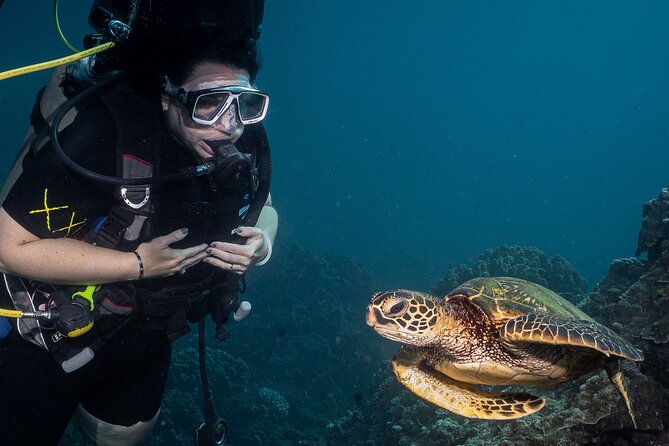
Mala Wharf is the star of this outing. After Hurricane Iniki destroyed it in 1992, the wrecked structure became a powerful reef anchor—broken pier sections turned into habitat. That matters because wildlife doesn’t just “pass through” randomly. It settles where there’s cover, food, and structure. Mala Wharf has those things in spades.
This is also a shore-based plan, which means you’re not spending a big chunk of your morning on boat logistics. You’re walking out to the water and getting started. In plain terms: you spend more time in the zone and less time on transfers.
From the wildlife list, you can see the intent. The guides are set up to look for the resident honu sea turtles and white-tip reef sharks. Then they widen the search for the smaller, weirder life too—octopus tucked into shelter, eels sliding into crevices, nudibranchs doing their slow-motion thing, and frogfish that can be hard to spot until they decide to show themselves.
One more detail I appreciate: the wreck supports more than just the big names. Schools of fish and the constant “stuff on the reef” vibe are part of the reason so many people treat this as their must-do Maui underwater stop.
You can also read our reviews of more tours and experiences in Maui.

Your morning schedule at 7:30am: how 2.5 hours turns into real water time
The outing starts at 7:30 am and runs about 2 hours 30 minutes total, with the activity ending back at the meeting point.
The key practical point is underwater time. The team notes that their shore sessions have the potential to be about one hour underwater, air permitting. Unless you request something different, shore sessions use standard-size tanks (their reference is 80’s), which usually translates to that near-60-minute window.
So how does that feel for you? If you’ve done scuba before, you know the truth: the trip is only as good as the time you actually spend looking for animals. This format is designed to give you enough time to spot a lot without turning your morning into a half-day project.
You’ll also get the normal rhythm you want for a shore start: a pre-water briefing, gear checks, then a guided path for what you’re hunting for. And because this is small-group (more on that next), you’re not just drifting along while someone manages a crowd.
Small groups of four: how named guides change your odds of spotting the good stuff
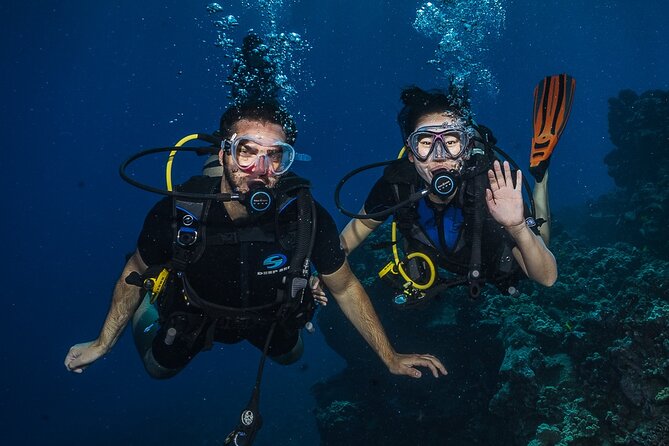
This experience caps at 4 travelers, which is a big deal for underwater attention.
In a large group, you tend to follow the guide’s wake and do your best not to get separated. In a group this size, your guide can slow down for eyes-on moments and adjust buoyancy pacing to the people in front of them. That’s where small-group formats shine: fewer people to corral, more ability to point out the same animal a few times from different angles.
The reviews also give you a clue about how the guides work. Joe is praised for a thorough pre-water briefing and staying friendly and professional. Abbi/Abby is repeatedly described as helpful in setting expectations for entry/exit and showing divers what to look for. Matt also gets credit for strong instruction and safety-conscious guiding.
Even without knowing which instructor you’ll get, the pattern is consistent: you’re not left to “figure it out.” You’re guided through what to watch for—signals, entry/exit expectations, and where the wildlife tends to show up at Mala Wharf.
Sea turtles, white-tip reef sharks, and the full critter checklist
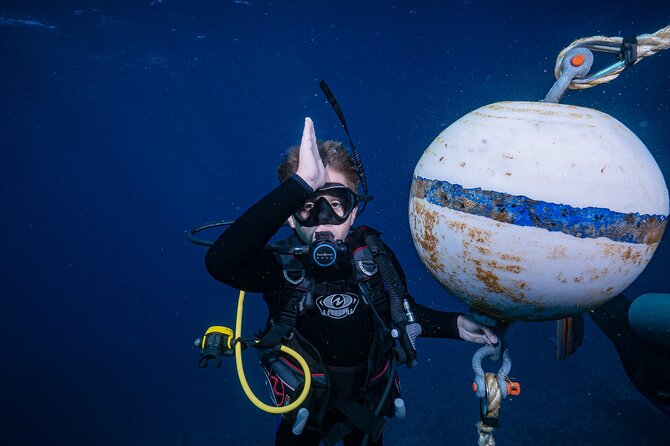
This outing is built around a simple idea: if you’re on Maui and you only have time for one shore-based underwater session, go to the place with the most consistent life. That’s why turtles and reef sharks are center stage.
Honu sea turtles (the headline)
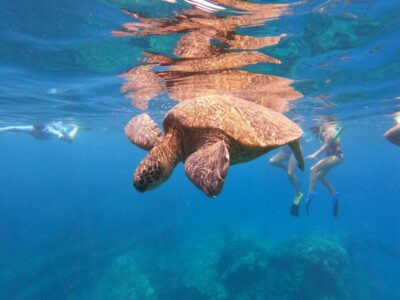
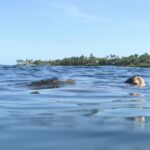
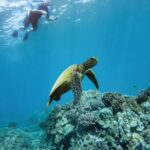
Honu sea turtles are the main reason people show up early and hopeful. Many divers describe seeing turtles in high numbers, including turtles at rest and at the famous turtle cleaning area (that cleaning-station concept comes up clearly in the feedback you provided). When turtles are active and the reef is busy, you get that “wait—there’s another one right there” feeling.
Also, turtles make it easier to relax. You don’t have to chase every fish. You can watch behavior: a slow glide, a turn toward the reef, or a pause that lets you get your eyes on the details of their shell and face.

White-tip reef sharks
White-tip reef sharks are another major target. These are not giant ocean swimmers; they tend to stick close to structure. That’s perfect for Mala Wharf, because the wreck gives them places to cruise along or rest.
In feedback from this experience, white-tip reef sharks show up more than occasionally, and sometimes in multiple sightings. Your guide will typically manage your position so you’re safe and not crowding the animals.
The bonus life: octopus, eels, nudibranchs, frogfish
Then come the smaller stars, which many people remember longer than they expect.
- Octopus: look for them in sheltered areas around the structure.
- Eels: they tend to vanish and reappear, so you’ll want to watch those crevices during your guide’s scan.
- Nudibranchs: tiny sea slugs that reward slower, calmer looking.
- Frogfish: the elusive one. If you don’t spot one right away, don’t assume it’s not happening. The goal is methodical searching of reef ledges and hiding spots.
One reason I like this critter checklist is it keeps your eyes working the whole time. Even if you’re not a “big animals only” person, you’ll have a lot to focus on.
Gear provided, plus what you might still want to pack
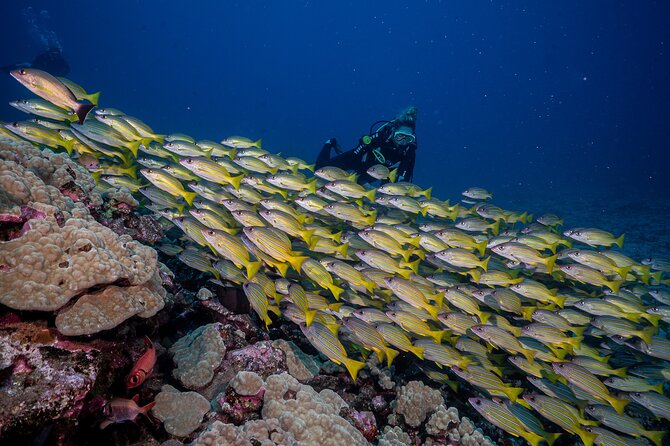
The operator provides scuba equipment, so you don’t need to show up with your regulator, BCD, or tank arrangements. That’s real value in Maui, where packing everything and dealing with travel weight can be a headache.
Still, reviews point to a couple of smart personal adds:
- If you own your own mask, you might find it more comfortable to wear your familiar fit.
- Bringing a small torch/flashlight can help with spotting smaller reef critters. Not everyone needs one, but it’s an easy way to make low-visibility ledges easier to inspect.
Wetsuits and core scuba gear quality are praised in the feedback you shared, including modern, comfortable equipment and good wetsuits. That reduces the usual “I hope this fits me” uncertainty.
One more practical note: this is certified divers only, and you must be able to carry your own scuba gear in and out of the water. That means your “gear packing” might be lightweight, but your “gear handling” is still on you.
Shore entry over rocks: the one logistical wrinkle to plan for
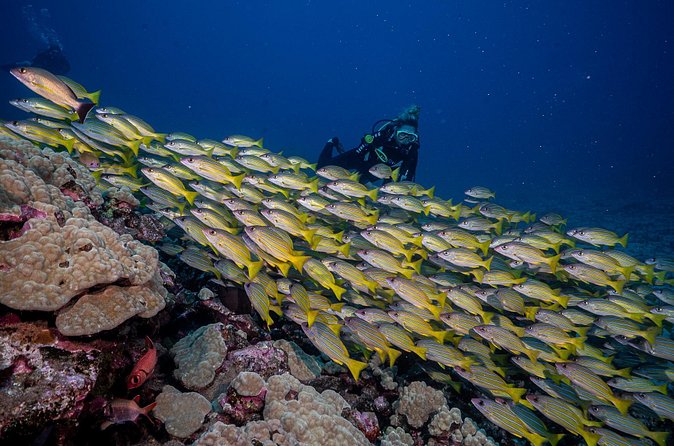
Here’s the tradeoff that comes up in the details you provided: shore entry.
At Mala Wharf, you may need to walk with your scuba kit over rocks to reach the beach and then into the water. Another run described walking into the beach from a parking lot. So the expectation is simple: you’re doing a short walk with your gear.
This matters if:
- your footing isn’t great,
- you’re carrying gear and want a low-risk path,
- or you’re recovering from any recent lower-body injury.
The upside is that shore entry can be efficient and close to the shop—no boat schedule, no reef-to-reef travel time. But you should be honest about the walking/rock element before booking.
Your best move: go prepared for a little walking workload. Wear grippy footwear where appropriate, and be ready to move carefully with your gear.
Price and value: what $135.80 buys you on Maui
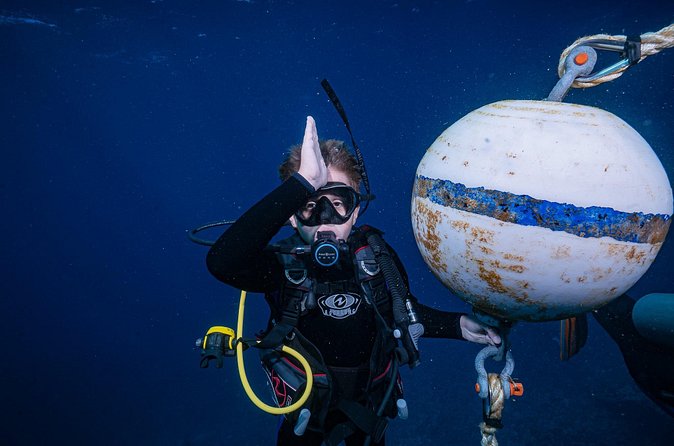
At $135.80 per person, this price lands in the “solid value” category for Maui, mostly because the key costs are wrapped in.
You’re paying for:
- a small-group guided underwater session (max 4),
- access to a high-productivity shore site at Mala Wharf,
- and scuba equipment provided on-site.
When equipment is included, the cost comparisons get easier. Many people compare prices across operators without counting what they’d have to rent themselves. Here, you avoid the full gear rental burden, which makes the price feel more straightforward.
The other value lever is the guide-to-diver ratio. A small group doesn’t just mean comfort—it means better instruction, more targeted pointing, and more chances to see the animals the trip is built around (turtles, white-tip reef sharks, and the smaller critters).
Bottom line: if your goal is one strong shore-based underwater outing with minimal hassle, this format looks like good money.
Who should book this, and who might want a different plan
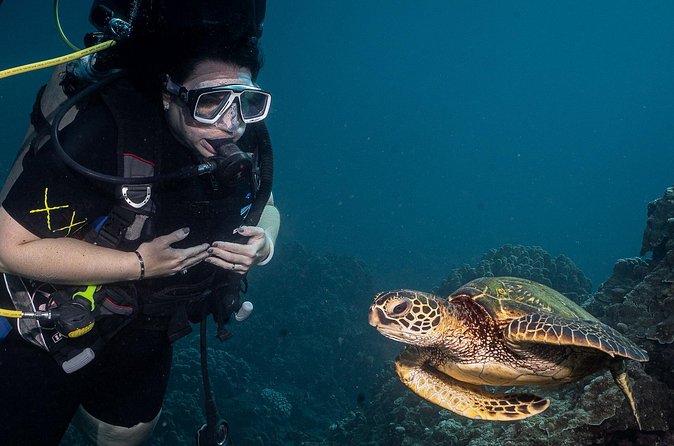
This is for certified divers only. You also need to have dived in the previous two years to participate. And you should have a moderate physical fitness level.
So this is a good fit if you:
- are already scuba certified,
- can comfortably manage gear carrying and a shore entry,
- want a wildlife-focused morning with lots of attention,
- and like the idea of structure-based searching around a pier wreck.
It may be a poor fit if you:
- haven’t been in the water recently (the two-year requirement is real),
- can’t handle carrying your own gear,
- or you know you struggle with walking over rocky surfaces.
One last practical detail: service animals are allowed, and the meeting point is at 1223 Front St, Lahaina. It’s also near public transportation, which can help if you’re mixing this with other Lahaina-area plans.
Should you book this Mala Wharf underwater session?
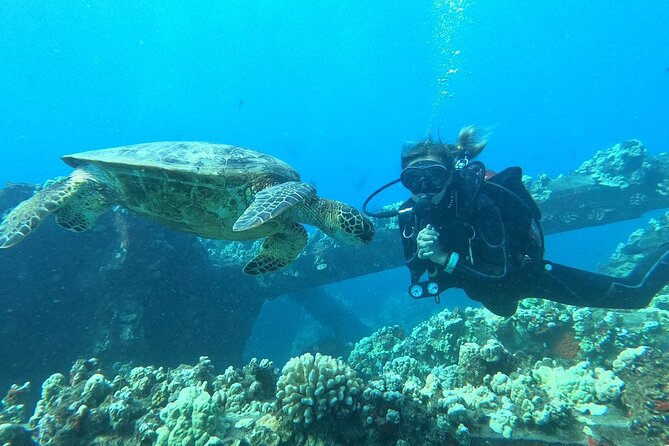
If you want one Maui shore stop that’s built around honu sea turtles, white-tip reef sharks, and a strong chance at smaller critters, I’d book it. The small group size (max 4) and the guide-led search are exactly what you want when you’re targeting animals that can be stationary, hidden, or easy to miss.
I’d only hesitate if the shore entry over rocks sounds like stress you don’t want on your vacation. If you’re comfortable carrying gear and moving carefully over uneven footing, this is a smart, high-value way to get meaningful underwater time at Mala Wharf—without the hassle of a long boat day.
FAQ
Question: Who is this experience for?
This is for certified divers only. You must be able to carry your own scuba gear in and out of the water, and you should have moderate physical fitness.
Question: Is there a requirement about recent diving?
Yes. You need to have dived in the previous 2 years to participate.
Question: How big is the group?
The maximum group size is 4 travelers.
Question: What time does it start, and how long is it?
The start time is 7:30 am, and the duration is about 2 hours 30 minutes.
Question: Do I need to bring my scuba equipment?
No. Scuba equipment is provided. You still need to be able to carry your own scuba gear during entry and exit.
Question: What marine life should I expect?
You’ll be guided in search of sea turtles (honu) and reef sharks. The site is also known for octopus, eels, nudibranchs, and the frogfish.
Question: What happens if the weather is bad?
The experience requires good weather. If it’s canceled due to poor weather, you’ll be offered a different date or a full refund.