REVIEW · MAUI
Oceanfront Landing 75-Minute Event Helicopter Tour
Book on Viator →Operated by Air Maui Helicopter Tours · Bookable on Viator
A helicopter ride over Maui sounds like a cliché. This one earns its hype with forward-facing 180-degree views and that jaw-drop moment when you actually land on the ocean. You’ll also get live narration that helps you connect what you’re seeing to how the islands formed.
I love that the cabin is set up so everyone faces forward, not sideways guessing. I also really like the added perspective of an oceanfront landing on Maui’s North Shore, which turns the whole flight from scenic to memorable. One thing to weigh: it’s a shared 6-passenger ride, and the windows and seating can make photos tricky for some people.
If you want a Maui helicopter tour that feels like Hawaii from above and on the ground, this is a strong match. Just plan to travel light, wear dark clothes for window glare, and keep weather in mind.
In This Review
- Key highlights you’ll feel fast
- Kahului Heliport: get set, then get sky-ready
- The 6-seat ASTAR setup and why it changes everything
- West Maui ridges to the Pailolo Channel: the first wow moment
- Molokai cliffs, rain forest, and waterfalls: what you’re really buying
- The oceanfront landing on Maui North Shore: the photo op plus the feeling
- Back across the West Maui Mountains: finishing strong
- Who this tour is best for (and who should reconsider)
- Price and value: why $404 can make sense here
- Video on USB: when it’s worth it
- What to do before you go: packing, clothing, and nerves
- Quick itinerary flow: what happens, in order
- Should you book this oceanfront 75-minute helicopter tour?
- FAQ
- Where is the meeting point for the tour?
- How long is the Oceanfront landing helicopter tour?
- What route will the helicopter fly?
- Is the tour shared with other people?
- What is included and what should I expect to pay for separately?
- Are there weight restrictions I should know about?
- Are bags allowed on board?
- Can I cancel and get a full refund?
Key highlights you’ll feel fast
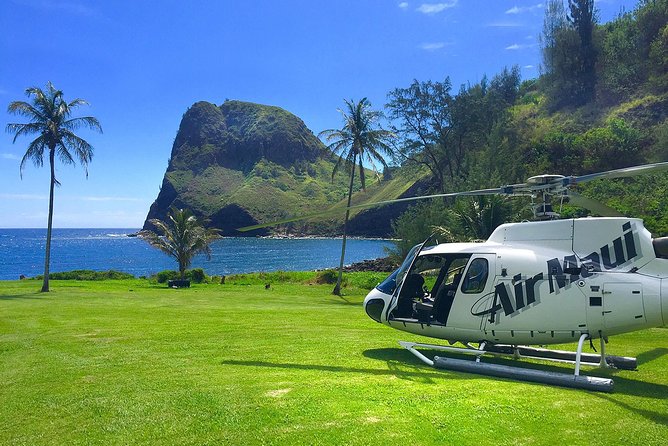
- Forward-facing 180-degree views in an ASTAR helicopter with six passenger seats
- West Maui to Molokai route over ridges and the Pailolo Channel
- Oceanfront landing on Maui’s North Shore for photos and a new angle
- Pilot narration that explains what you’re looking at, not just where you’re going
- Small group size (max 6 travelers per flight) for a calmer feel
- On-board recorded video available to purchase on a USB after the flight
Kahului Heliport: get set, then get sky-ready
Your tour starts at 108 Lelepio Pl in Kahului, and it ends back at the same meeting point. You’ll want to arrive with enough buffer to park, check in, and settle before boarding.
A few practical notes that matter once you’re there: parking is paid with a QR code at the heliport entrance, and it’s credit card only. Also, plan to travel without bags—no backpack, no fanny pack, and even no purse. The goal is simple: keep the cabin free for safety and comfort.
One small tip I’m glad you have upfront: the operator asks you to wear dark clothing. That reduces reflections on the windows, which can make a huge difference if you’re trying to photograph cliffs, waterfalls, and coastlines.
A few more Maui tours and experiences worth a look


The 6-seat ASTAR setup and why it changes everything
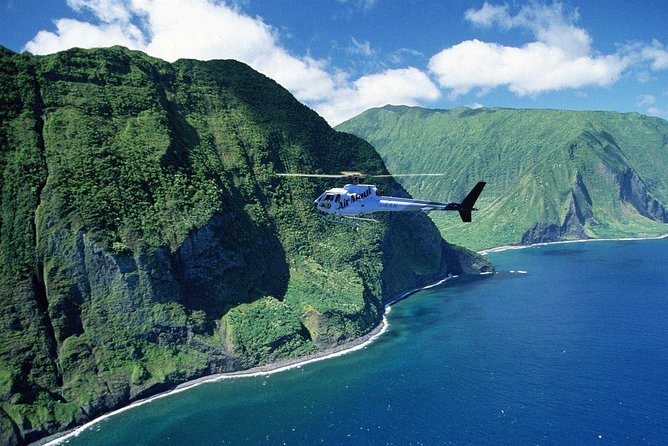
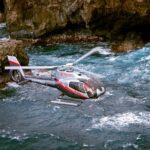
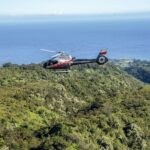
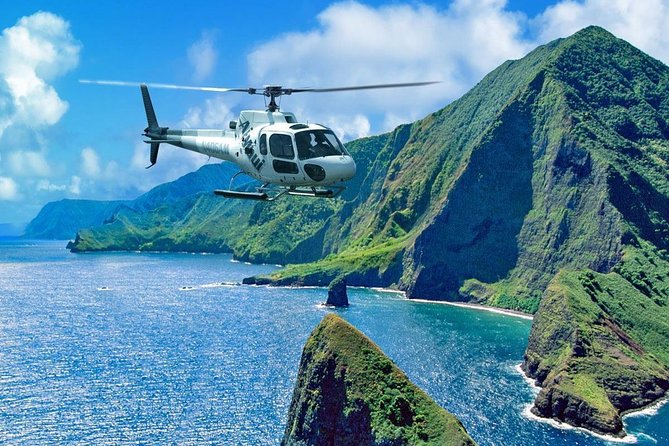
This flight uses an ASTAR helicopter with six forward-facing seats, plus the pilot. That means you’re not trapped watching through someone’s shoulder. You’re set up to see in a wide arc—exactly what you want when the route includes cliffs, channels, and waterfalls.
In plain terms: when everyone faces forward, you can actually track the scenery as you fly. It makes the narration easier too, because the pilot is describing features you can see without twisting around.
There’s a trade-off, though. Because it’s a tight shared cabin, some riders have mentioned cramped seating and issues with window visibility for photos. You can’t change the aircraft size, but you can maximize your odds: sit where you’re assigned, keep your camera ready, and wipe down the part you’re photographing through if the window looks smudged.
West Maui ridges to the Pailolo Channel: the first wow moment
Once you board, the tour takes off and you start with the West Maui ridges. This is where the helicopter format really earns its keep. From a car or even a bus, you get roads. In the air, you get altitude, and suddenly the coastline and valleys make sense as a whole.
Then you cross the Pailolo Channel toward Molokai. The channel is the big visual separator between islands, so it tends to create that instant sense of scale—water stretching farther than you expect, cliffs dropping into it, and weather patterns shaping what you can see.
A lot of the best moments here are quick. You’ll fly past and over features that you can’t easily reach from land. That’s the real value of helicopter time: you spend minutes above places that would take hours to approach by road, and in many cases you can’t access at all safely on foot.
Molokai cliffs, rain forest, and waterfalls: what you’re really buying
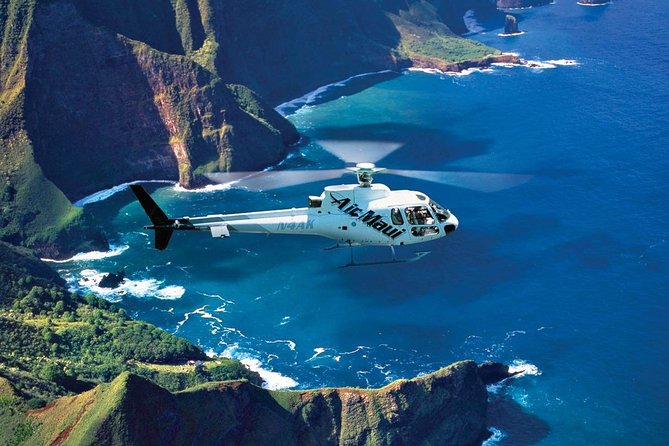
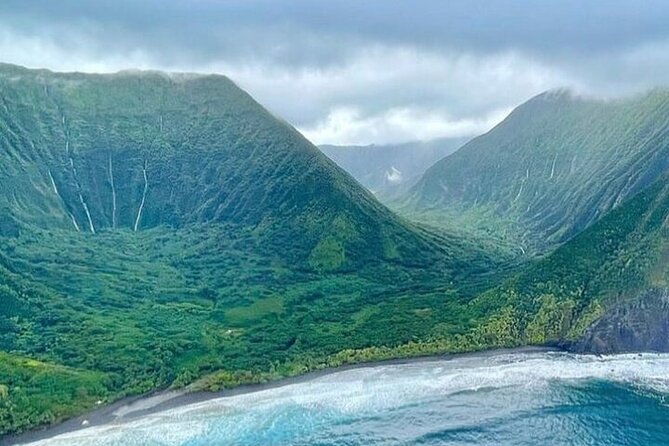
Molokai is famous for being rugged and less developed than its neighbors, and this route is built to show that. From the air, you get views of steep sea cliffs, rain forest areas, and waterfalls as the terrain breaks into dramatic layers.
Even if you’ve seen photos, aerial views make the scale click. Waterfalls look smaller on the ground because you’re often at a distance. From above, you can track where water comes from and how it drops through the geography.
Weather matters here. The operator notes that flight routes and sights may vary due to conditions. If clouds sit in the wrong place, some waterfall views can fade. That’s not a hidden downside—it’s simply how airborne sightseeing works in Maui’s changing conditions.
The oceanfront landing on Maui North Shore: the photo op plus the feeling
After the Molokai portion, you return and land at a private oceanfront spot on Maui’s North Shore. This is the signature twist. Instead of only looking down, you step out and see the shoreline from ground level, with wind, sound, and lighting that you simply can’t reproduce from a window.
For photo lovers, this is huge. You get a different angle on the coast and sea cliffs, and you can reset your camera position instead of shooting through reflections. Several recent riders singled out the oceanfront stop as the standout moment, especially for pictures.
For people who feel nervous about helicopter rides, landing helps too. It’s a clear milestone: you’re not just circling. You land, you look, you take a breath, and then you continue.
If you’re hoping for a specific shot—like a particular cliff face or waterfall location—use the landing time for your planning and framing. A lot of great pictures come from slowing down for ten minutes on the ground, not from frantic shutter-speed bursts in the air.






Back across the West Maui Mountains: finishing strong
After the oceanfront break, your flight continues across the West Maui Mountains and back to the Kahului heliport. This section is less about one single “must-see” and more about tying the whole trip together.
From the air, the mountains act like a divider. They shape which sides get weather, where valleys cut through, and how the coastline bends. By the time you’re heading back, you’re often better at recognizing features as the pilot calls them out.
This is also when you’ll notice how fast the helicopter moves compared to how slow the scenery seems. It’s a funny mental mismatch: time flies, but the views keep feeling like they could be paused.
Who this tour is best for (and who should reconsider)
This tour works best if you want a high-impact Maui experience in a short window. At about 75 minutes, it’s long enough to include both islands’ highlights, but not so long that it turns into a half-day logistics puzzle.
It’s a great fit for:
- Couples and families who want something special beyond beaches
- First-time helicopter riders who still want real geography and narration
- Photo-focused travelers who want an above-and-beyond ground stop at the oceanfront
You might think twice if:
- Photos through windows are your top priority, and you’re sensitive to smudges, glare, or reflections
- You hate small shared cabins (seating is tight by necessity)
One funny practical tip from rider feedback: if you get motion sick, don’t show up starving. A couple of people recommended avoiding food right before the flight to keep things calmer in the air. If you’re prone to nausea, consider taking your usual coping steps.
Price and value: why $404 can make sense here
At $404 per person for about 1 hour 15 minutes, this isn’t a budget add-on. But helicopter tours aren’t priced like sightseeing buses—they’re priced like scarce airtime over terrain that’s hard to access.
Here’s why I think the value can work:
- You’re seeing two islands on one flight: West Maui and Molokai
- You get an oceanfront landing, not just a flyover
- Every seat is forward-facing with wide viewing angles, so the experience isn’t wasted by poor sightlines
- You also get recorded narration you can purchase on a USB after the flight (useful if you want to relive the route at home)
What you should watch for is simple: you’re paying for access and time in the air, not for luxury. The cabin is functional. The windows and seating quality can affect photos. If your expectations are set for scenery and perspective rather than comfort perfection, you’ll probably feel good about the spend.
Video on USB: when it’s worth it
At the end of the flight, the trip is recorded and available for purchase on a USB. This can be a nice souvenir because it preserves the flight itself—especially if you want proof of the moment you’re pointing at a cliff and thinking, wow, that’s real.
But I’d treat it as a bonus, not a substitute for photos. One review noted disappointment when the video didn’t match their specific hopes about waterfall scenes and cliff locations. That doesn’t mean your video will be the same. It just means: if you’re aiming for a particular view, prioritize getting your own photos during the flight and especially during the oceanfront landing.
What to do before you go: packing, clothing, and nerves
This tour has a few “small rules” that can prevent big headaches.
- Wear dark clothing to reduce glare on windows.
- Leave bags behind. The rule is strict: no purse, no fanny pack, no backpack.
- Keep an eye on your weight category. There are specific limits that can require an extra seat purchase for safety and comfort.
If you’re nervous about flying, it helps that many pilots on these routes focus on comfort during boarding and throughout the narration. Recent rider feedback includes pilots like Cameron, Drew, Vince, Nathan, and Kirk being singled out for calm professionalism and island storytelling. Even if your pilot isn’t one of those names, the point is consistent: the ride is designed to be handled well.
One more practical note: routes can change due to weather. So come with curiosity, not a strict checklist of exact waterfalls.
Quick itinerary flow: what happens, in order
Here’s the rhythm you’ll follow from takeoff to touchdown:
1) Fly out from the Kahului heliport over the West Maui ridges
2) Cross the Pailolo Channel to Molokai for sea cliffs, rainforest areas, and waterfalls
3) Return and land at a private oceanfront spot on Maui’s North Shore for views and photos
4) Continue over the West Maui Mountains and back to Kahului
This structure is why the tour feels complete. You don’t just see distance—you get a ground-level reset, then you finish with a bigger-picture view of how the islands connect.
Should you book this oceanfront 75-minute helicopter tour?
If your Maui “must-do” is an aerial look at West Maui plus Molokai, and you’ll enjoy the bonus of a real oceanfront landing, I’d book it. The forward-facing setup and the small max group size help keep the experience focused and easier to take in.
If you’re booking mainly for a perfect photo outcome, I’d still consider it—but go in with flexible expectations. Windows, reflections, and the exact lighting can vary, and the most reliable photo time is usually the ground landing moment.
Overall, this is one of those tours where the value comes from access: places that feel impossible from land become visible from the sky—and then you stand on the coast to make it real.
FAQ
Where is the meeting point for the tour?
The tour starts at 108 Lelepio Pl, Kahului, HI 96732, USA, and it ends back at the same meeting point.
How long is the Oceanfront landing helicopter tour?
The flight is approximately 1 hour 15 minutes.
What route will the helicopter fly?
You’ll fly over West Maui ridges, cross the Pailolo Channel to Molokai, then return and land at a private oceanfront spot on Maui’s North Shore before continuing back over the West Maui Mountains to the heliport.
Is the tour shared with other people?
Yes. Each flight is a shared cabin that holds six passengers and one pilot.
What is included and what should I expect to pay for separately?
Included: a professional pilot-guide. Not included: hotel pickup/drop-off and food or drinks. The recorded trip is available for purchase on a USB at the end of the flight.
Are there weight restrictions I should know about?
Yes. Total weight per passenger is limited, with specific rules for single passengers at or above 240 lbs and for combined group weights. If required by the weight rules, you may need to purchase an additional seat for safety and comfort.
Are bags allowed on board?
No bags are allowed. This includes purses, fanny packs, and backpacks.
Can I cancel and get a full refund?
You can cancel up to 24 hours in advance for a full refund. If you cancel less than 24 hours before the experience starts, the amount you paid will not be refunded.