REVIEW · MAUI
Maui Whale-Watching Tour by Raft from Kihei
Book on Viator →Operated by Redline Rafting · Bookable on Viator
Whales close up, with speed and brains. This Maui whale-watching tour from Kihei pairs a sturdy raft, an on-board marine naturalist, and a hydrophone so you can spot humpback behavior and even hear whale song. On different departures, you may be guided by folks like Capt. Jamie alongside crew such as Josh, Tony, and Emma.
I really like two things about this outing: you’re out for about 1 hour 30 minutes, which feels efficient, and the crew keeps you moving to improve your odds of seeing active whales. I also like that the experience includes an on-board expert who can answer real questions on the spot, plus there are nonalcoholic drinks and a sunshade for the parts you’re waiting and scanning.
One consideration: it’s a speed raft, so you should plan for choppy water and some spray. If you’re sensitive to rough rides—or if you have bad back or neck issues—this may not be the right fit.
In This Review
- Quick, useful highlights
- Why a Kihei raft whale watch feels better than big boats
- Getting set up at the Kihei Boat Ramp (and why timing matters)
- The 90-minute route: from Kihei to Wailea and Keawakapu
- The southern coastline whale hunt: what to watch for
- The marine naturalist on board: learning that actually helps you spot whales
- Raft comfort, sunshade, and the bumpy-water reality check
- Price and value: is $84.14 a good deal for humpback whales?
- Tips to improve your sightings (without overthinking it)
- Should you book this Maui raft whale-watching tour?
- FAQ
- What’s the duration of the Maui Whale-Watching Tour by Raft from Kihei?
- Where do I meet the tour?
- Is hotel pickup included?
- Is the tour in English, and do I get a ticket on my phone?
- How old do you need to be to join?
- Who should not book this tour?
- What wildlife might I see besides humpback whales?
- What happens if weather is poor?
Quick, useful highlights
- Max 22 travelers for a more personal feel than big whale boats
- Guaranteed to see whales, based on the operator’s promise
- Hydrophone whale song gives you an extra sense beyond just sight
- On-board marine naturalist for fast, practical explanations
- Sunshade + nonalcoholic drinks so you stay comfortable in the sun
- Fast raft setup that helps the crew reposition quickly for sightings
Why a Kihei raft whale watch feels better than big boats
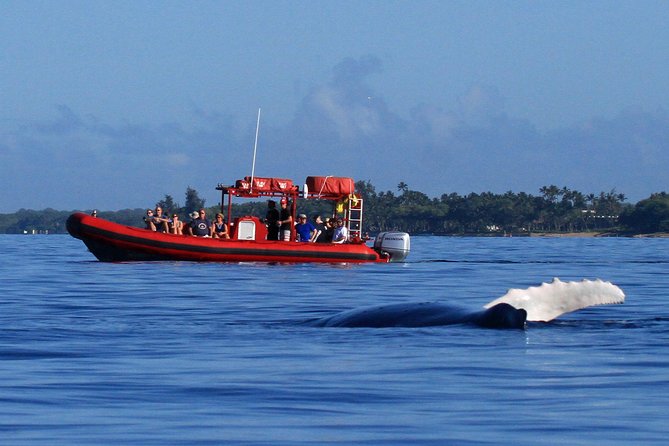
Maui whale-watching can turn into a lot of waiting around—especially on larger vessels. This one works differently because it runs on a smaller raft and a faster cruising style, which helps the crew adjust the route when whales surface.
You’ll also get the best kind of “extra”: a marine naturalist on board plus an on-board hydrophone. Seeing spouts and tail slaps is already the main event, but listening to whales through the hydrophone changes how you experience the water. It’s not just whale watching as a visual hobby; it becomes a whole sensory thing.
If you’re the type who wants the payoff quickly—without spending most of a day on the ocean—this 90-minute format is a strong match. It’s also the sort of tour where the crew’s personality matters. From names that have guided past departures (like Capt. Jamie, Tony, Emma, Jake, and Josh), it’s clear they aim to make the trip fun, not robotic.
You can also read our reviews of more whale watching tours in Maui


Getting set up at the Kihei Boat Ramp (and why timing matters)
Your starting point is the Kihei Boat Ramp area at 2800 S Kihei Rd, Kihei, HI 96753. Plan to arrive about 30 minutes before departure for check-in. Parking is listed as free, which is a small but real win when you’re traveling and juggling daylight.
There’s no hotel pickup, so you’ll be driving yourself or using your own transport plan. That sounds simple, but it matters for value: you avoid the extra cost and time sink of pickup logistics, and you can choose the schedule that works for you.
You’ll also receive a mobile ticket, and the tour is offered in English. Confirmation happens within 48 hours (subject to availability). That means you don’t have to obsess for months, but you should still lock it in ahead of time—on average, this tour gets booked about 21 days in advance.
The 90-minute route: from Kihei to Wailea and Keawakapu
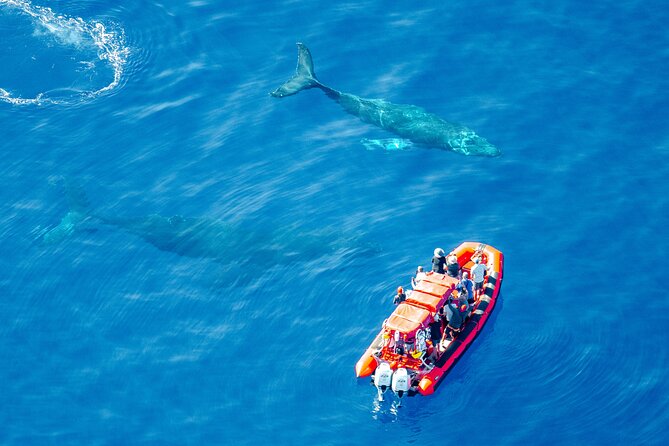
This trip is built to keep you scanning and repositioning, not idling. After check-in at the Kihei ramp, you head out along the southern coastline where humpbacks are common.
Here’s how the shoreline part breaks down:
Kihei (meeting at the ramp)
This is where you’ll get your safety briefing and your first look at the ocean conditions. Expect to spend a short window getting everyone organized before the main run begins. If you’re prone to motion sickness, this is also the time to decide what you’ll need for comfort.
Wailea Beach pass-by
You’ll pass by Wailea Beach while you’re on your whale watch. Even if you don’t see whales from the shoreline moment, it gives you an anchor point—this is Maui’s more resort-heavy stretch, and it’s a useful mental reference as you head toward deeper waters.
Keawakapu Beach pass-by
You’ll also pass by Keawakapu Beach. Again, this is about keeping the route logical and giving you coastline context while you hunt for humpbacks farther out.
The tour stays short, so there isn’t time for long detours. That’s the trade-off: the crew prioritizes whale encounters over sightseeing stops. For many people, that’s exactly what they came for.
The southern coastline whale hunt: what to watch for
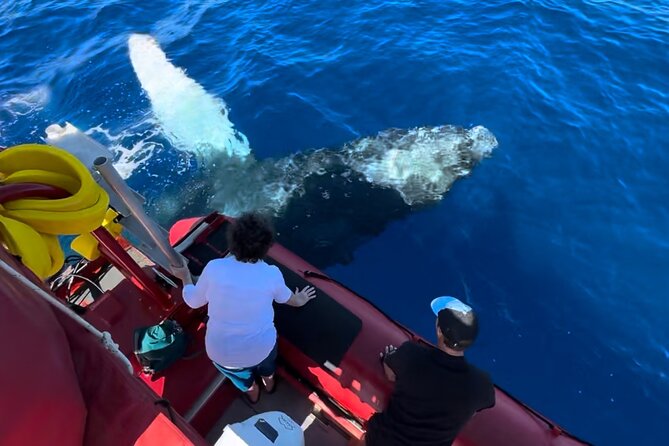
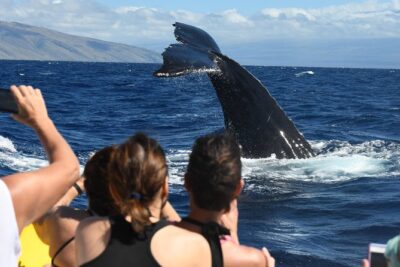
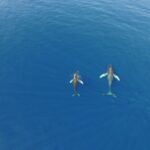
The tour is focused on humpback whales traveling through Maui’s warm waters. When humpbacks are active, you may see multiple behaviors within a short window—spouts, surface intervals, and the classic slap-and-tail movements.
Here’s how to watch smarter on a raft:
- Look for breathing behavior first: a spout often appears before you fully see the body.
- Watch the water for quick changes: surface activity can be brief, then gone.
- Pay attention to crew cues. When the naturalist or captain points something out, it’s usually because they’ve already spotted movement you might miss at first glance.
One neat benefit of having a hydrophone is that it can give you a clearer sense of what’s happening around the boat. You’re not waiting only for visual proof. You can hear whale activity, even if the whale isn’t instantly visible.
Some departures may also push toward areas around Molokini Crater as part of the search pattern. The key word there is may—your exact route depends on where whales are showing up that day.
And yes, you should expect water conditions to affect comfort. Even when whales are near, the ocean decides how smooth the ride is.
The marine naturalist on board: learning that actually helps you spot whales
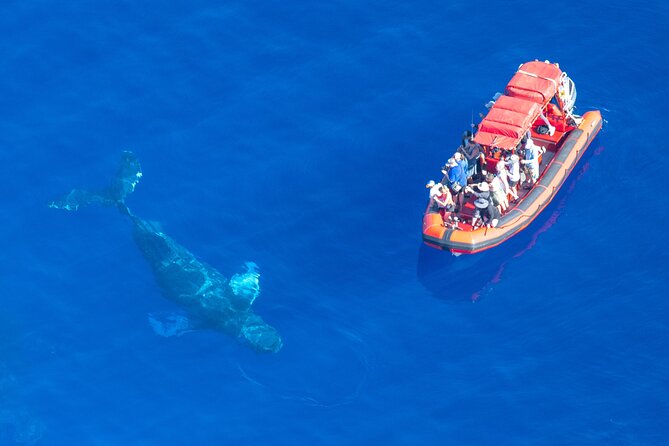
If you like wildlife explanations, you’ll probably enjoy the onboard naturalist format here. The goal isn’t a lecture. It’s quick, relevant teaching while you’re actively scanning the water.
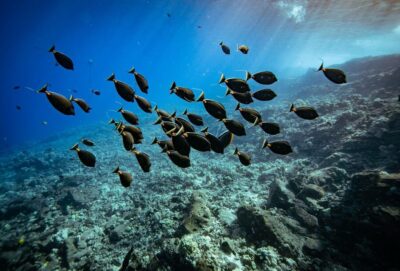
From past crews, you can expect a mix of safety, whale behavior, and marine creature facts. And it’s not just whales. You’ll also keep an eye out for dolphins and sea turtles, which makes the watch feel richer even when whale surfaces are less frequent.
A practical way to get more out of the tour: ask the naturalist one or two focused questions. Things like how to tell different whale behaviors apart, why whales surface when they do, or what certain sounds might indicate. With a smaller group, you’re more likely to get direct answers instead of a one-size-fits-all script.
Also, the naturalist and captain teamwork matters. When you hear whale calls through the hydrophone and then see matching behavior on the surface, the learning clicks fast. That’s the difference between just seeing animals and understanding what you’re seeing.





Raft comfort, sunshade, and the bumpy-water reality check
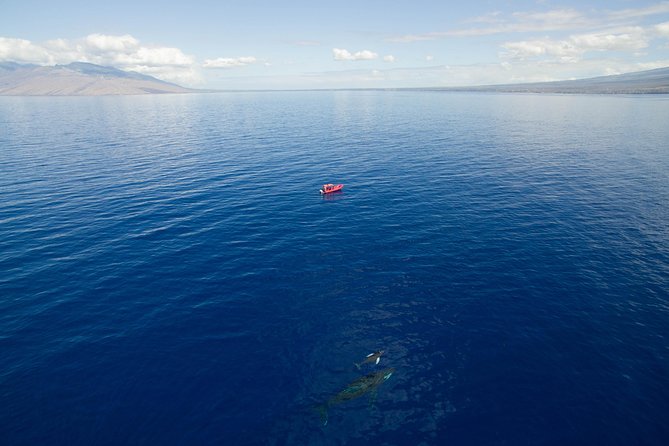
This is a raft, not a smooth cruise ship. That’s part of the appeal: the boat feels agile and lively. It also means the ride can be bumpy and you might get wet.
The good news is that you’re not out there exposed the whole time. There’s a sunshade to cool off, plus nonalcoholic drinks. So you’re not just balancing on a bench and hoping for the best.
A few other notes that can help you plan:
- If you’re sensitive to motion, consider how you’ve handled boats before. A speed raft can feel more intense than slower vessels.
- Dress for sun and spray. Maui sun is strong, and saltwater mist is part of the deal.
Safety-wise, the operator lists clear limits: no back or neck injuries and no pregnant passengers. Even if you’re not pregnant, the back/neck warnings are strong. If you fall into that category, look for a more gentle boat option.
One more real-world consideration: because it’s a small group (max 22), the vibe can be great, but if the raft feels crowded on your departure, your comfort and photo angles can suffer. Past trips have praised the small group size overall, yet one person did flag that raft space can feel tight. That’s not a dealbreaker, but it’s worth knowing.
Price and value: is $84.14 a good deal for humpback whales?
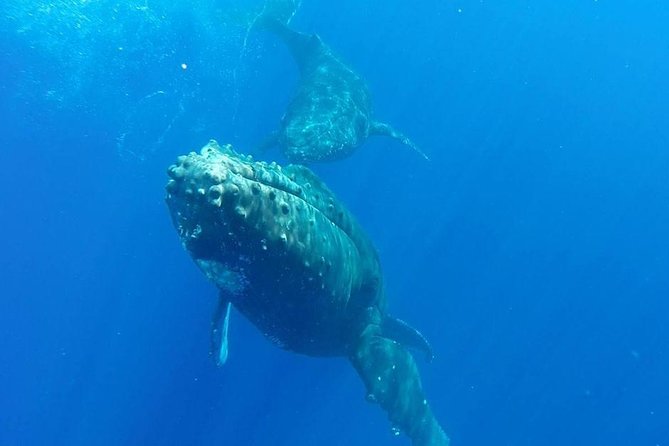
At $84.14 per person for about 1.5 hours, this tour lands in the “worth it if you care about whales” category. You’re paying for three things that often cost extra on other tours:
1) A smaller craft that can reposition quickly,
2) an onboard marine naturalist, and
3) the hydrophone experience.
The biggest value lever is the time-to-sighting ratio. Multiple guides have been praised for getting whales quickly after leaving the dock, sometimes within minutes, and for staying on the move to maximize whale activity before the trip ends. Short tours aren’t for everyone, but if your goal is whales, they often feel like better value than a half-day that includes lots of travel and waiting.
Also, the operator includes a promise that you’ll see whales. No one can control nature, but having that guarantee changes how you should think about risk. If you want “high odds, not wishful thinking,” this fits that mindset.
Bottom line: if you want a fast, close-feel whale encounter with real interpretation—and you’re okay with a raft ride—this price tends to make sense.
Tips to improve your sightings (without overthinking it)
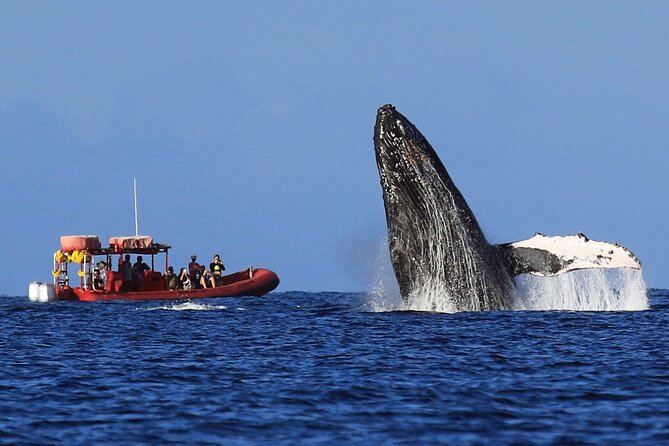
This is one of those tours where preparation helps, but you can’t manufacture whale sightings. Still, you can stack the deck:
Arrive early and get oriented fast
Show up about 30 minutes early for check-in. Once you’re on board, get your spot where you can scan the water comfortably.
Bring what you need for sun and spray
You’ll be in Maui sun and you might get wet. Wear practical swimwear-friendly clothing, use sunscreen, and consider sunglasses with good coverage.
Use the hydrophone moment
When they bring the hydrophone into play, treat it like an active signal. If you hear whale song, keep your eyes scanning around the boat, not just staring at one spot.
Ask one question, then watch for the answer
Try a simple question for the naturalist and watch for the behavior they describe. It makes the tour feel interactive instead of passive.
Go for the timing that matches your energy
Morning departures are often popular for wildlife activity, and some people have mentioned sunrise watches with strong whale movement. If you prefer cooler temperatures and a fresher start, a morning time slot can be a win.
Should you book this Maui raft whale-watching tour?
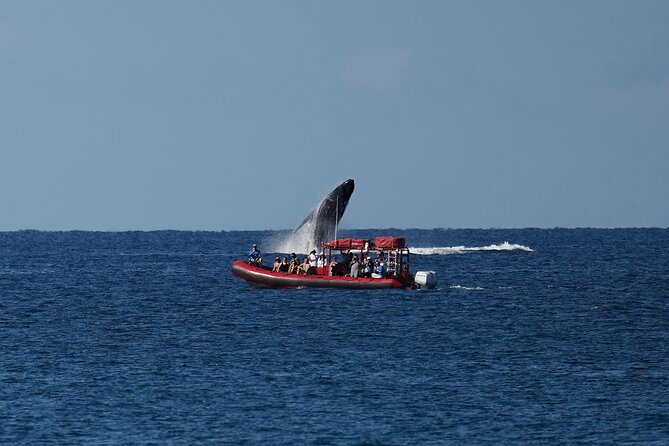
Book it if you want humpback whales close up, you like small-group energy, and you’d enjoy learning from an onboard marine naturalist while using a hydrophone to hear whale song. The 1 hour 30 minutes duration is also a smart fit if you’re packing multiple Maui activities and don’t want a long ocean block.
Skip it or think hard if you have bad back or neck injuries, you’re pregnant, or you know raft-style rides don’t work for you. It’s also a good idea to be mentally prepared for a bumpy, spray-friendly outing.
If you fall in the sweet spot—comfortable with a lively raft ride and eager for whales—this is the kind of tour that can feel like a highlight fast, with plenty of time left in your Maui day.
FAQ
What’s the duration of the Maui Whale-Watching Tour by Raft from Kihei?
The tour runs about 1 hour 30 minutes.
Where do I meet the tour?
You meet at 2800 S Kihei Rd, Kihei, HI 96753 (Kihei boat ramp). The tour ends back at the meeting point.
Is hotel pickup included?
No. Hotel pickup and drop-off are not included.
Is the tour in English, and do I get a ticket on my phone?
Yes. The tour is offered in English, and you receive a mobile ticket.
How old do you need to be to join?
The minimum age is 8 years. The maximum recommended age is 65.
Who should not book this tour?
The operator states no back or neck injuries and no pregnant passengers. It also says it is not recommended for anyone with bad backs or neck injuries.
What wildlife might I see besides humpback whales?
The tour highlights humpbacks, and you’ll also keep an eye out for dolphins and sea turtles.
What happens if weather is poor?
This experience requires good weather. If it’s canceled due to poor weather, you’ll be offered a different date or a full refund.