REVIEW · MAUI
Maui: Guided Whale Watching Tour on Eco Raft
Book on GetYourGuide →Operated by Hawaii Ocean Rafting · Bookable on GetYourGuide
Whales get personal out on the water. This Maui eco-raft whale watching tour from Lahaina mixes a guaranteed whale sighting, a marine naturalist, and a hydrophone so you can hear whale communication under the surface, with guides like Val and skippers like Jack often setting the tone. I love how it’s built for real viewing time on a small boat, not cattle-car sightseeing. One thing to think about: there’s no in-water activity, so you won’t snorkel or swim with marine life.
Two things I especially like for most visitors: the small group feel and the way this is “stay dry” ocean time. The eco-raft sightseeing focuses on what’s happening nearby—wild behavior, not a rigid script—and it can work well if you’re a non-swimmer. As a consideration, if you came to Maui hoping for an in-water experience, you’ll need to look elsewhere because all the action is from the raft.
Key to knowing what you’re buying: the tour is sold as a guaranteed whale sighting, but whales still choose where to be in the wild. Weather and capacity can also affect whether the trip runs as planned, so build in a little flexibility if you’re on a tight schedule.
In This Review
- Key highlights I’d plan my Maui day around
- Whale watching on an eco-raft: what makes this tour different
- From Lahaina Front St to open water in about 15 minutes
- The West Maui and Lanai search: how you spend your whale-watching time
- Marine naturalists on board: what you learn while you watch
- Staying dry vs. getting wet: comfort on a low-to-water raft
- The in-water moment you won’t have: what this tour is and isn’t
- Food, breaks, and the snack setup on the water
- Getting the best whale photos from a raft (and where people struggle)
- Who this whale watch is perfect for
- Price and value: is $96 a smart buy in Maui?
- Weather and waves: what to plan for on West Maui water
- Should you book this Maui eco-raft whale watching tour?
- FAQ
- Is the whale sighting guaranteed?
- How long is the Maui whale watching eco-raft tour?
- Is there snorkeling or any in-water activity?
- What should I bring to be comfortable?
- Who is this tour not suitable for?
- Where do I check in, and how early should I arrive?
Key highlights I’d plan my Maui day around
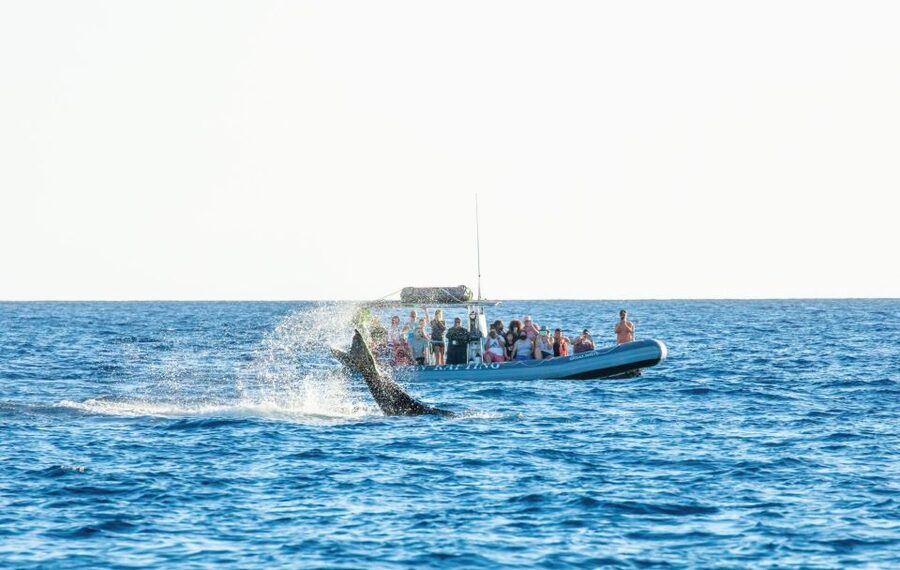
- Guaranteed whale sighting with real-time scouting while you’re out on the water
- Hydrophone whale songs and calls captured through an underwater microphone
- Marine naturalists on board sharing behavior and habitat context as you watch
- Small-group, family-style vibe that’s easier to focus on than big-boat crowds
- No snorkeling, all sightseeing so you can keep your comfort level higher
- Small eco-raft viewing that still works for non-swimmers
Whale watching on an eco-raft: what makes this tour different
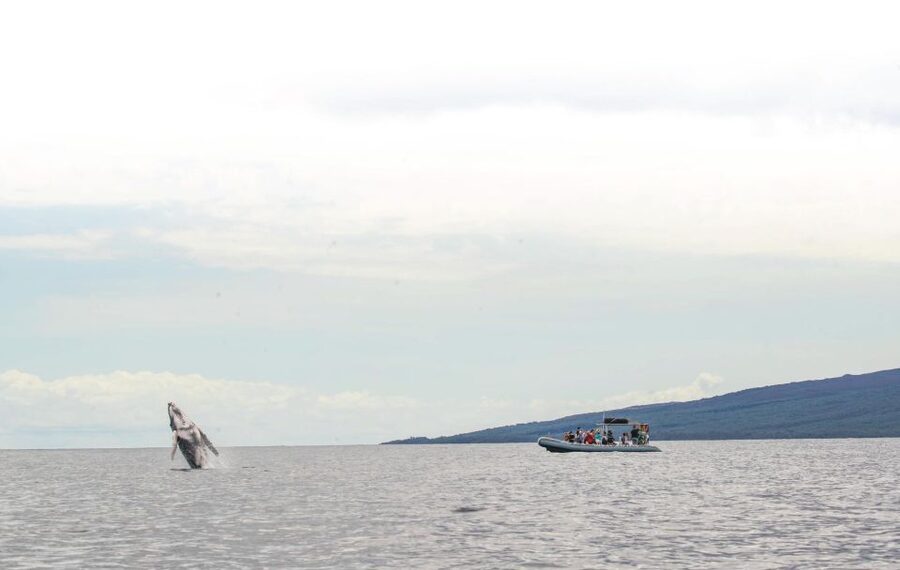
Maui whale watching can be a mixed bag depending on boat size and how long you actually spend looking. This tour leans the other direction: a smaller eco-raft experience that’s designed for close, calm viewing time while a marine naturalist talks you through what you’re seeing.
The headliner is the guarantee. That doesn’t mean whales will always come right to the exact spot you hope for; it means the operator is committed to getting you a sighting during your outing. I like guarantees in nature experiences because whales are never fully predictable, but the tour’s promise signals they’ll work the water until they find what’s out there.
Then there’s the hydrophone component. Instead of only relying on your ears and guesses, you get whale communication through an underwater microphone. Even if you don’t know what you’re hearing, the guide’s explanation helps you connect the sound to the whales’ behavior overhead.
You can also read our reviews of more guided tours in Maui



From Lahaina Front St to open water in about 15 minutes
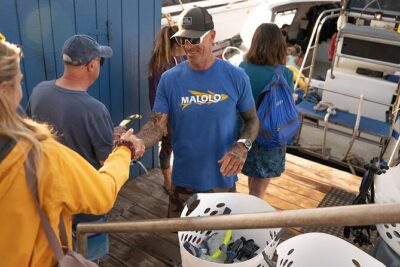
Your tour starts at 1223 Front St with check-in at Dive Maui. After you check in, the team takes you to the departure location, so you’re not piecing things together on your own. If you want a smooth start, give yourself a cushion: check in is required at least 30 minutes before the scheduled time.
Parking is limited by the pier area setup—if you’re driving, park near Longs Drugs at Lahaina Cannery Mall, walk toward Front Street, and cross the cement bridge to reach the shop area. It’s not hard, just not the kind of thing you want to stress about with a clock ticking.
That early “get aboard” stretch is short—about 15 minutes—which matters. For whale watching, the quickest path from shore to water often means more time scanning for flukes, breaches, or slow rolls.
The West Maui and Lanai search: how you spend your whale-watching time
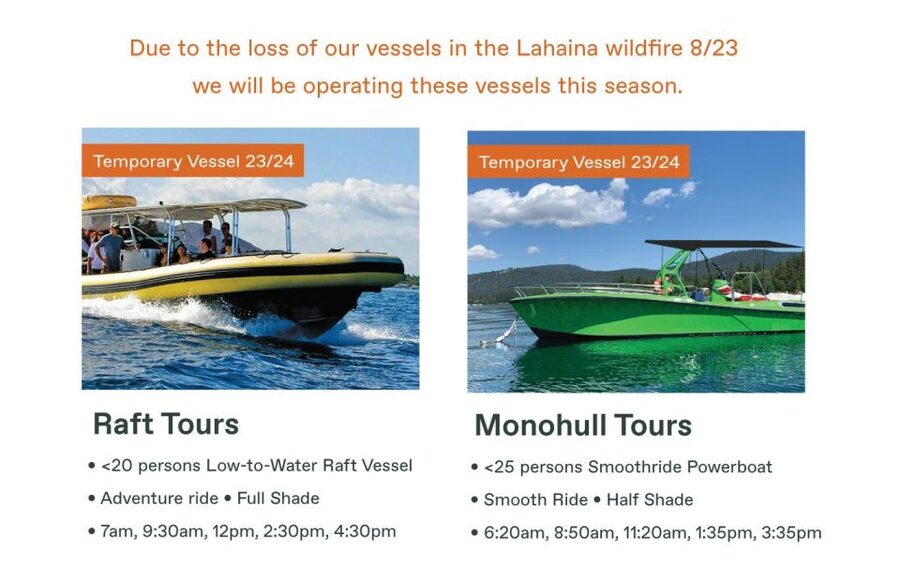
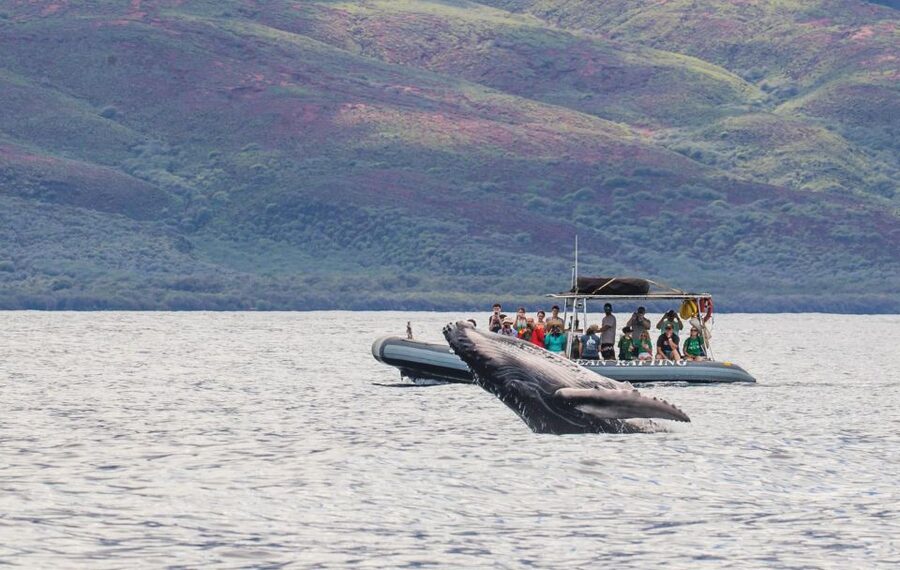
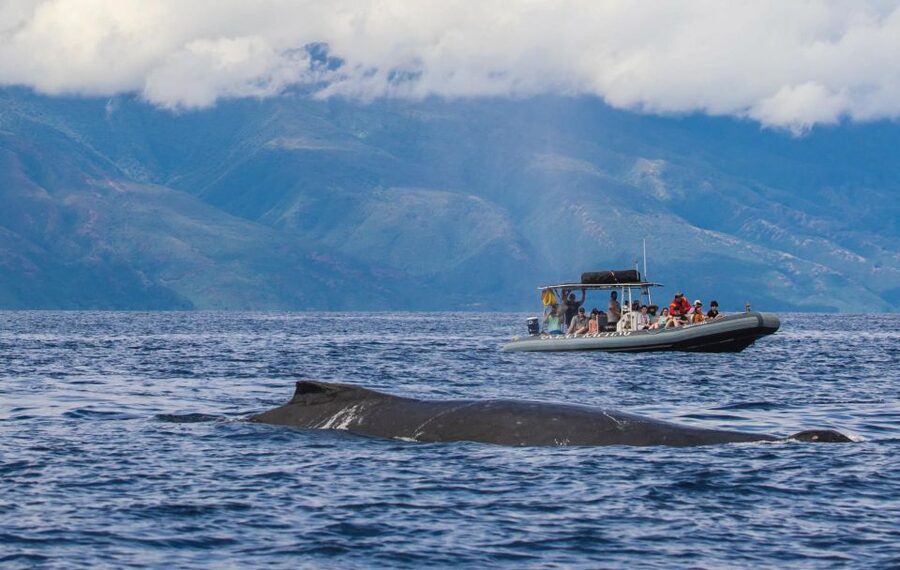
Once you’re out, the cruise focuses on the coast of West Maui and Lanai. The boat is scouting for whales and dolphins while also giving you general shoreline sightseeing. The whale-watching segment is about 1.5 hours, which is a meaningful chunk of time when you’re trying to catch active behavior like tail slaps, surface feeding patterns, or play.
This is a tour where the “what happens” part is fluid. The ocean doesn’t read schedules, so you’re out there letting the animals set the agenda. A good naturalist makes this feel purposeful, not random, by pointing out tells you can actually see—like body angle before a dive or changes in how closely groups travel together.
If you’re hoping for classic moments—like a breach or whales swimming very close—know that your sightings will depend on what’s in the area that day. The value here is that you’re watching with guidance and with hydrophone support, not just staring into distance and hoping.
Marine naturalists on board: what you learn while you watch
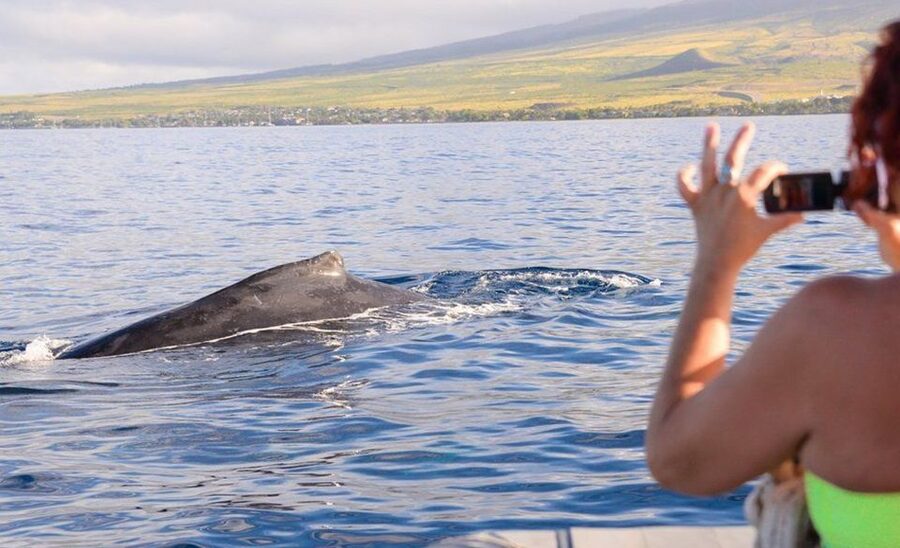
The guide component is where this tour turns from “a boat ride with whales” into something you’ll talk about later. The marine naturalist role is built around interpretation: whale behavior, what the animals are doing, and how their environment shapes that behavior.
In past outings, guides like Val (and teams that included Jill & Val) have been singled out for being friendly and informative, with a focus on details that go beyond basic species facts. Skippers like Jack also show up in feedback as informative and upbeat, which matters because you’re on the water for long enough to notice the difference between a guide who narrates and one who genuinely engages.
One of the most memorable elements is the way the hydrophone experience gets explained. When you hear whale calls through the hydrophone, the naturalist can connect the sound to what you’re seeing above the surface—so you’re not just hearing noise, you’re learning a layer of whale communication.
Staying dry vs. getting wet: comfort on a low-to-water raft
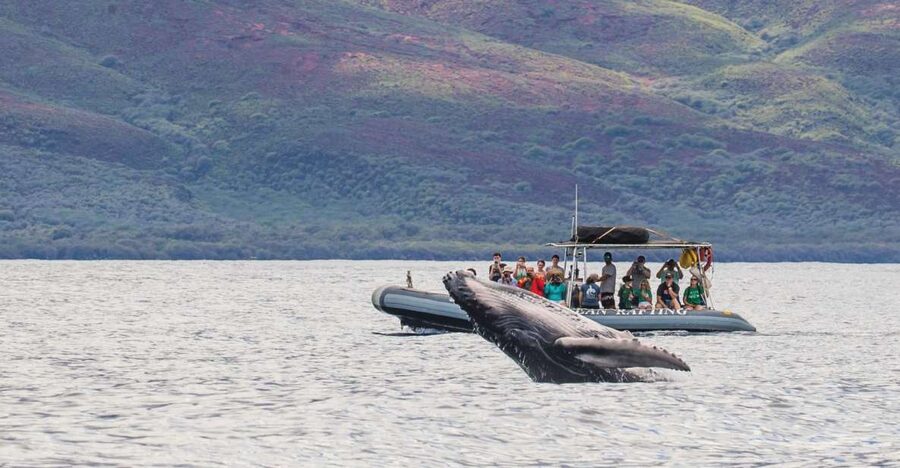
This is one of those tours that’s often better than people expect on the comfort front. There’s no snorkeling, so you’re not suiting up, climbing back on wet gear, or worrying about time in the water. The promise is dry sightseeing from the raft.
That said, you should still plan for ocean reality. The raft is described as adventure-style and low-to-water, and the experience may include getting wet. If you want to protect electronics and your clothes, bring a waterproof bag for items like your phone and wallet, plus a towel and water shoes.
If you’re the type who gets nauseous on boats, you’ll be glad this tour is small-raft oriented. People have specifically mentioned not getting sea sick, and the raft is often praised for handling waves well. Still, the ocean can vary, so if you’re sensitive, pack any motion-comfort tools you normally use.
You can also read our reviews of more whale watching tours in Maui



The in-water moment you won’t have: what this tour is and isn’t
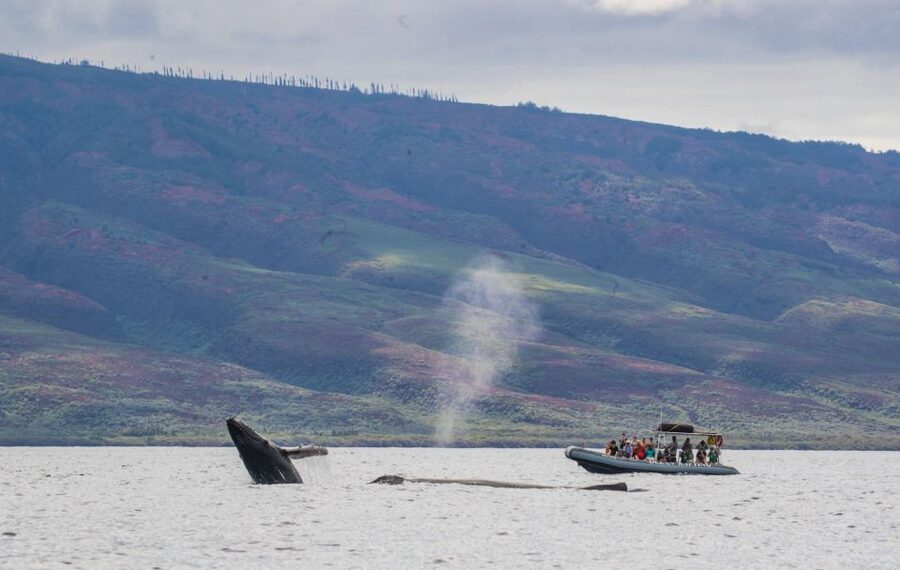
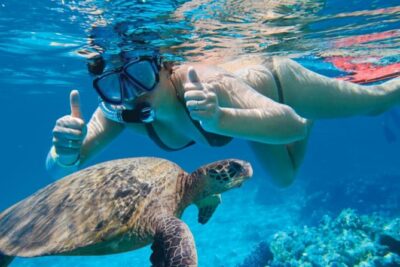
Here’s the “read this twice” point. This tour has no in-water activity. That means no snorkeling and no swimming with the whales. You’re watching from the eco-raft the whole time, and that’s by design—keep things safer, cleaner, and more comfortable for a wider range of people.
I actually think this is a strength for many visitors. If you’re traveling with kids (over the age limit), older relatives, or anyone who isn’t confident in the water, a viewpoint-only tour often delivers the wildlife payoff without the hassle and risk.
The tradeoff is simple: if your dream is a hands-on encounter, this isn’t that. It’s built for viewing, listening, and learning from a stable platform.
Food, breaks, and the snack setup on the water
You don’t just stare at waves. You’ll take breaks and enjoy onboard snacks and drinks, including sweet pastries, fruit, Maui-style potato chips, cookies, and beverages. This helps make the total time feel less like a “sit and wait” experience and more like a guided outing.
There is an allergen disclosure you should pay attention to: the operator can’t guarantee that food is free from common allergens due to onboard preparation and potential cross-contact (gluten, nuts, peanuts, shellfish, fish, soy, eggs, dairy, wheat). If you have a serious allergy, plan to talk with the team in advance and bring any necessary medication.
Getting the best whale photos from a raft (and where people struggle)
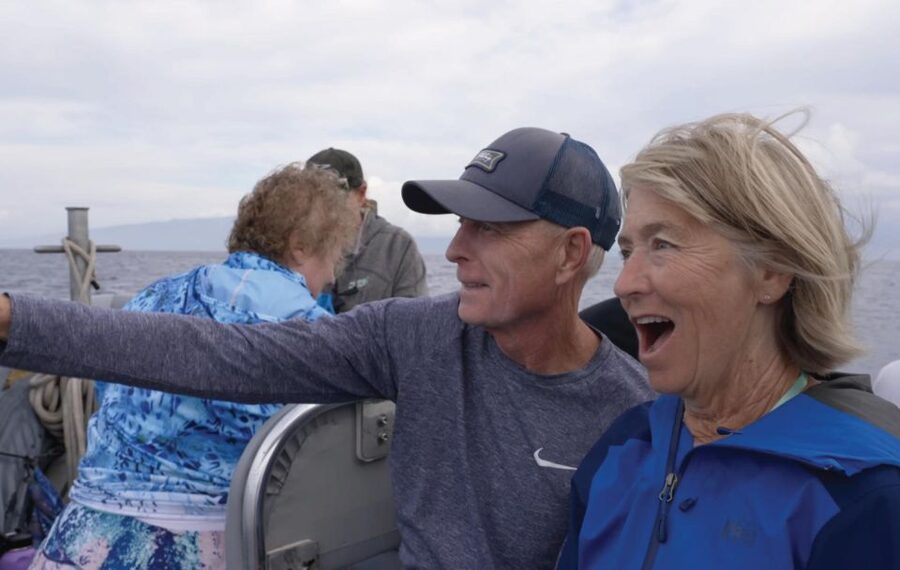
If you’re bringing a camera to chase that once-in-a-lifetime shot, you’ll want realistic expectations. One common issue noted is that taking photos from the front area can be tough when seas get choppy. You may also find that your best angles depend on where the captain spots the activity and how the boat positions for viewing.
A practical move: treat your seat like a plan. When you board, ask where whales are likely to be viewed and where the sightlines tend to be best. One feedback note also suggested that the captain’s viewing angle can favor certain sides, so don’t assume every seat is equal if you care about framing.
Also, bring a waterproof camera or waterproof housing. You’ll be glad you did if you get spray and wind-blown salt on the lens at the exact moment a fluke appears.
Who this whale watch is perfect for
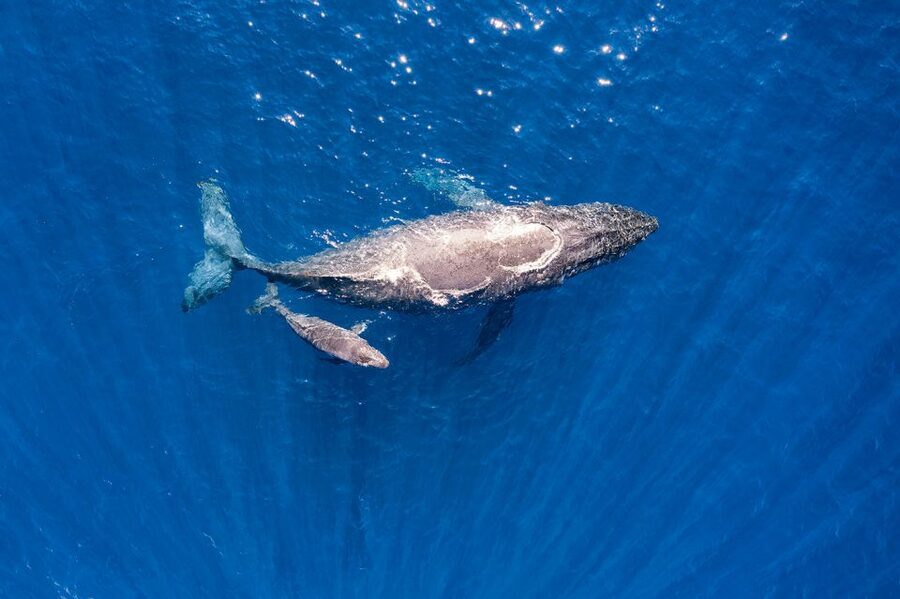
This is a strong fit if you want whales but your group isn’t all ocean-ready. The tour is described as great for non-swimmers, because the experience stays on the eco-raft for sightseeing. You’ll still get a wildlife encounter, plus the educational layer from the naturalist.
It also works well for people who don’t want a big-boat crowd scene. The tour is described as semi-private/small group, with a family-style vibe, so the attention feels more personal and easier to follow during the hydrophone moments and explanations.
On the other hand, it’s not suitable for:
- children under 3
- pregnant people
- people with back problems
- wheelchair users
If any of those apply, it’s better to look at an option that’s designed for your needs rather than trying to “make it work.”
Price and value: is $96 a smart buy in Maui?
At $96 per person for a 2 to 5 hour outing, you’re paying for three main things: the boat time, the guide-led learning, and the hydrophone add-on. You’re also paying for operational commitment through the guaranteed whale sighting approach.
I tend to judge tours like this by what you’d otherwise pay for separately. If you only get chance-based sightings, whale-watching can turn frustrating quickly. Here, the structure is designed to make the experience work even when the ocean doesn’t cooperate.
Is it the cheapest whale watch in Maui? Not necessarily—and I wouldn’t assume it is. But for many people, it’s good value because you’re not just “hoping for whales.” You’re getting a guided search, whale sound tech, and a more comfortable format that doesn’t require you to swim or snorkel.
Weather and waves: what to plan for on West Maui water
This outing is subject to rescheduling or cancellation due to weather or capacity reasons. That’s standard for any ocean wildlife tour, but it matters more in Maui because conditions can change over the day.
The good news is that the small eco-raft option has been praised for handling big waves well. Still, you’ll feel ocean movement, and that’s why packing matters. Sunglasses, hat, towel, waterproof protection, and water shoes make a real difference when the ocean gets lively.
If you’re building a full Maui itinerary, I’d schedule this earlier in your trip or alongside flexible time, so if the ocean needs a different plan, you’re not stuck.
Should you book this Maui eco-raft whale watching tour?
Book it if you want guaranteed whale luck efforts, a small-group feel, and whale communication through a hydrophone while staying dry. It’s especially appealing for non-swimmers because the experience is built around viewing from the raft, not getting in the water.
Skip it if you specifically want snorkeling or hands-on water time. And if you fall into the not-suitable categories—like pregnancy, back problems, or wheelchair use—don’t force it. In those cases, your money and peace of mind are better spent on a tour format designed for you.
If you’re on Maui for a short window and you really want whales with an educational guide, this is one of the more practical ways to make that happen without turning the day into a big-boat crowd ordeal.
FAQ
Is the whale sighting guaranteed?
Yes. The tour includes a guaranteed whale sighting, though whales are wild and encounters can still vary based on natural conditions.
How long is the Maui whale watching eco-raft tour?
The duration is listed as 2 to 5 hours, depending on availability and your departure time.
Is there snorkeling or any in-water activity?
No. This is a sightseeing-only tour, with no snorkeling and no in-water activity.
What should I bring to be comfortable?
Bring sunglasses, a sun hat, a towel, a waterproof camera, biodegradable sunscreen, water shoes, and a waterproof bag to protect personal items.
Who is this tour not suitable for?
It’s not suitable for children under 3, pregnant women, people with back problems, and wheelchair users.
Where do I check in, and how early should I arrive?
Check in at Dive Maui, 1223 Front St, Lahaina at least 30 minutes prior to your tour start time. Late arrivals may miss boarding.